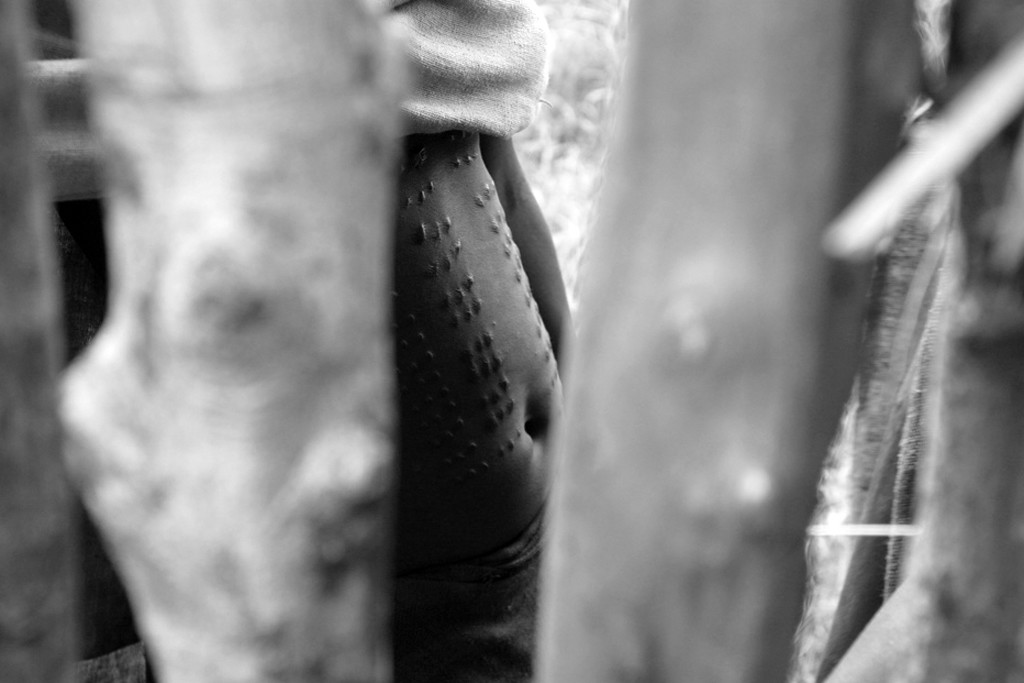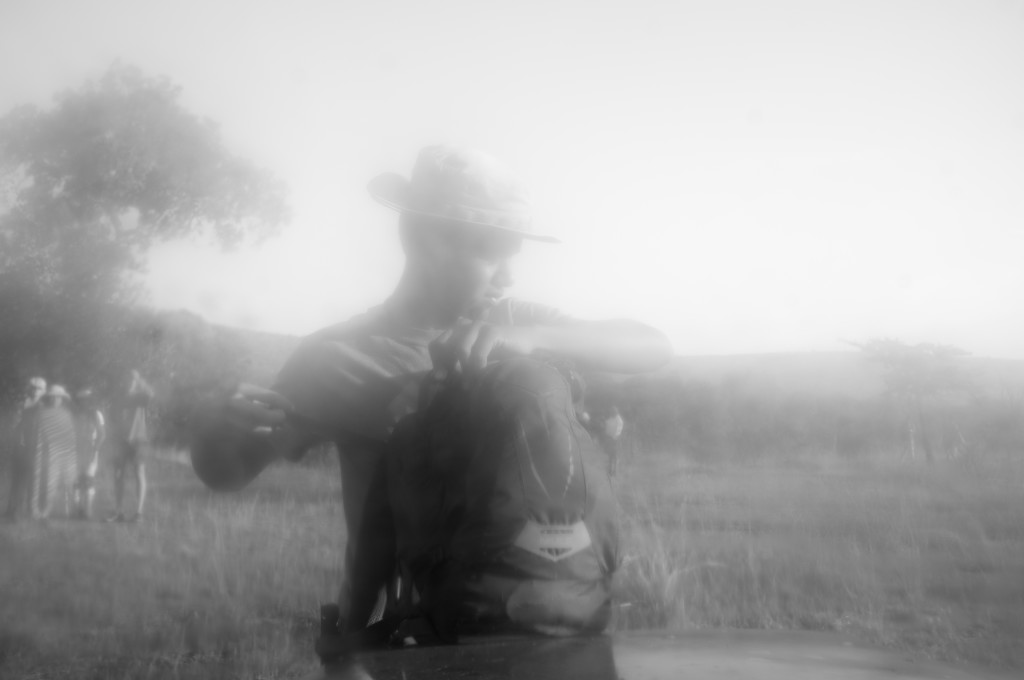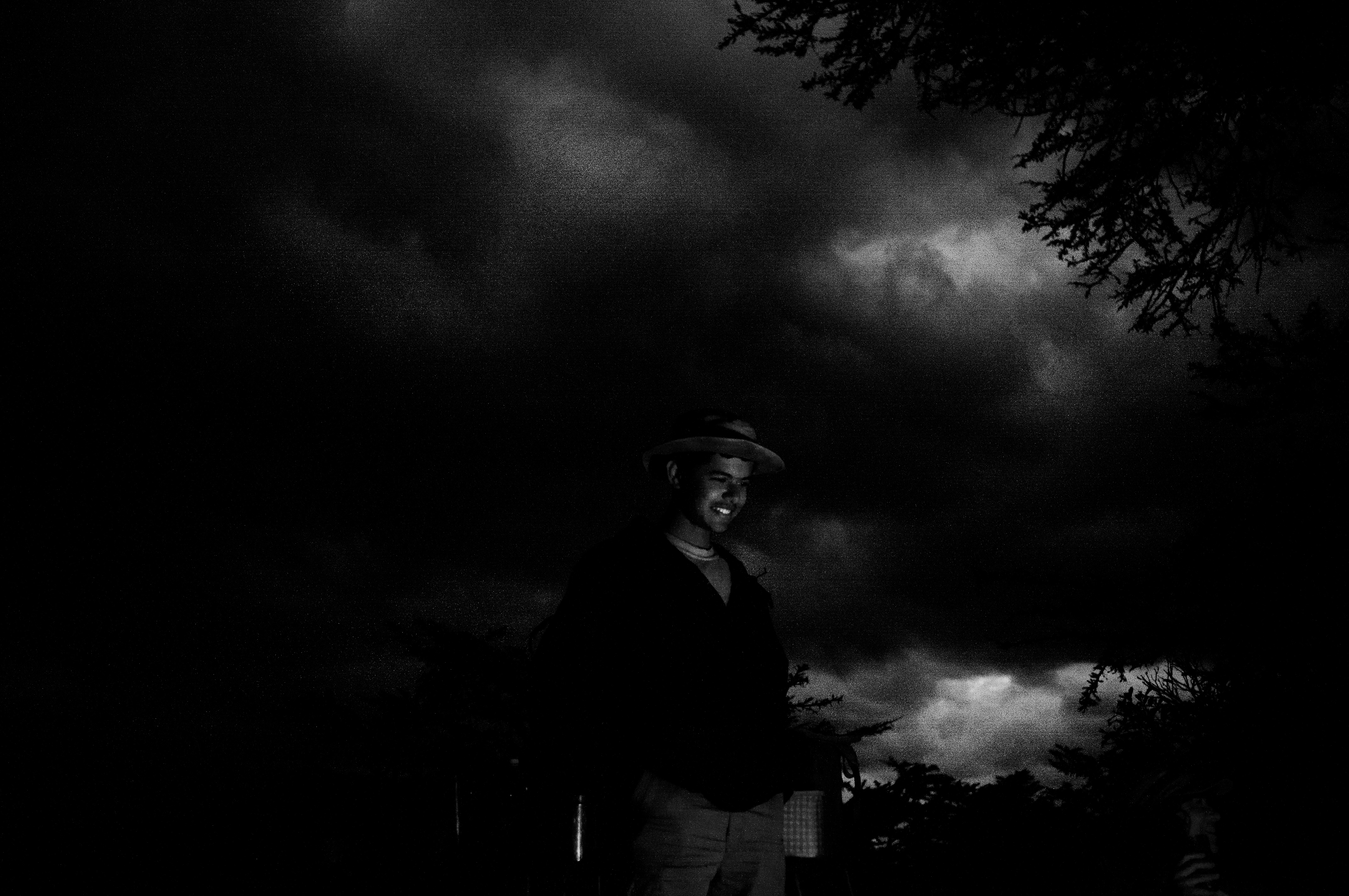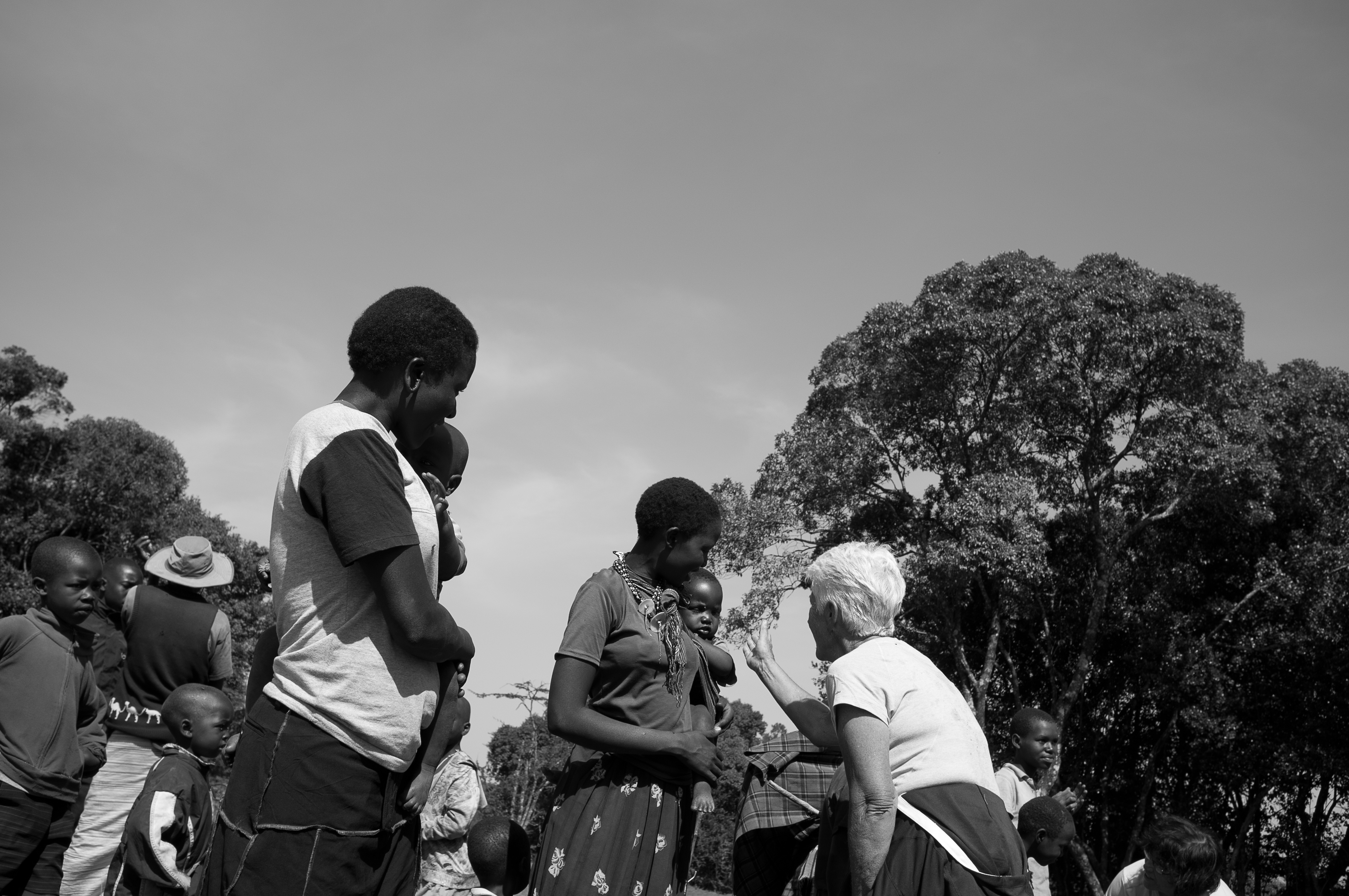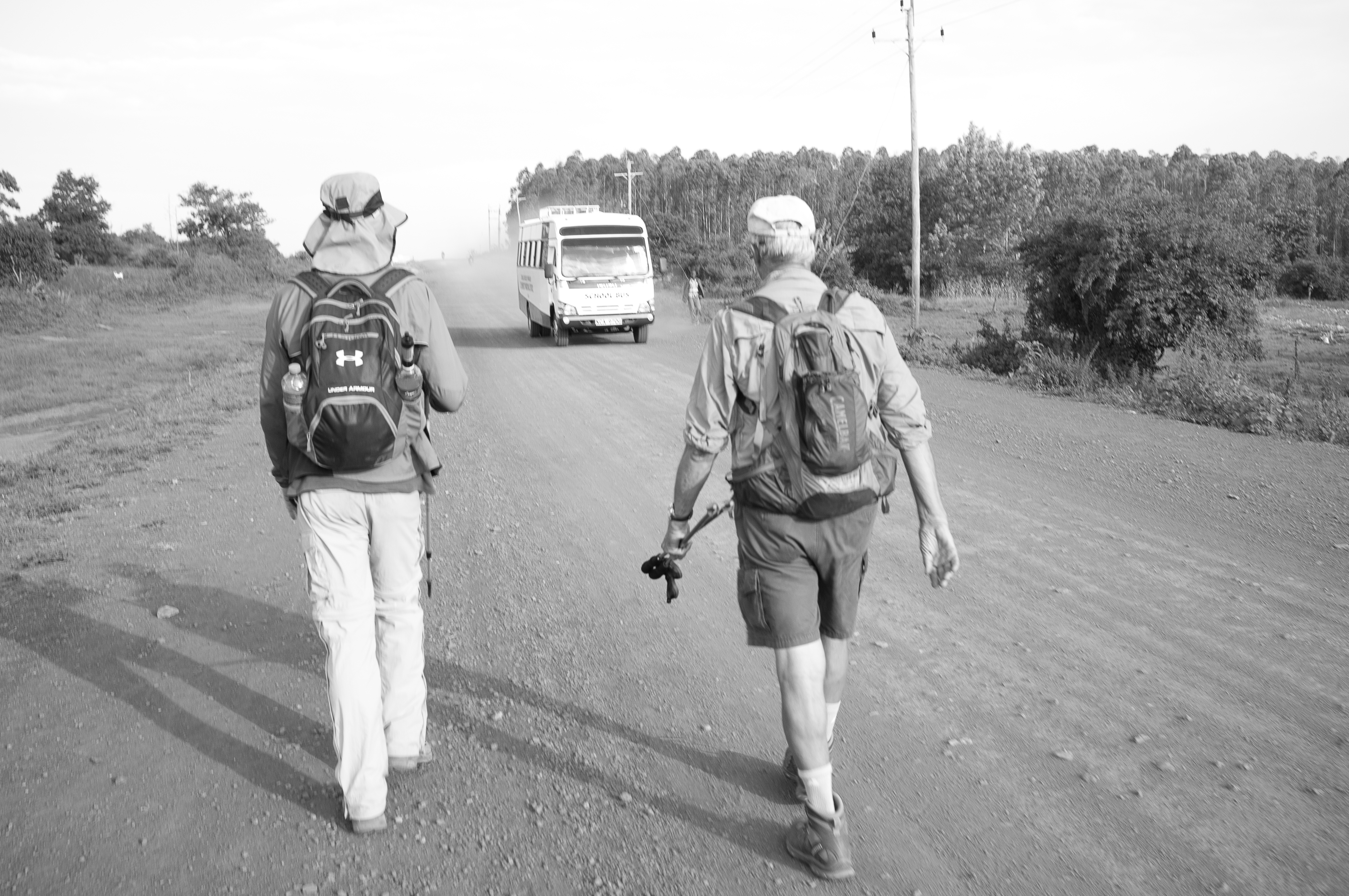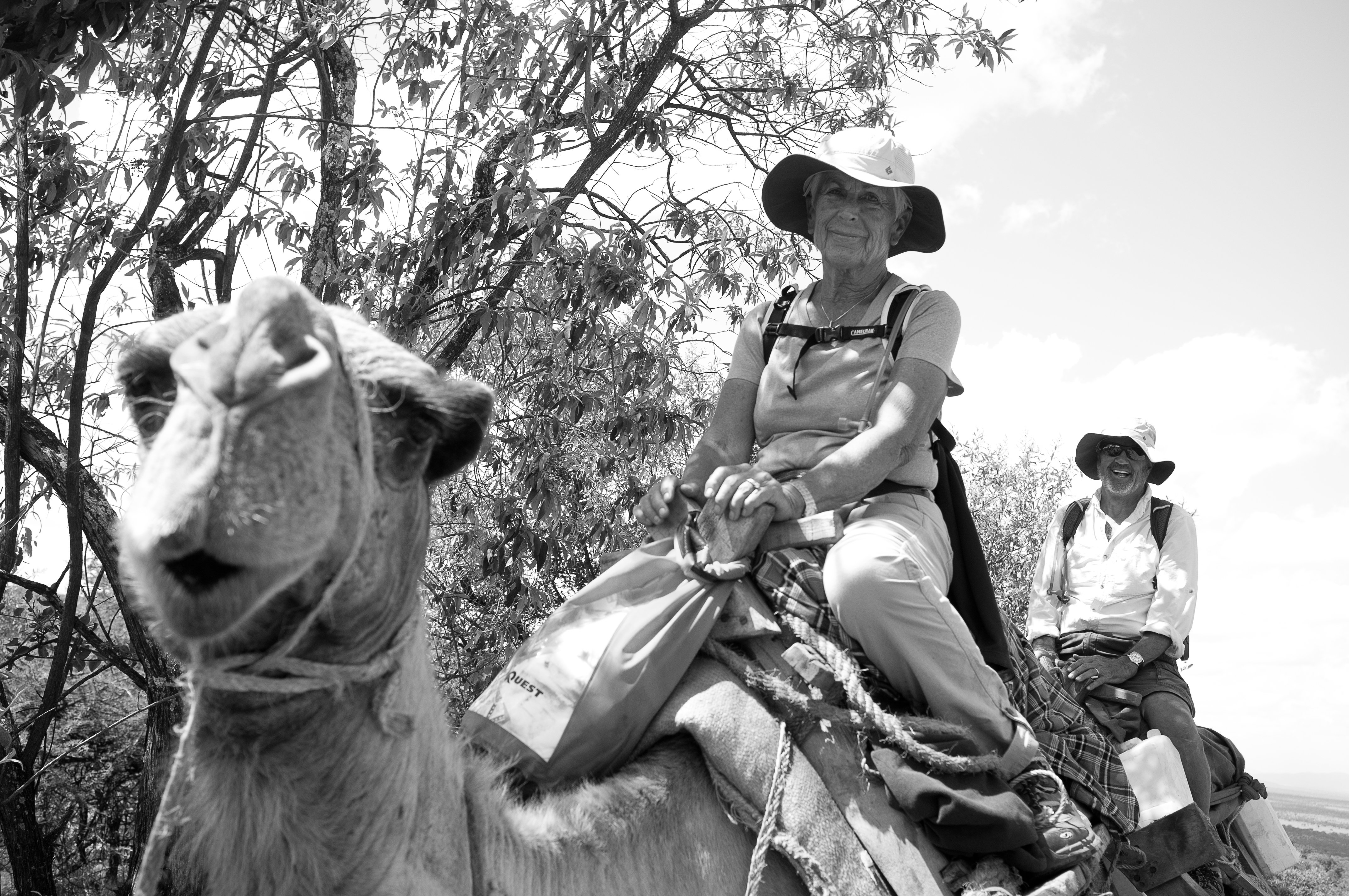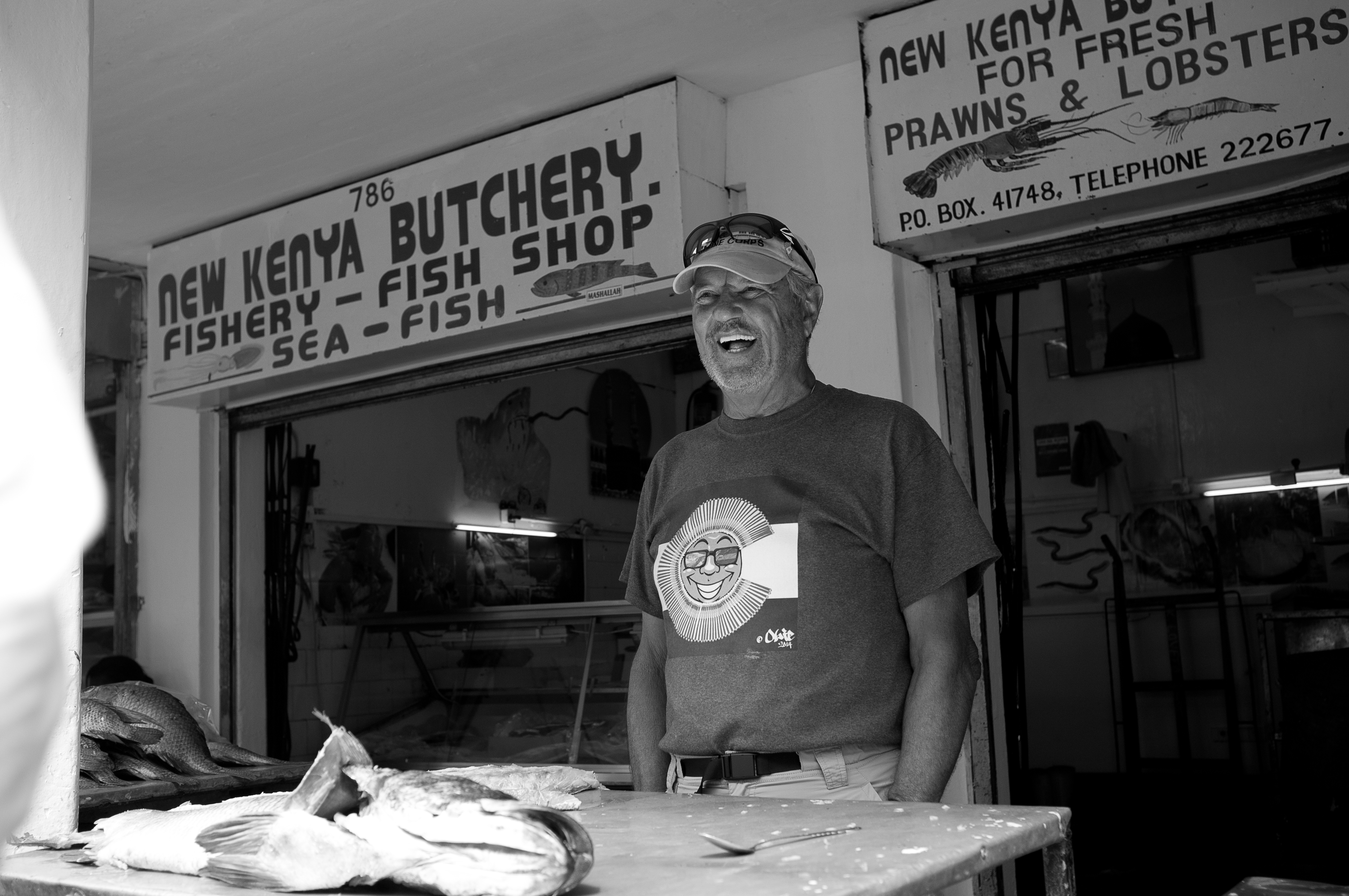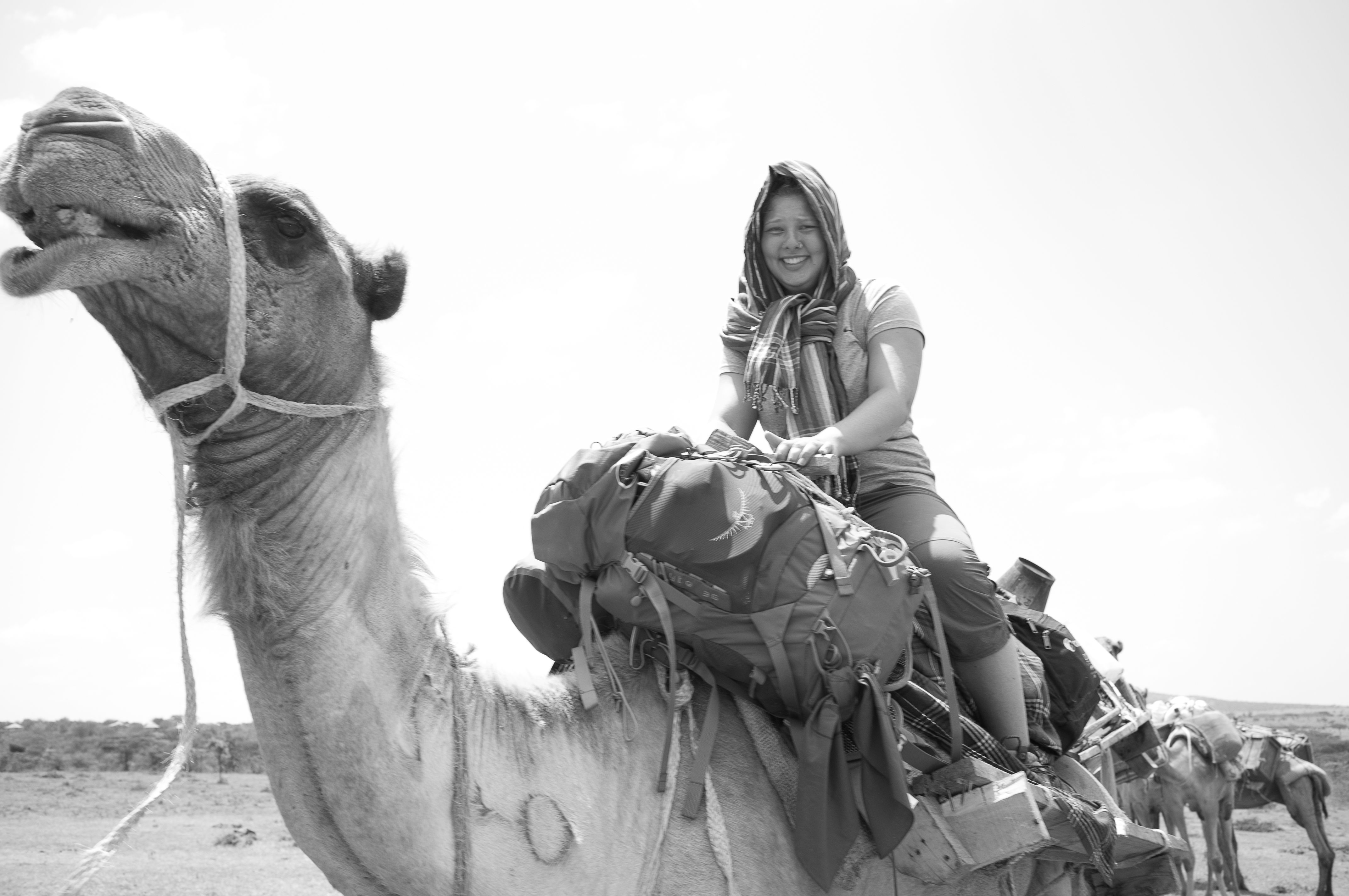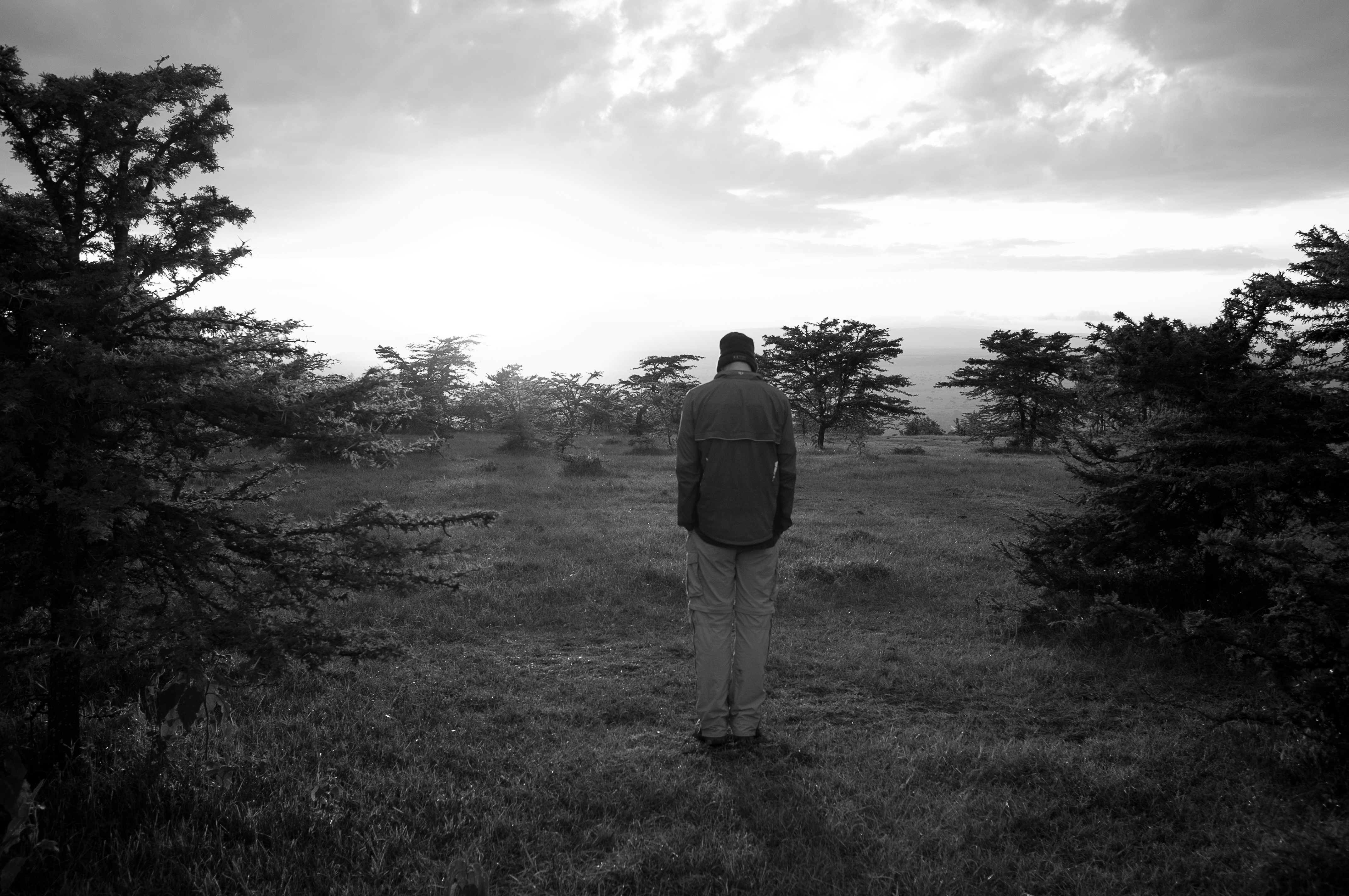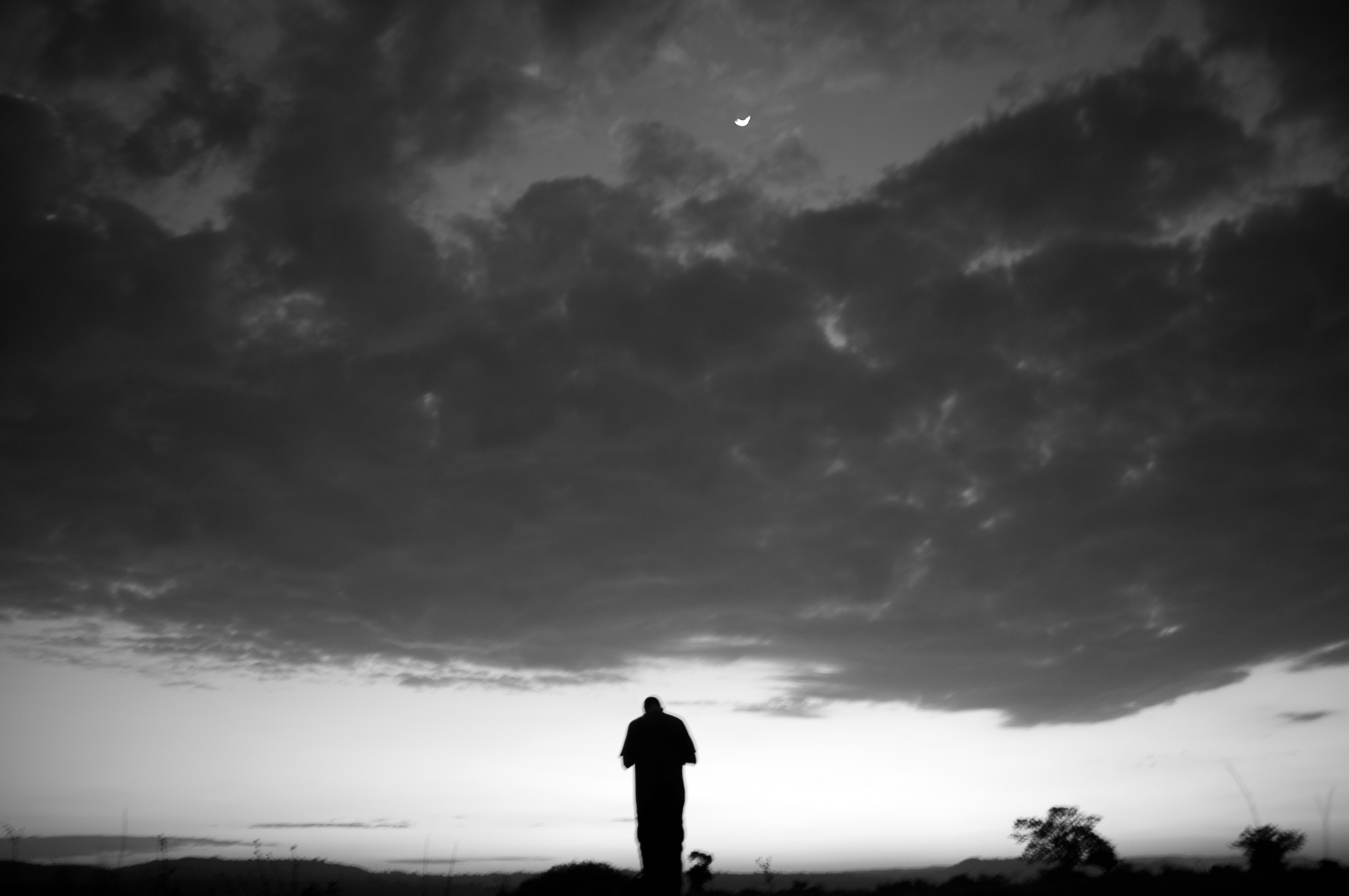
The Rise and Fall of Heroes, Part 8 of Tembea Na Mimi


This is Part 8 of a multi-part essay that chronicles Tembea Na Mimi, a walk across Kenya.
by Jeff James

Huddled under the branches of a thorn tree, cold rain pounding against my back, I witnessed courage in action and felt small and weak in comparison. But I am used to that; I’ve spent a lifetime watching my warrior brother excel in all tests of life, out in front, and taking action while others shiver.

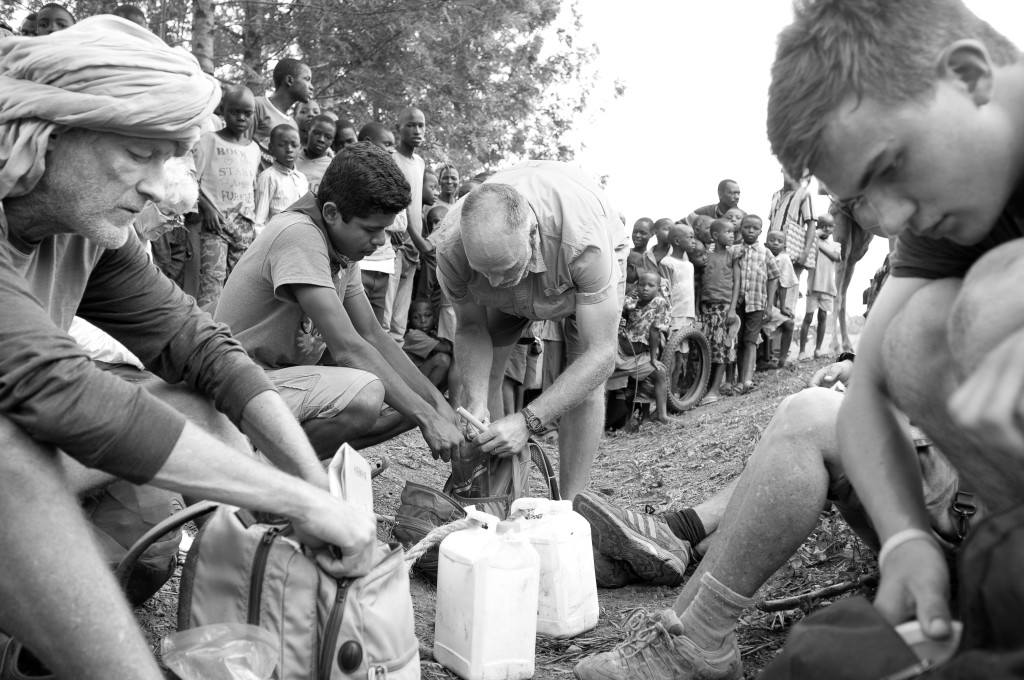
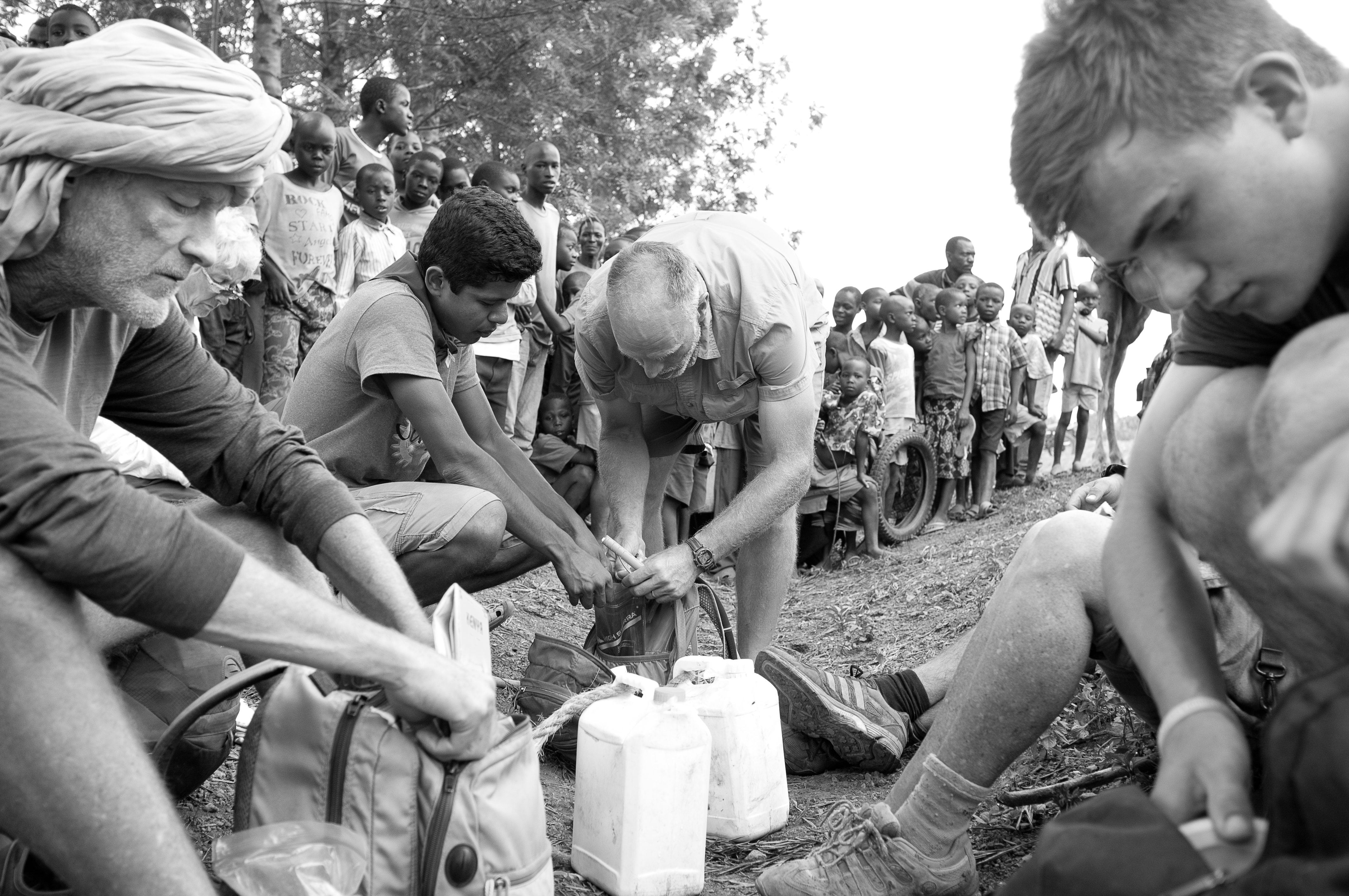
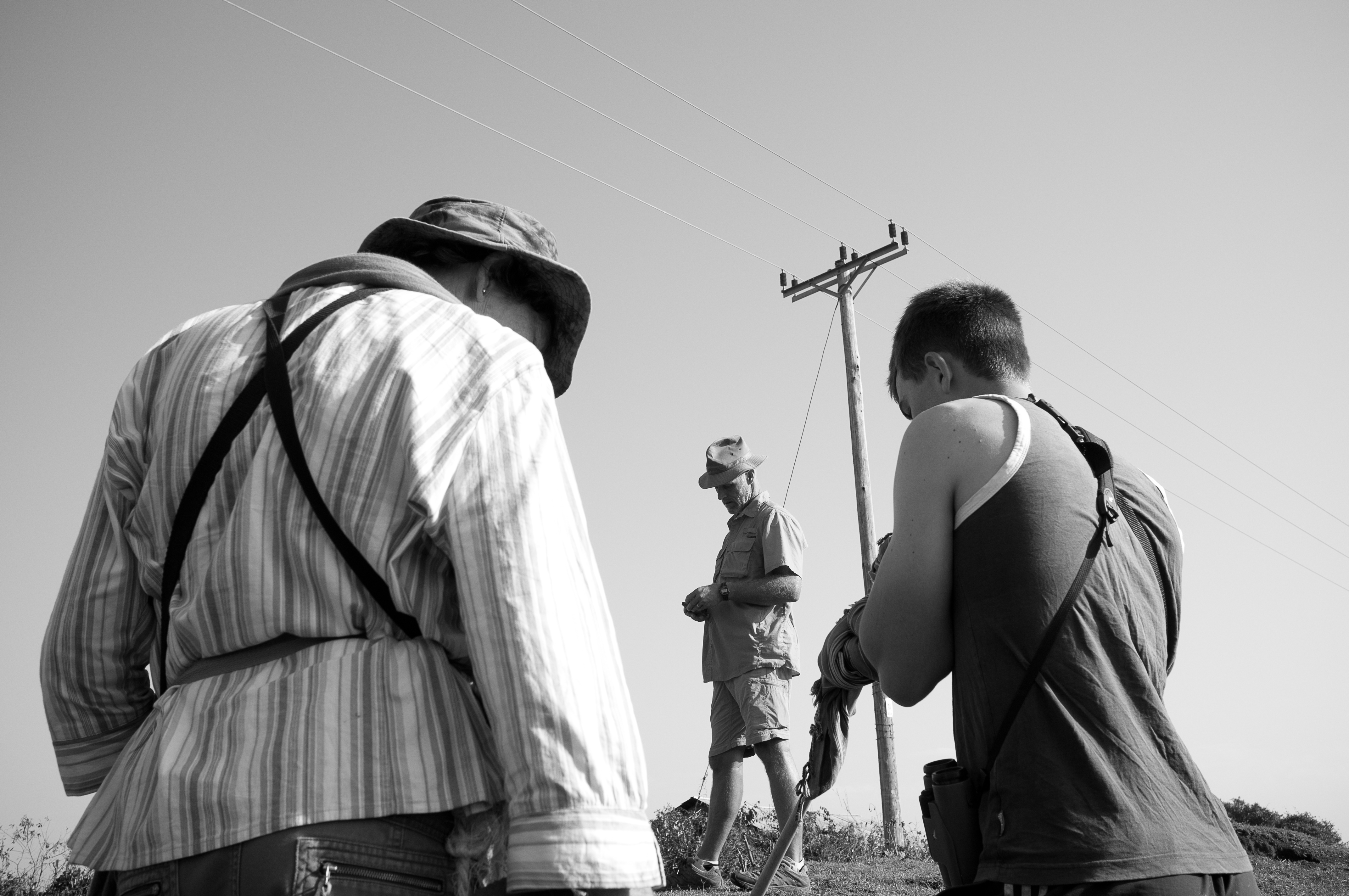
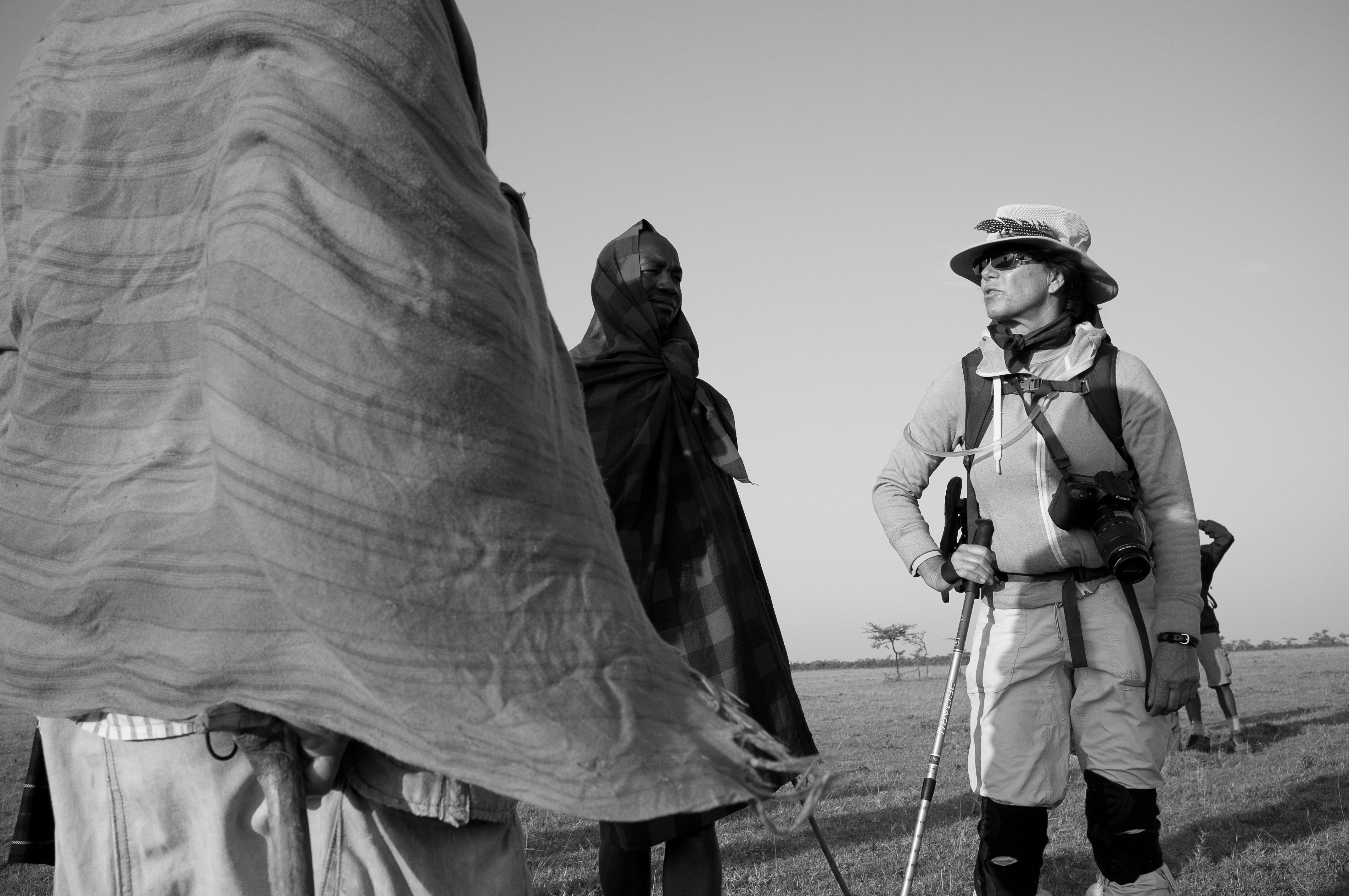
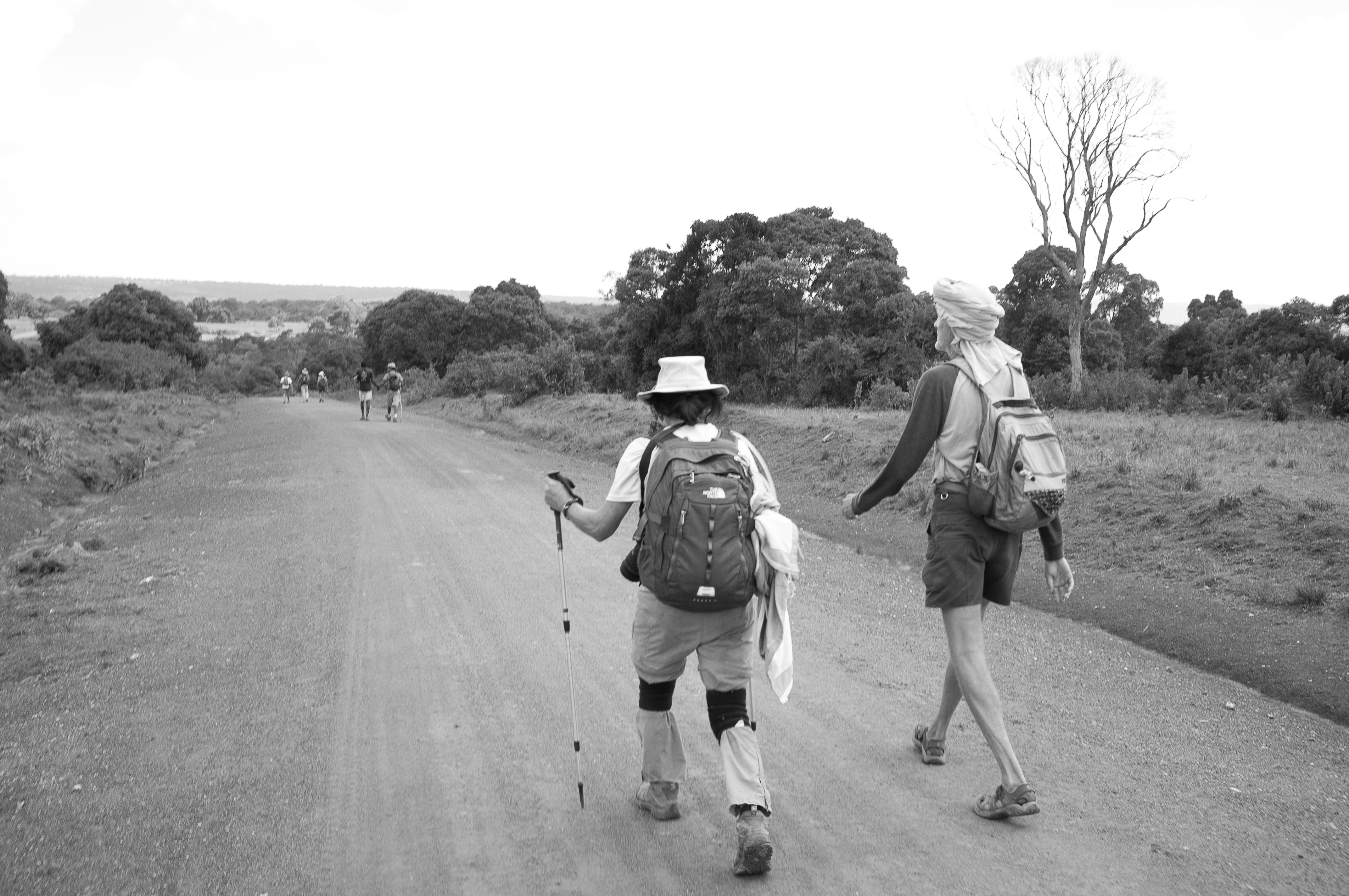
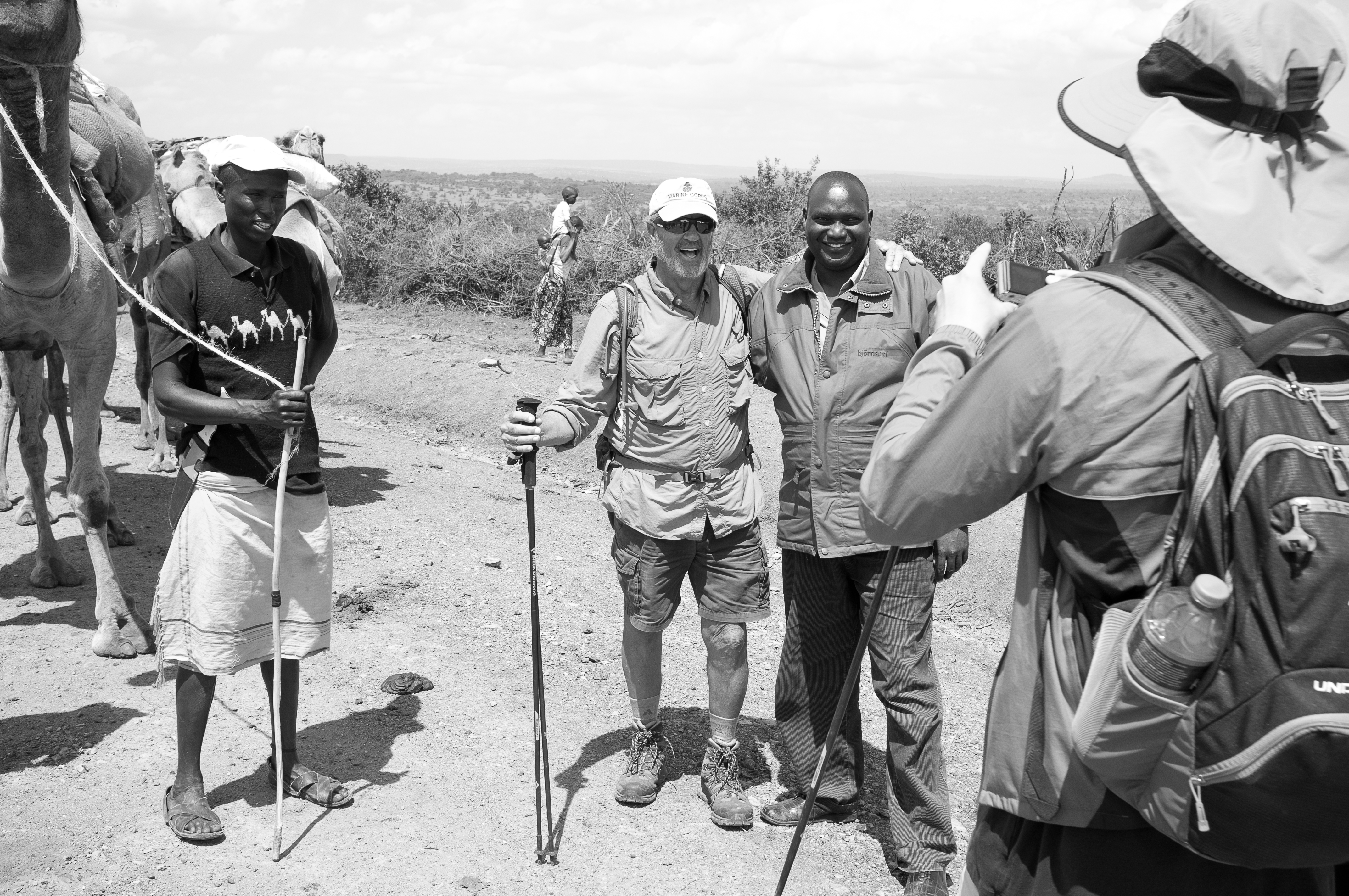
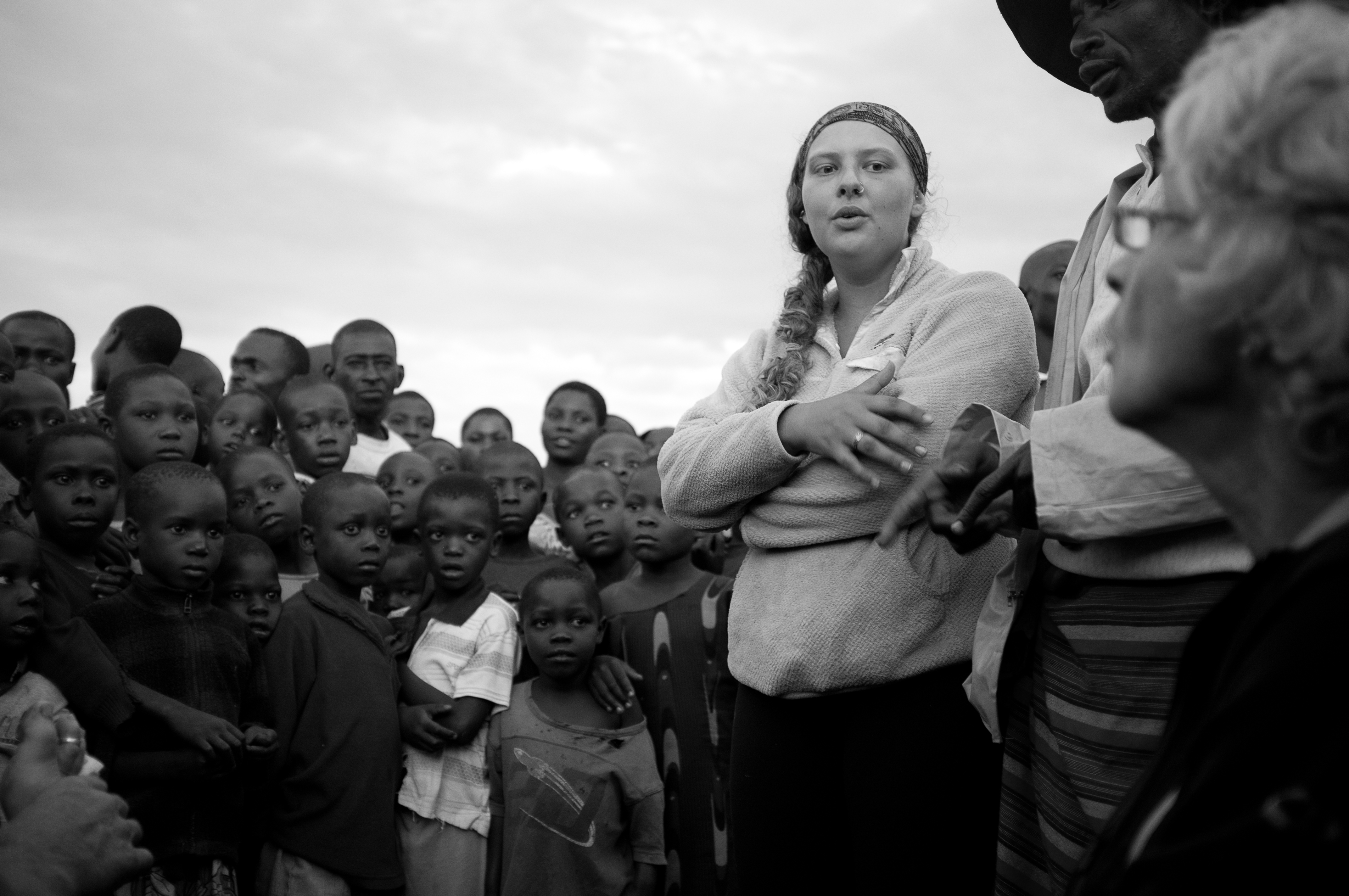
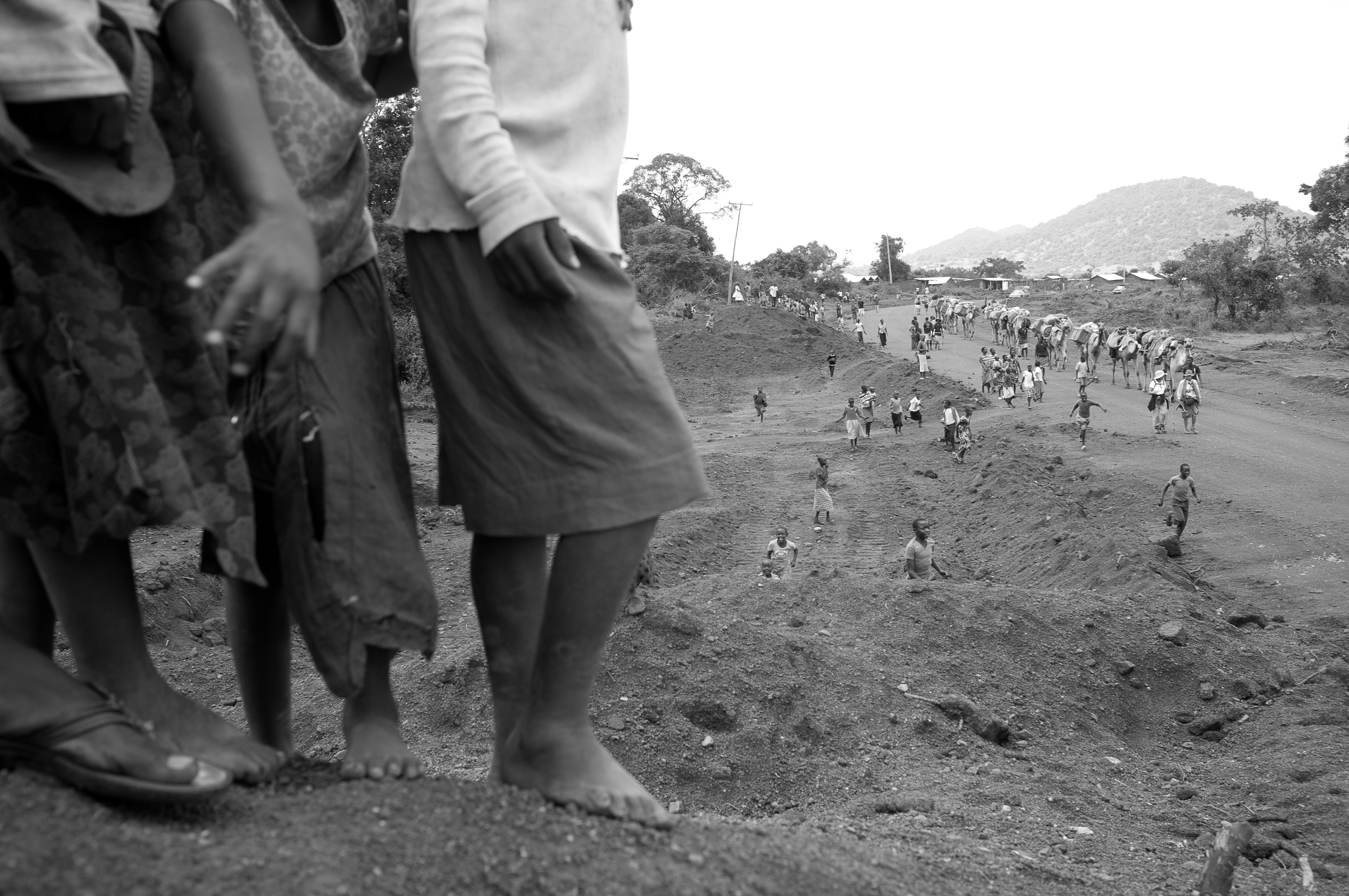
It was day 9, and we were anticipating the end of our journey with mixed emotions. We had taken a break under a shade tree on a dirt road adjacent to a school. A crowd hovered around our menagerie, spectators of the greatest show in town. The school’s soccer field was flat and grassy and tempted us as a campsite.  Plus, the waning afternoon light and the black and foreboding sky over Lake Victoria were clear signs we needed to make camp soon.  Unfortunately, the school’s headmaster wasn’t around, and without his permission, we decided it best to leave the road in search of another open space to make camp.   As we walked through farmland rain fell, gently at first, showering our dust and fatigue away. “This feels good,” I exclaimed to Amanda.  She smiled and tittered “mmm, yeah” with a concerned gaze skyward.

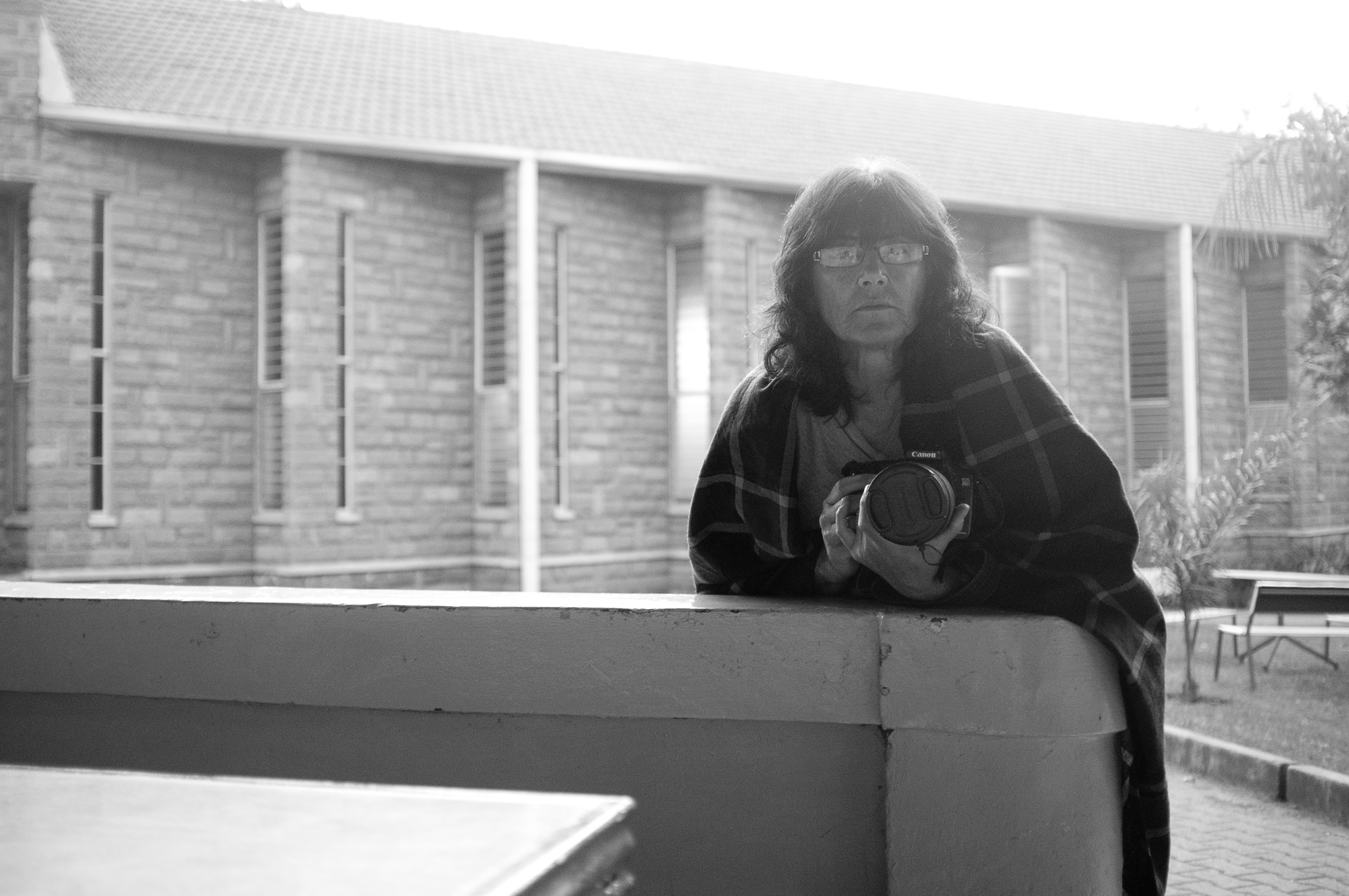
I put my camera in my pack and zipped it, but then it began to rain harder so I opened my pack and wrapped my rain jacket tightly around my camera. I was hot from the day of hiking and didn’t mind getting wet, but I worried about my camera getting rain-damaged. Pictures are treasures for me, and I felt greatly enriched by this trip’s rewards. And this was Africa, after all; the rain will pass and the sun will return its usual permeating warmth, drying clothes and lifting spirits.

And then from the west came a wall of wind and water so mighty the camels panicked.  They pulled against the guides, straining their ropes, slipping and falling down in torrents of mud. Our spectators, locals accustomed to lake storms, laughed at our pandemonium. But soon they too were cowed to the corners, seeking shelter under thorn bushes not suitable for a goat.

I followed Amanda beneath a slightly taller bunch of trees and hunched my back to the storm. The wind, icy and fierce, pushed at my neck and I shook deeply – shivering like never before. I looked left and saw Amanda and Thea,  thin and blue through sheets of gray water, huddled in vain under a useless umbrella.

Jeff James_Tembea Na Mimi_2015_143

And then I looked out to the clearing and saw my brother, David, his hat pulled low, his mouth and eyes set with determination, his knife in one hand slashing the taut sisal rope that tethered two camels head to tail, pulling in opposing directions.  As one camel fled, David brought the other to its knees and unburdened it of crates and saddle before sending it off to graze with a loving pat on the rear end.

Time passed slowly under that thorn tree; the rain and wind were unrelenting. I shivered, paralyzed by the cold, watching camel after camel get unloaded and released. Tarps unrolled and equipment stowed, trenches dug, tents erected and blown away and retrieved, only to be taken again. Eventually the large tent surrendered to the storm and lay flat in the mud, its poles broken in a discarded heap. And I remember thinking, as I looked out at David and the other brave warriors who stayed for the fight, that they did not look defeated nor hypothermic like I felt. In fact, they looked enthused, energized and warm, eager to keep fighting.  They were having the time of their lives battling nature and crowing defiance into the wind.

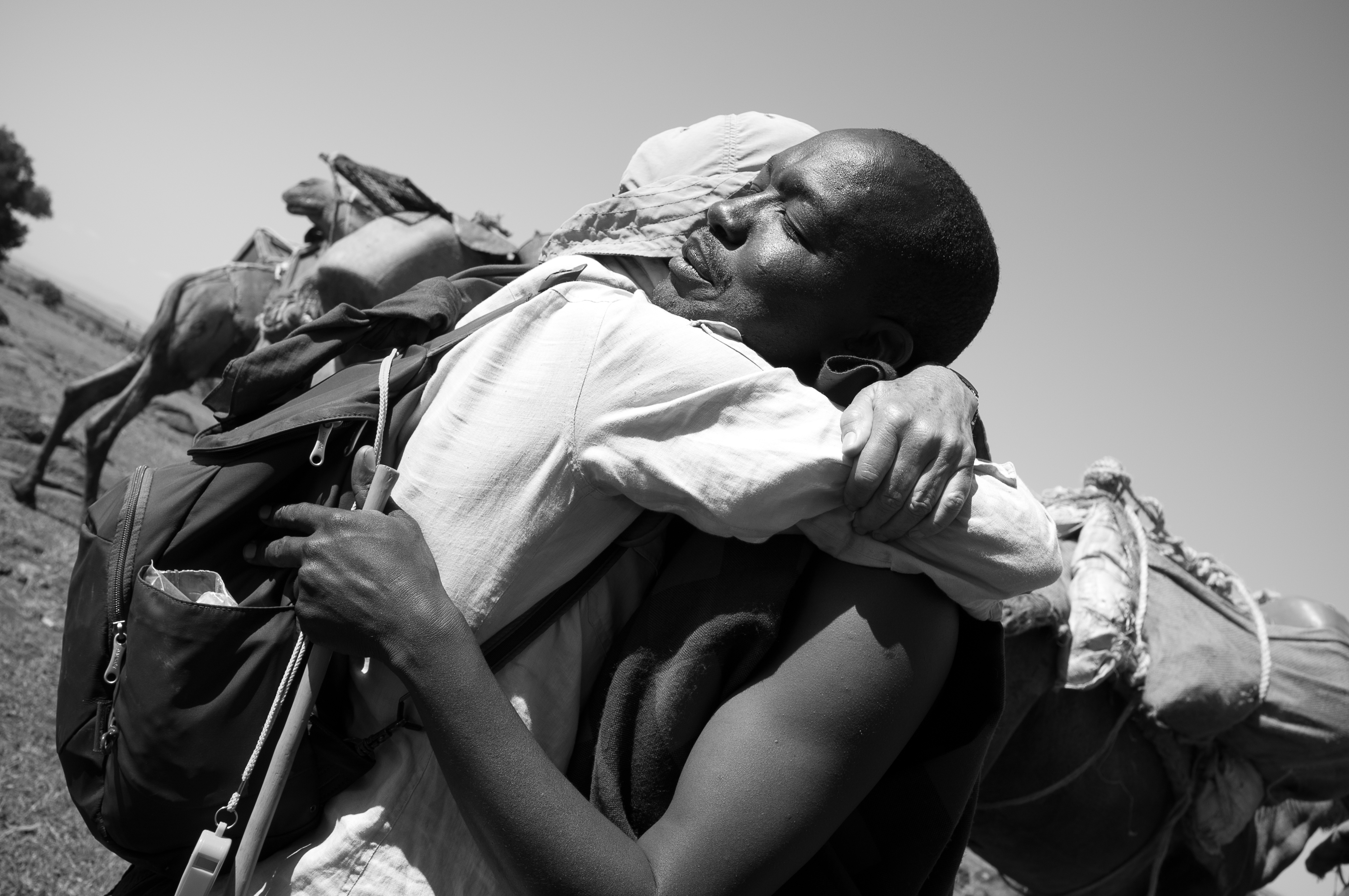
I shuddered and then bounded out to help, hoping some activity would warm me up.  But I was too late, the activity had come to a halt, the job was finished until the rain abated. And so there I stood in the clearing, stomping my feet in the mud to stay warm as heavy drops continued to fall.  David, seeing my sorry state, pulled a thermal blanket from his pack and wrapped it around my shoulders, ushering me under a tarp where other heroes squatted, sharing body heat and waiting out the storm. And he threw his big arm around me and hugged me until the chill and the rain subsided.  It was a brotherly moment like no other, a lesson in vulnerability and strength, a gesture of love that I’ll not soon forget.

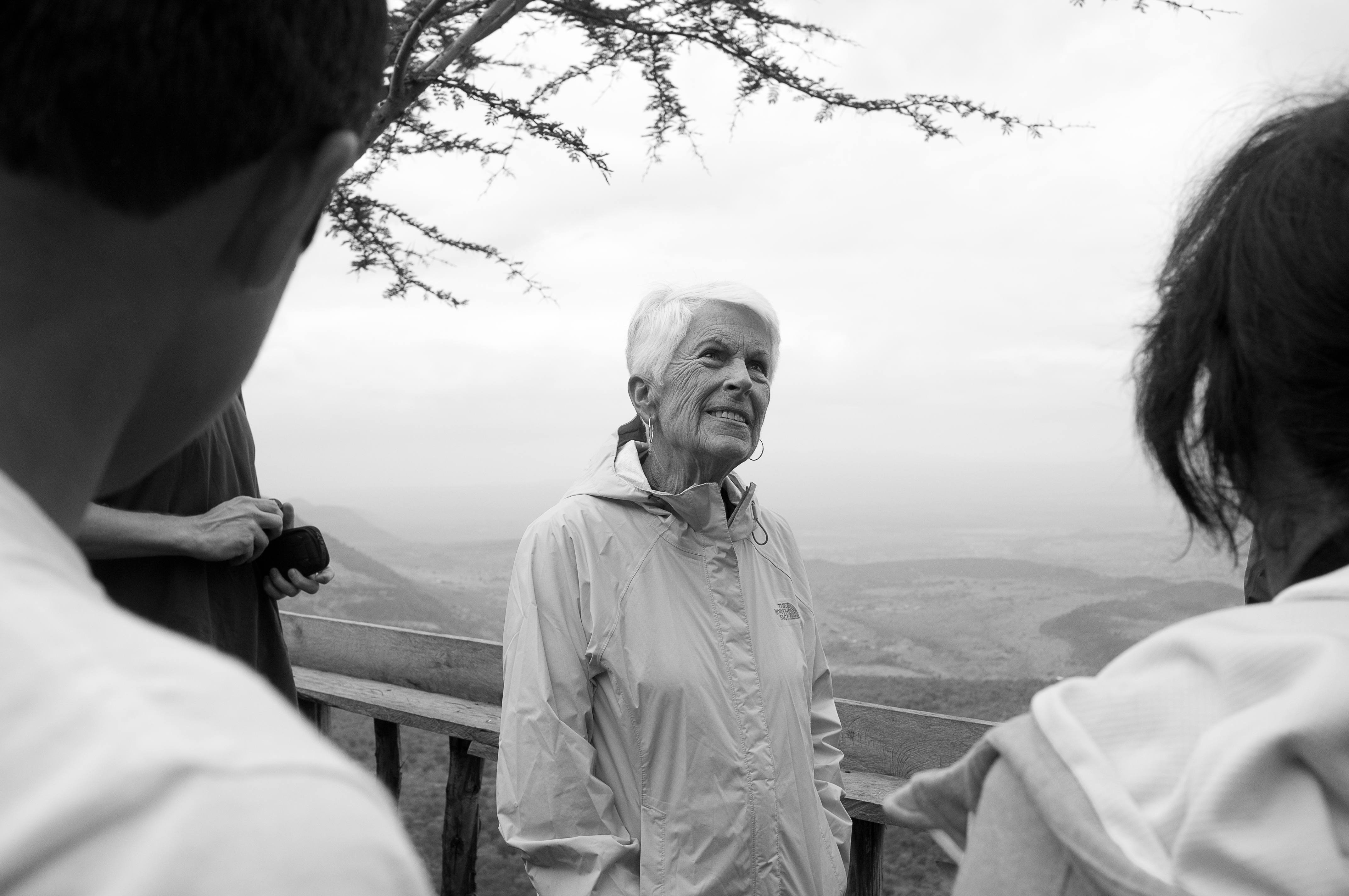
Jeff James_Tembea Na Mimi_2015_152When the rains subsided, we crawled out from beneath the tarp and began gathering survivors and gear. I worked extra hard to set up camp. I needed to warm up and I felt guilty for not carrying my weight and helping when the monsoon hit us. But what I’ve learned about groups and adventure challenges is that there are heroic moments for each person when a hidden strength is encountered, one not known before, tucked away somewhere behind the senses of panic and fear.  And then there are those vulnerable moments, when fatigue and dehydration have muddled your thoughts with waves of angst and poor decisions.  And so you must rely on others to help you survive.  The right group, one unified in a common goal and with a noble cause, allows for heroes to rise and fall like the tides, and the vulnerable to be carried in their fragile moments.

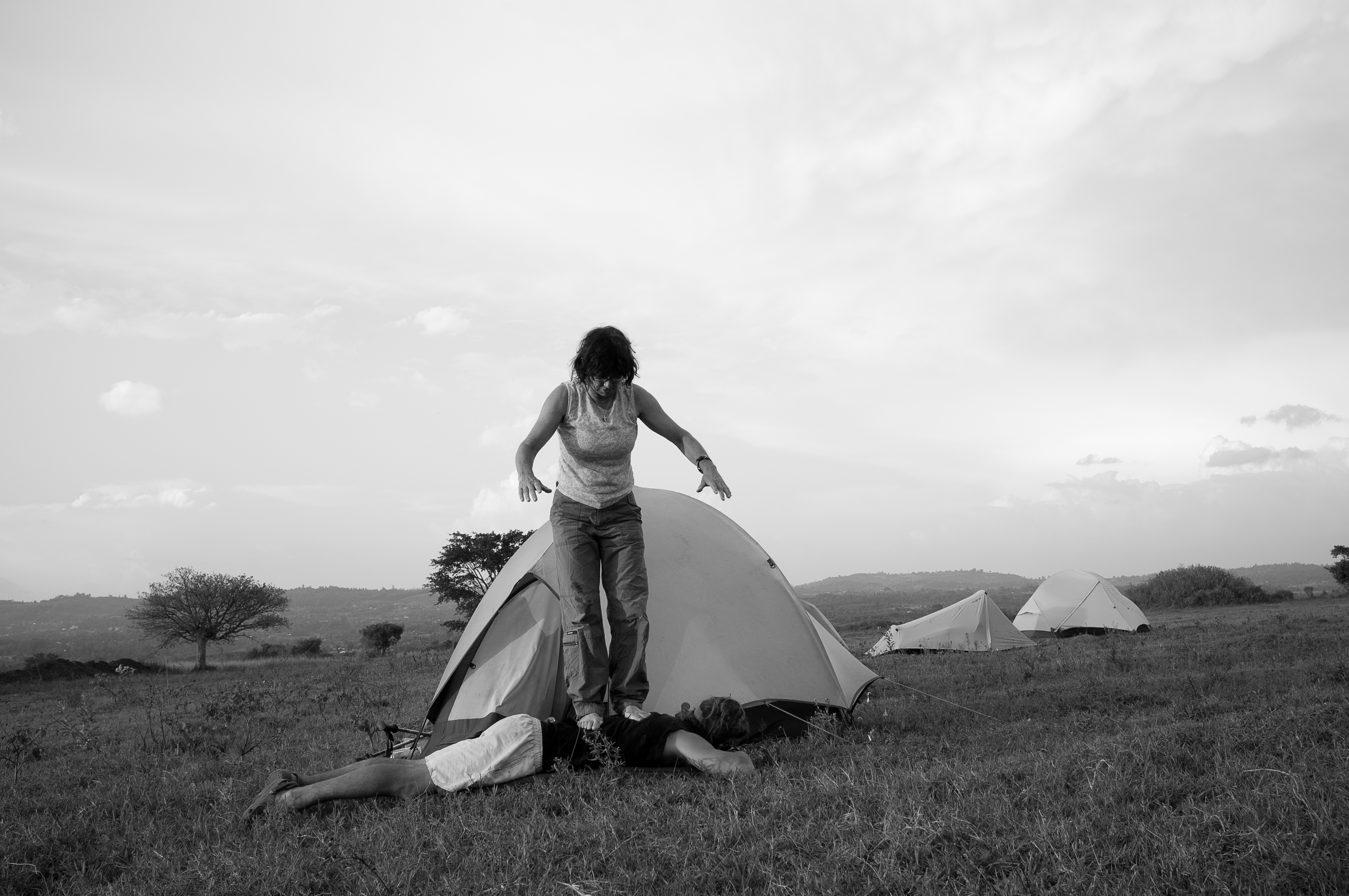
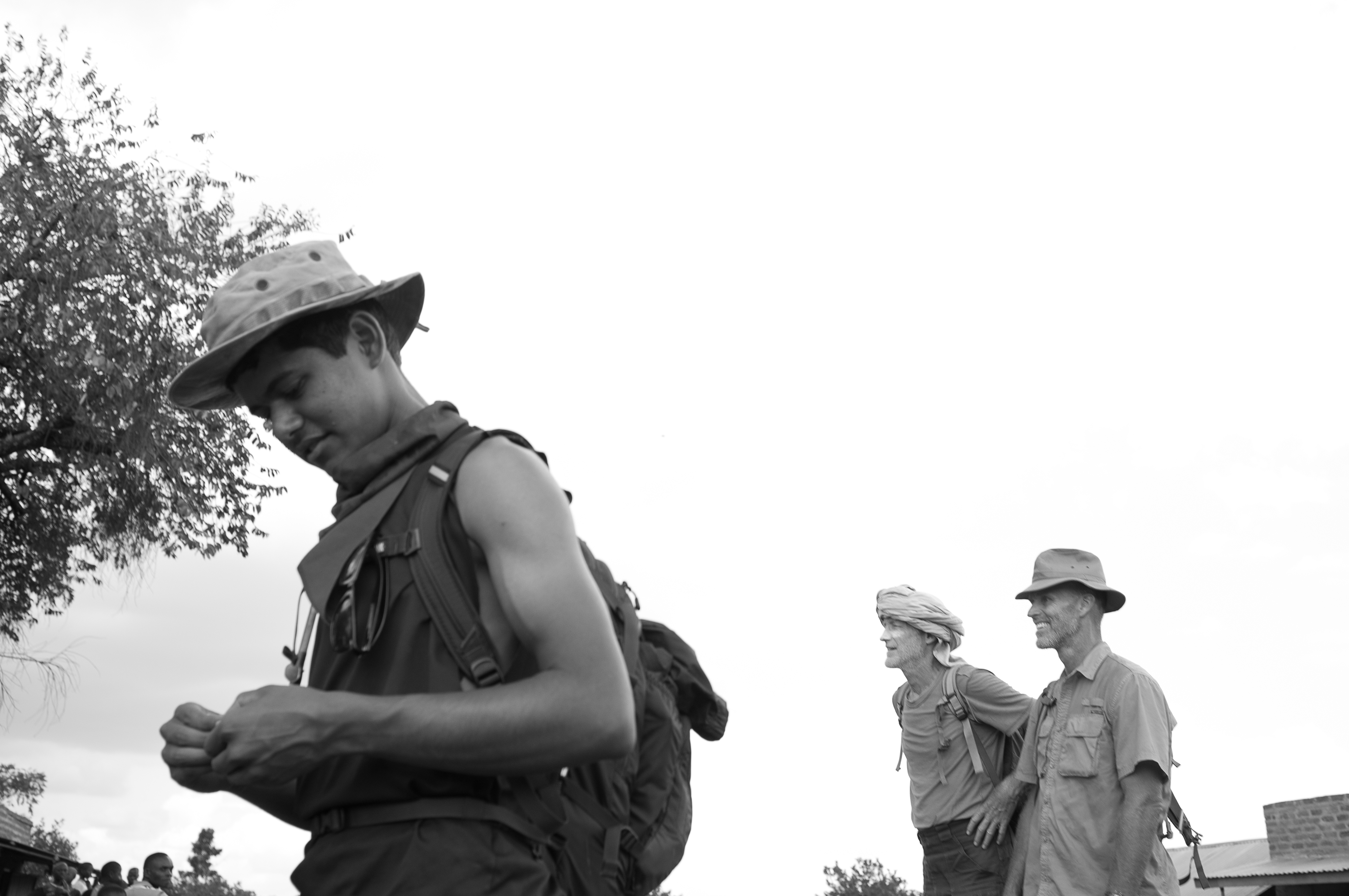
David seemed to ride the hero wave more often, however.  As I furiously erected my tent, trying to get the fly on before the rain returned, I looked around for David to see if he had a rock or something for pounding my tent stakes. There on the ground next to my tent was his pack, fully loaded, and his tent still unrolled.  Where did he go?  I then looked left and saw David and Michael hoisting Thea high into the air, like a patient on a bamboo stretcher.  She was flat on her back being placed feet first into her tent, a cocoon of dry warmth. I had not seen her since under the thorn tree, looking frail and cold through layers of gray rain.  But the cold had soaked in deeper and Thea was now in danger of hypothermia. Michael and David were saving her life. I flinched to help, but by the time I got there the job, once again, was done. Thea was tucked between a mound of sleeping bags and Michael was working on warming her feet and legs. David stood up,  an unassuming superman, unshaven and in safari clothes, looked once around the camp, a leader scanning for loose ends, and seeing none, headed over to set up his tent. He was the last man standing.

Jeff James_Tembea Na Mimi_2015_304

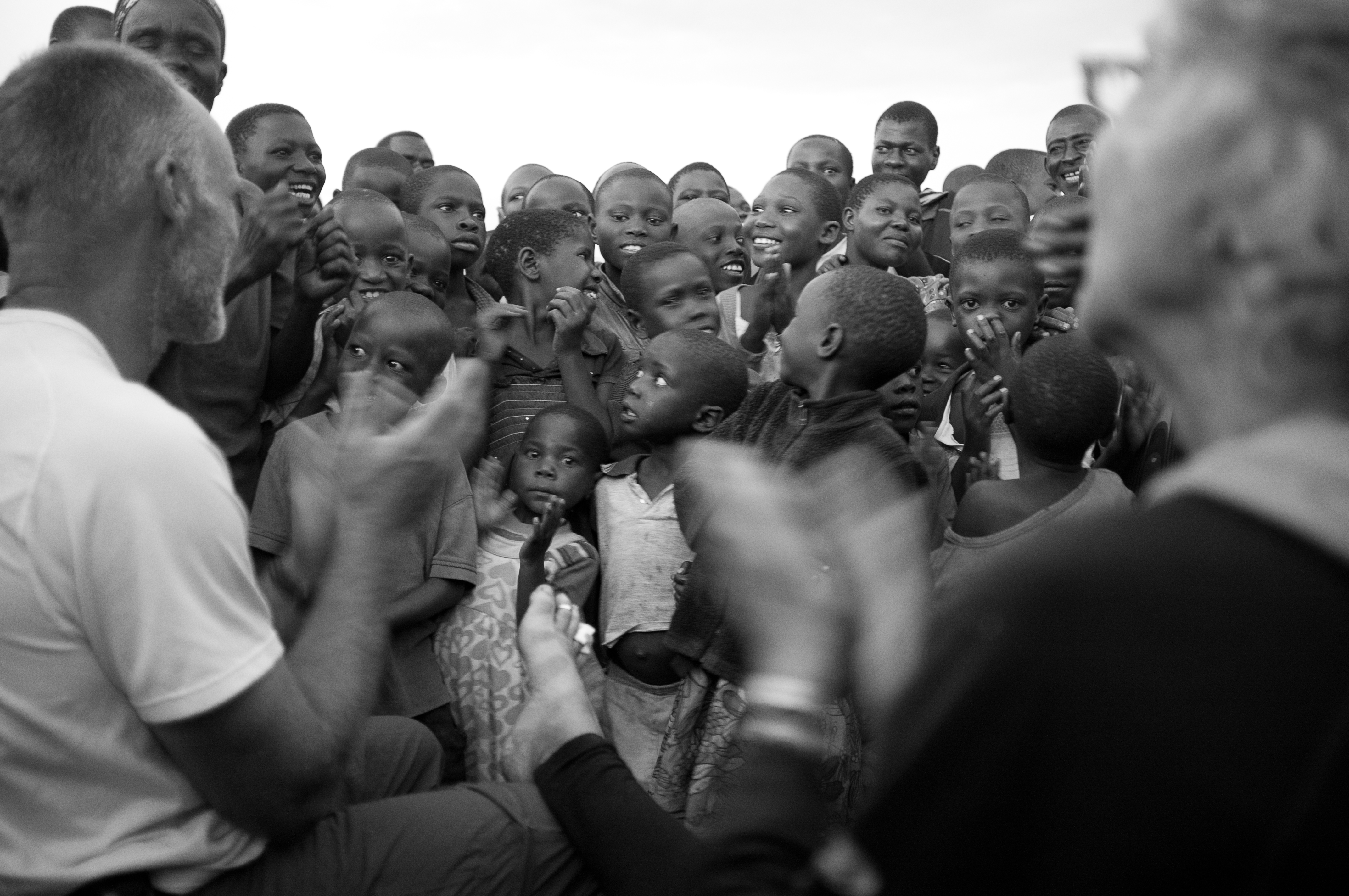
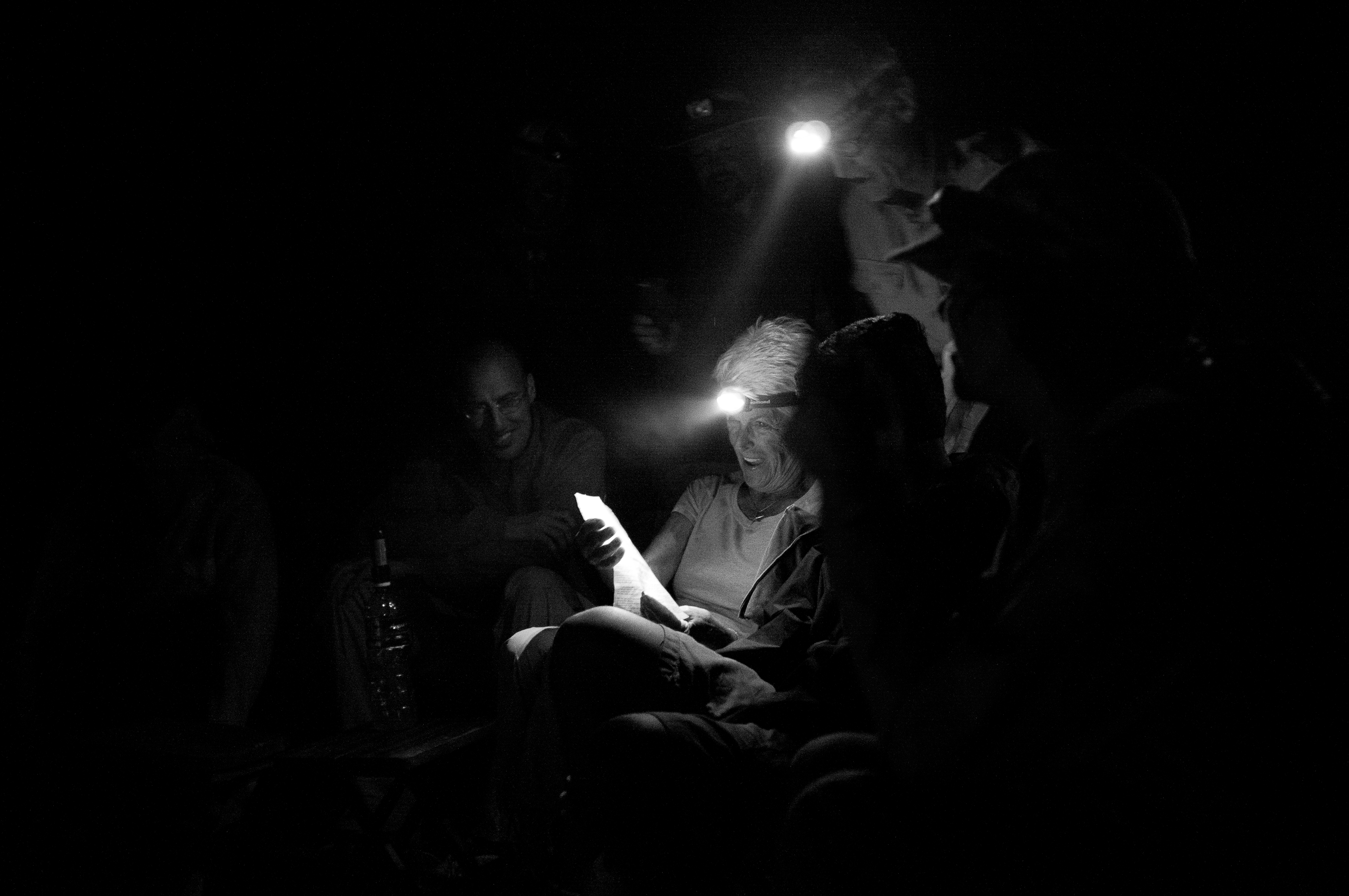
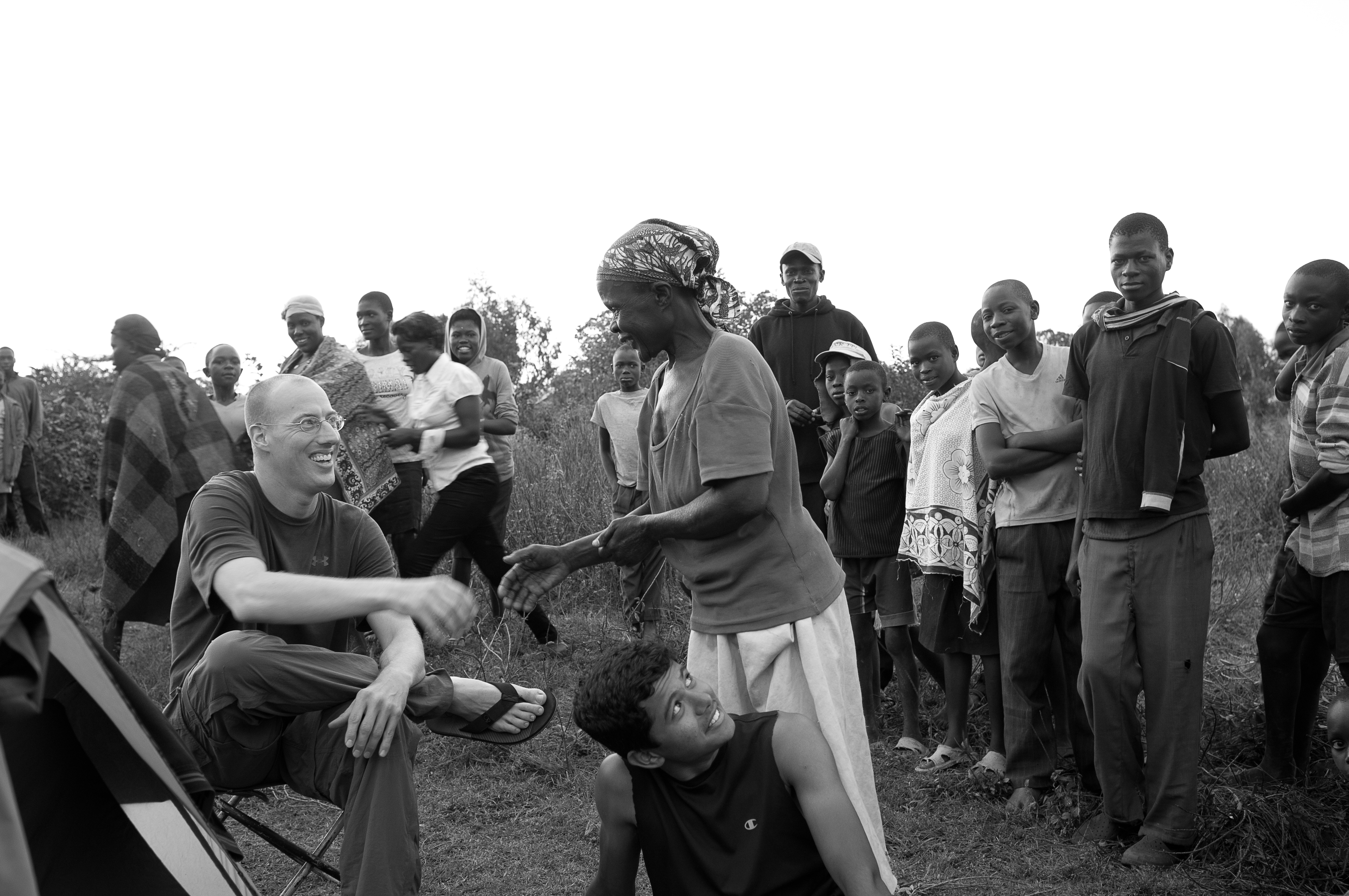
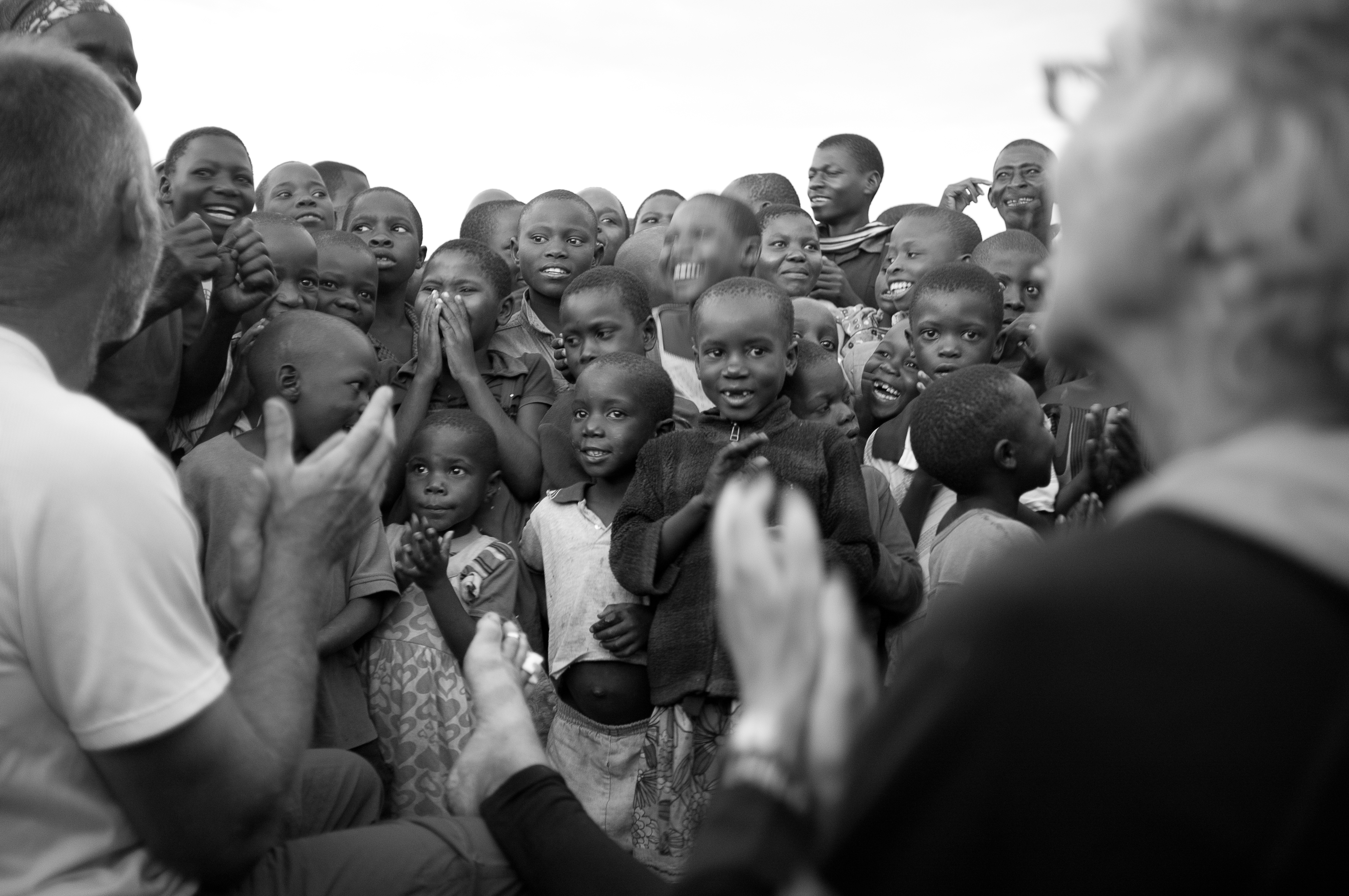
The rain never returned, and because it’s Africa, the sun came out and warmed our spirits and dried our clothes.  Later that afternoon, I bought a half pint of moonshine from a local brewer, “chang’aa” as it’s called, and we sipped it in a circle and sang songs with dozens of children and villagers, the same that laughed and mocked us as we battled nature earlier – some more valiantly than others. Now the laughter was different; it was no longer a mocking laugh at our comedy of errors, but rather we laughed communally – some celebrating survival, some reveling in triumph, others in marvel over God’s good humor and grace … and some of us may have just been a little tipsy.

Looking back it probably would have been best to wear my rain jacket rather than give it to my camera.  It was a poor decision, sacrificing self for art.   But if I had chosen differently, worn my jacket and, like the heroes of that afternoon, battled beasts and nature for the common good, I would have missed that vantage point of witnessing David from under the thorn tree. And I would have missed the life-saving gestures of love given by a brother, offering warmth where there was none.  And I would have missed being able to sip moonshine, proudly knowing that my older brother is still my hero.

And I found myself wondering, as we walked to end poverty, if what communities really need is a unifying noble cause, a common goal, and a culture that allows heroes to rise and fall with the tides, providing care for the vulnerable in their weakest moments.

Jeff James_Tembea Na Mimi_2015_296
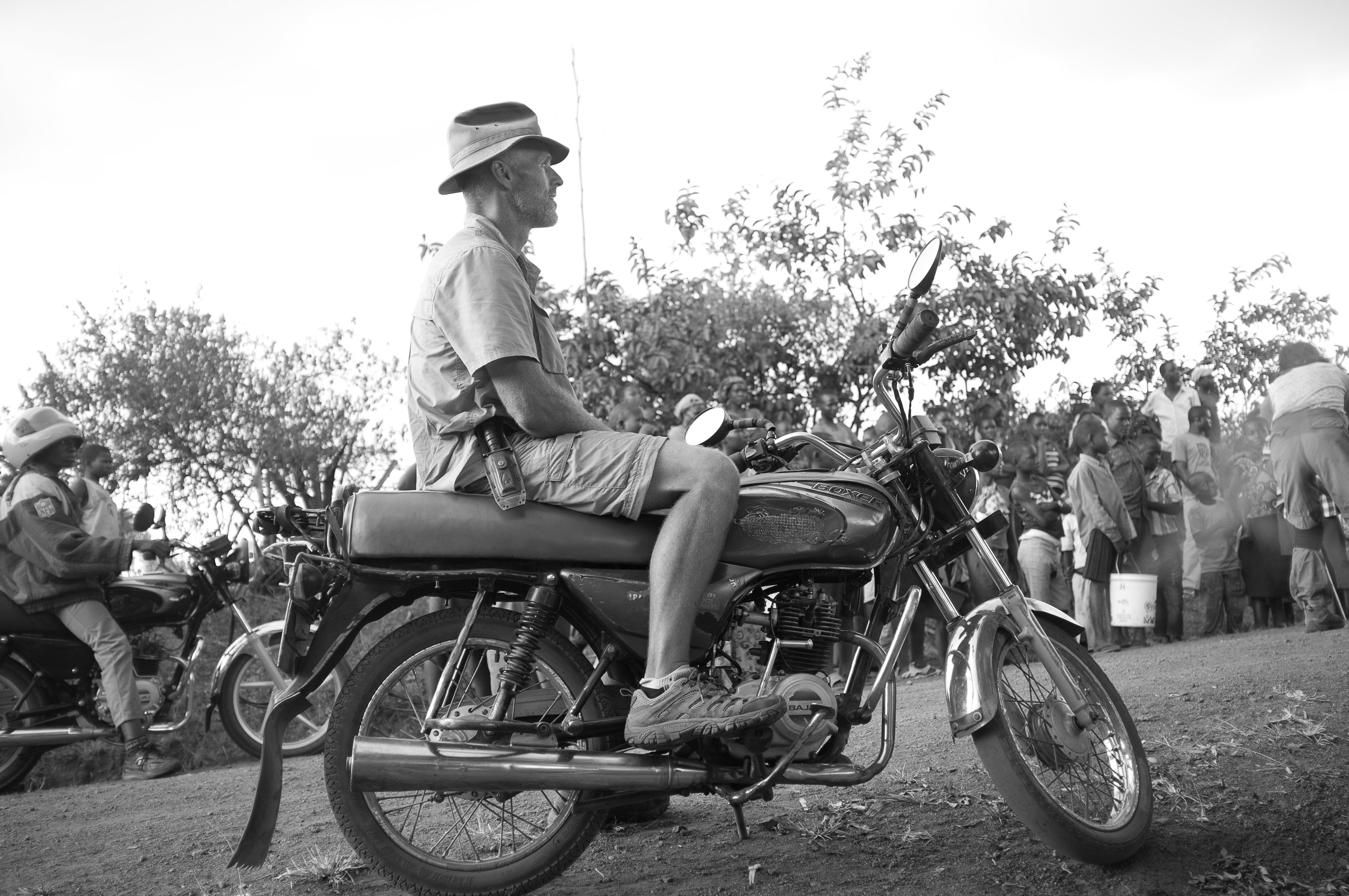
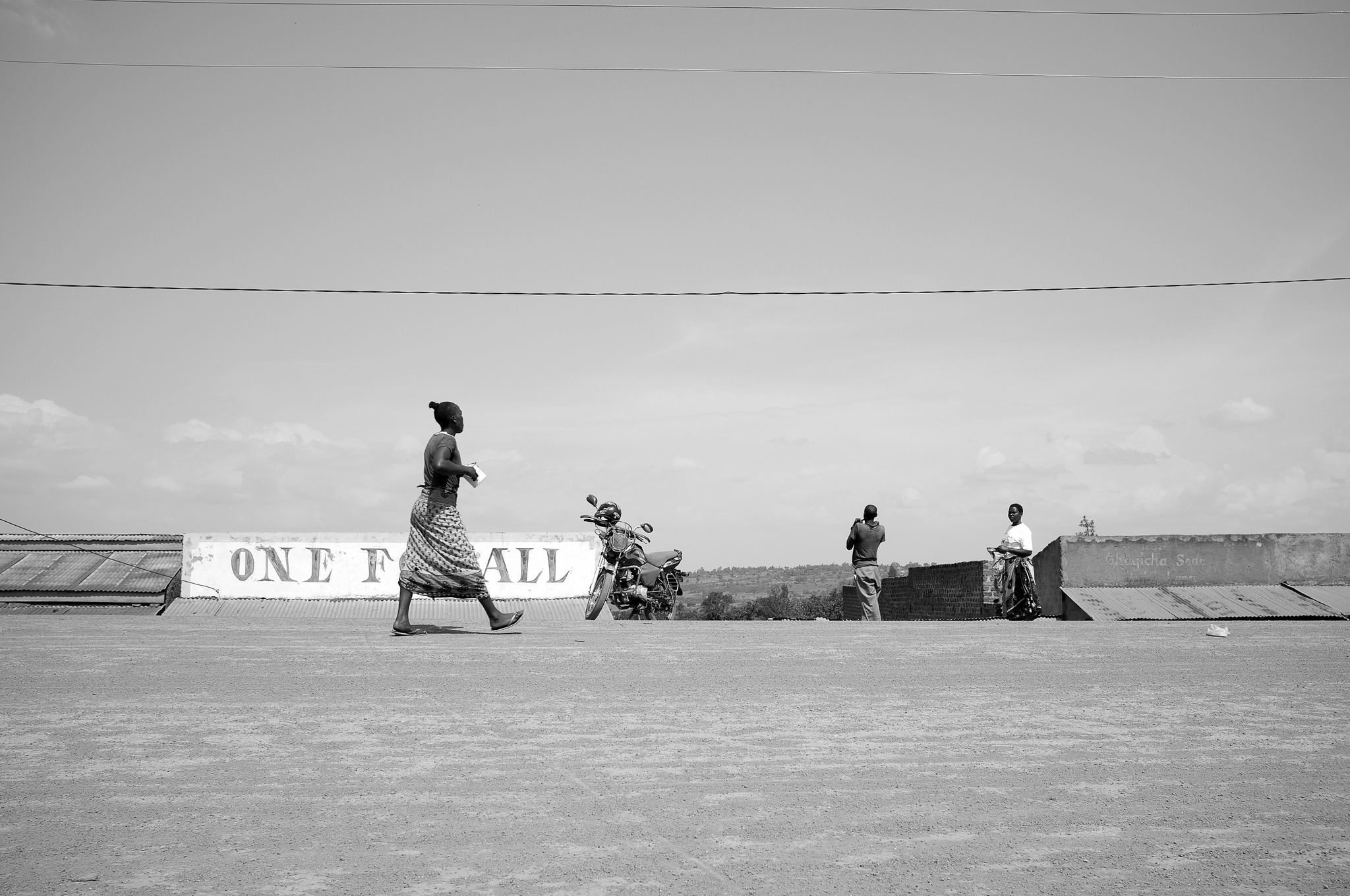
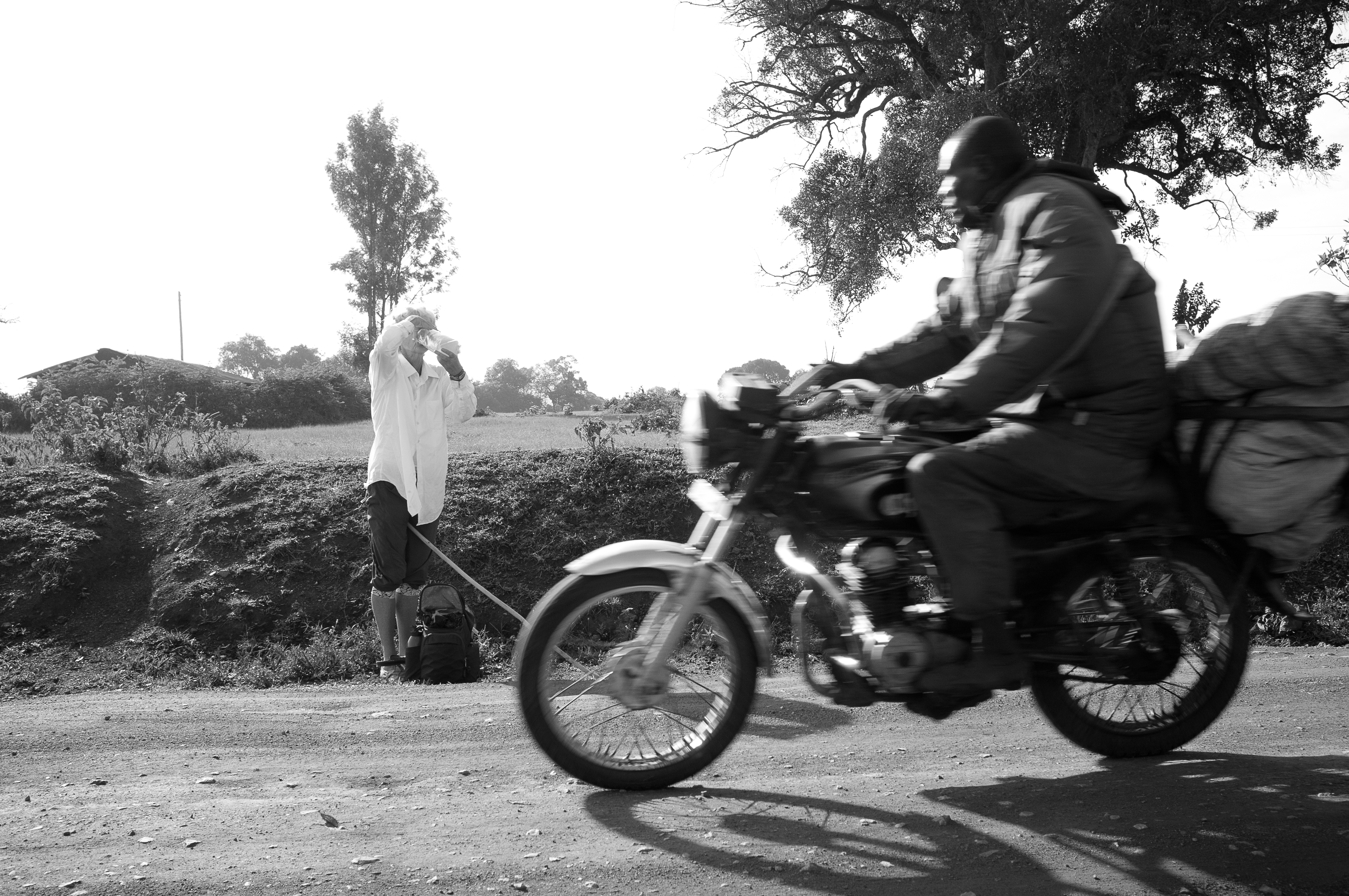
A parked “piki-piki” makes for a good seat.
Jeff James_Tembea Na Mimi_2015_109
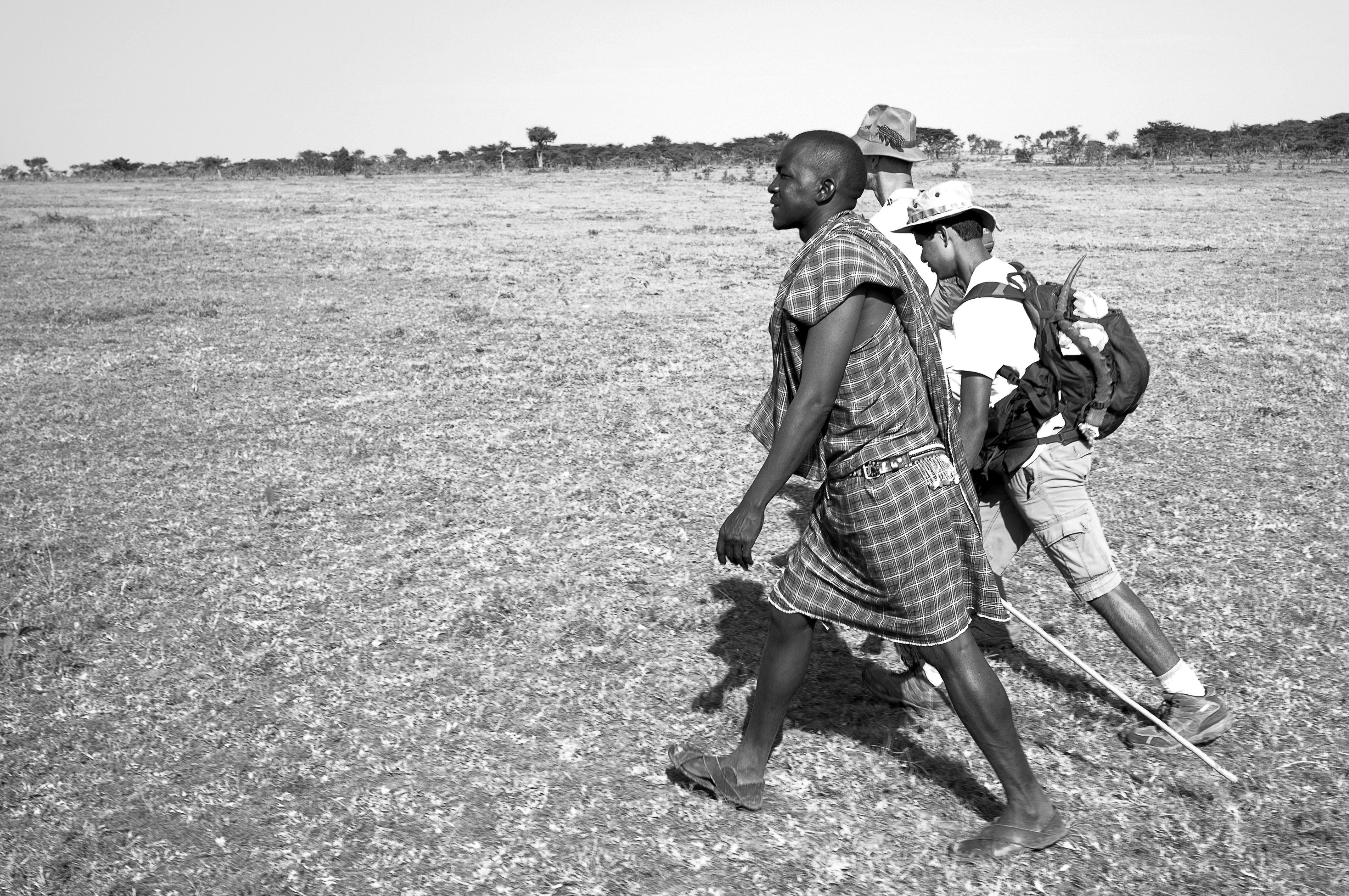
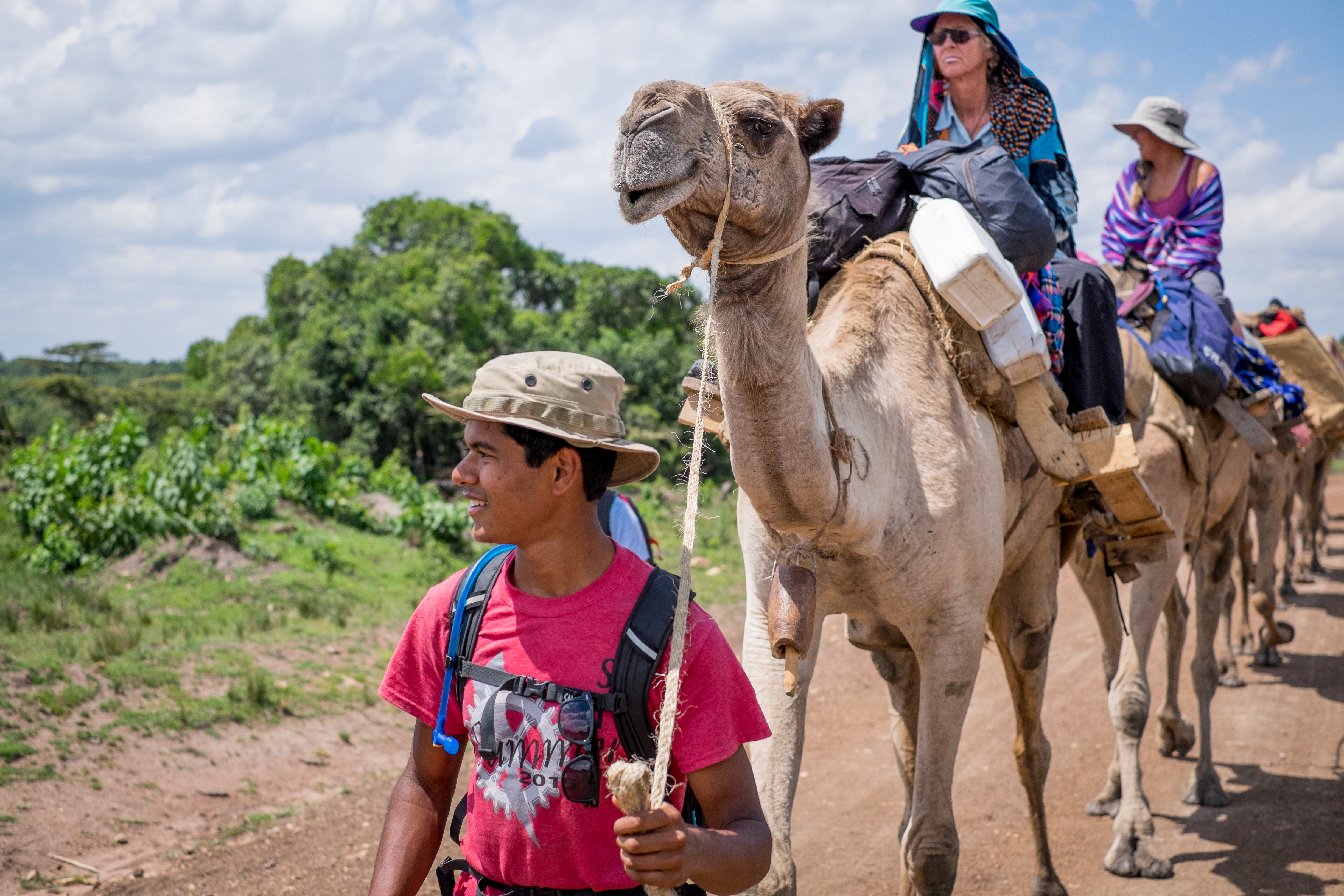
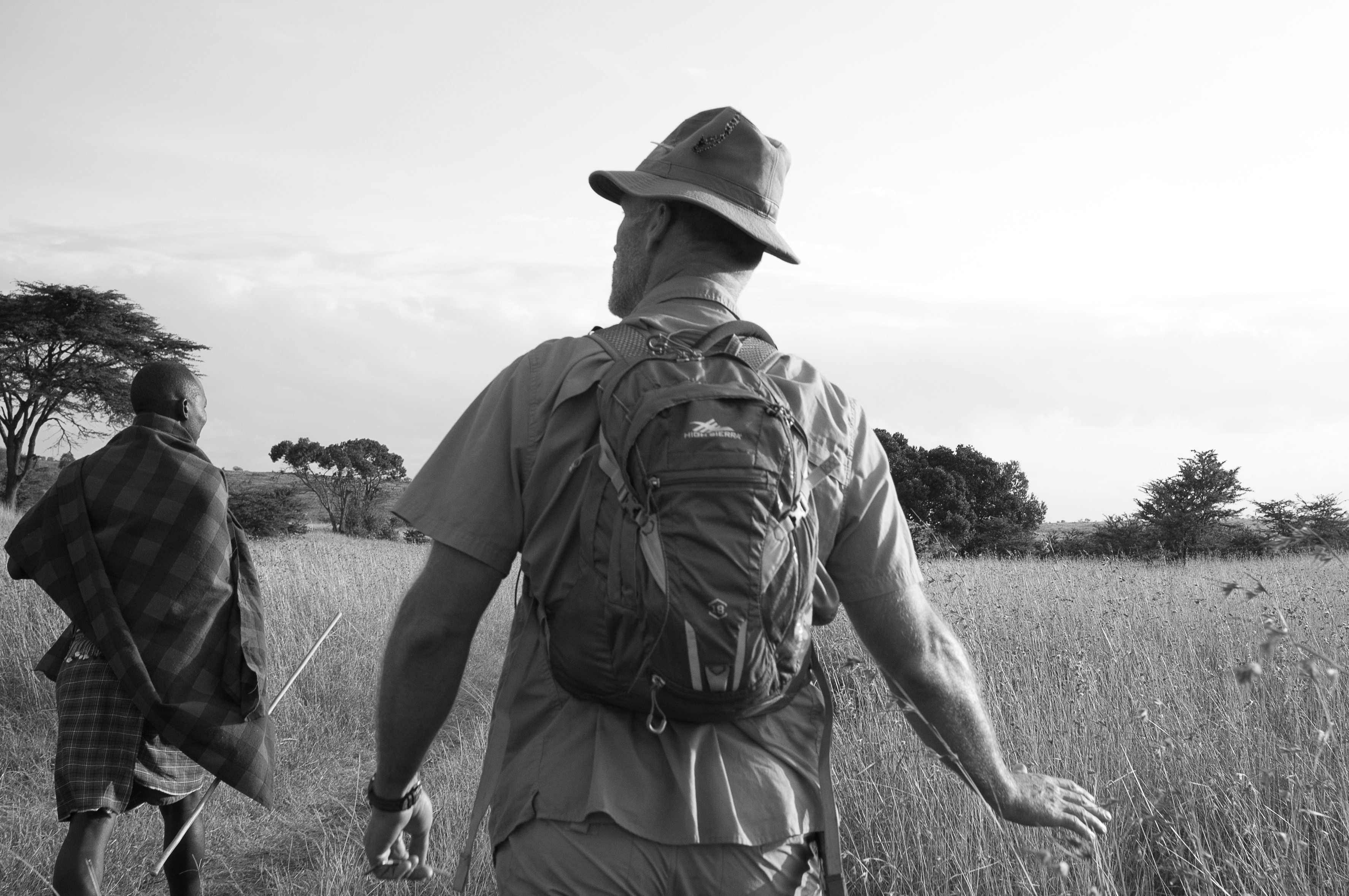
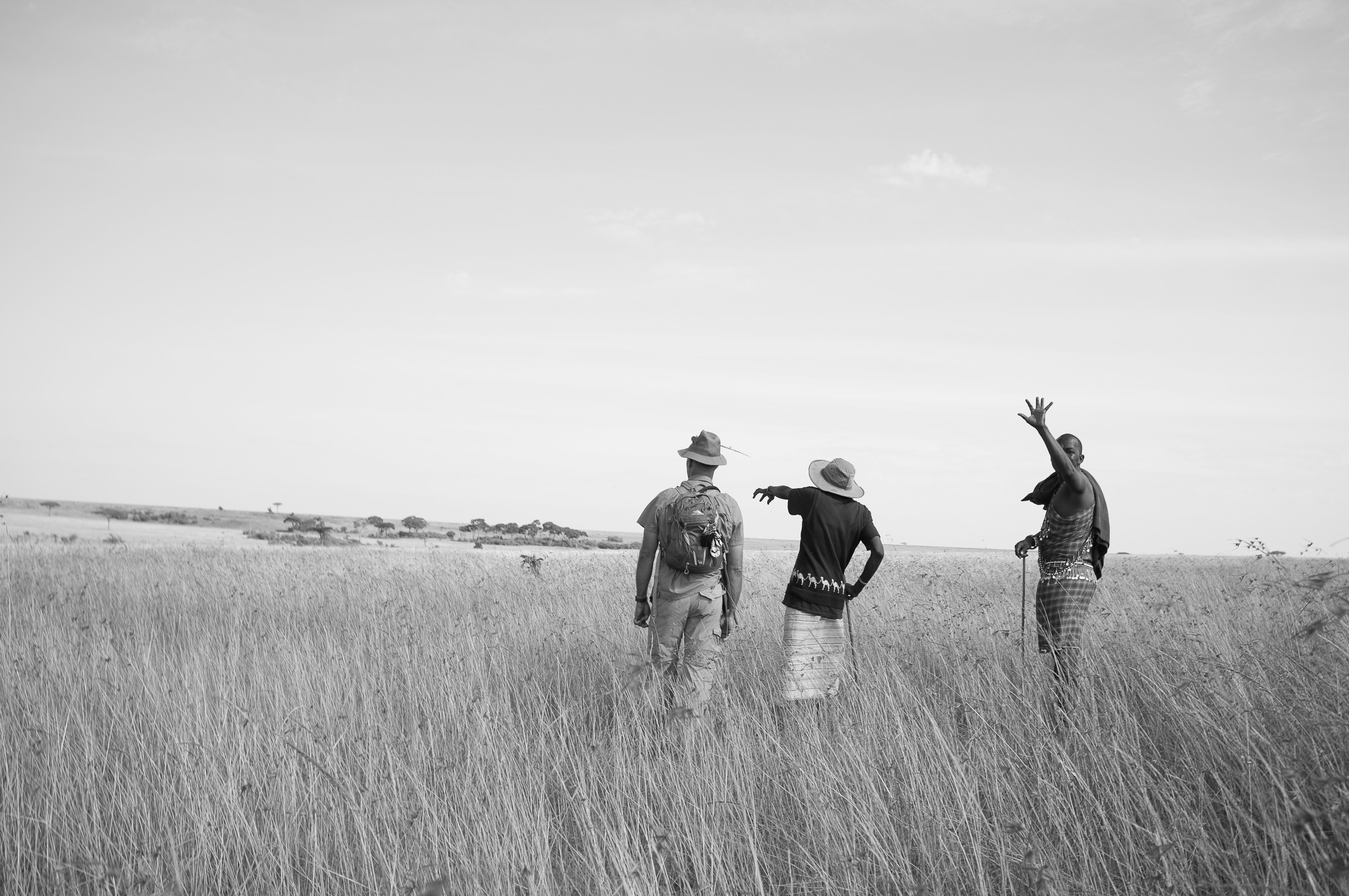
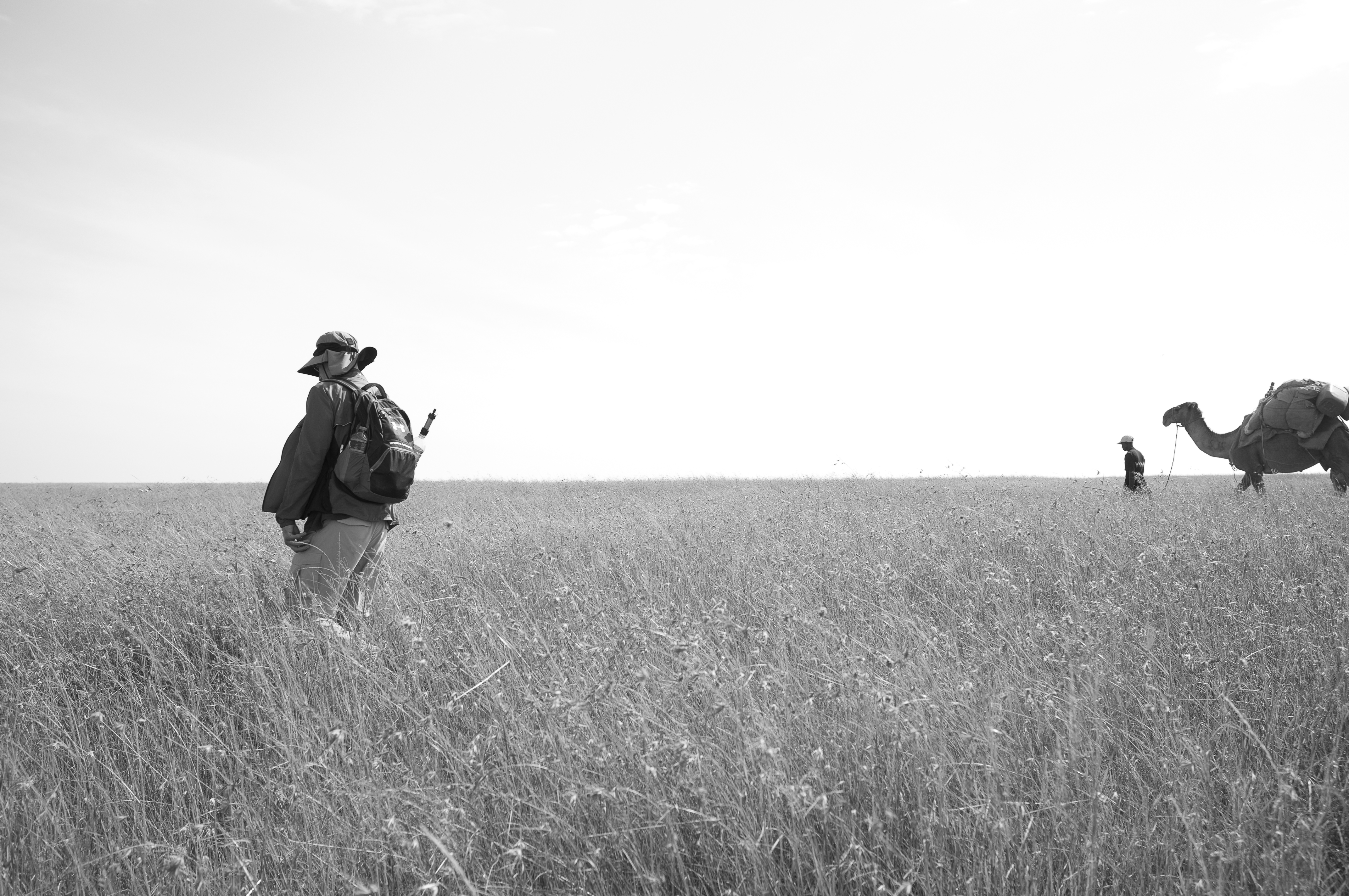
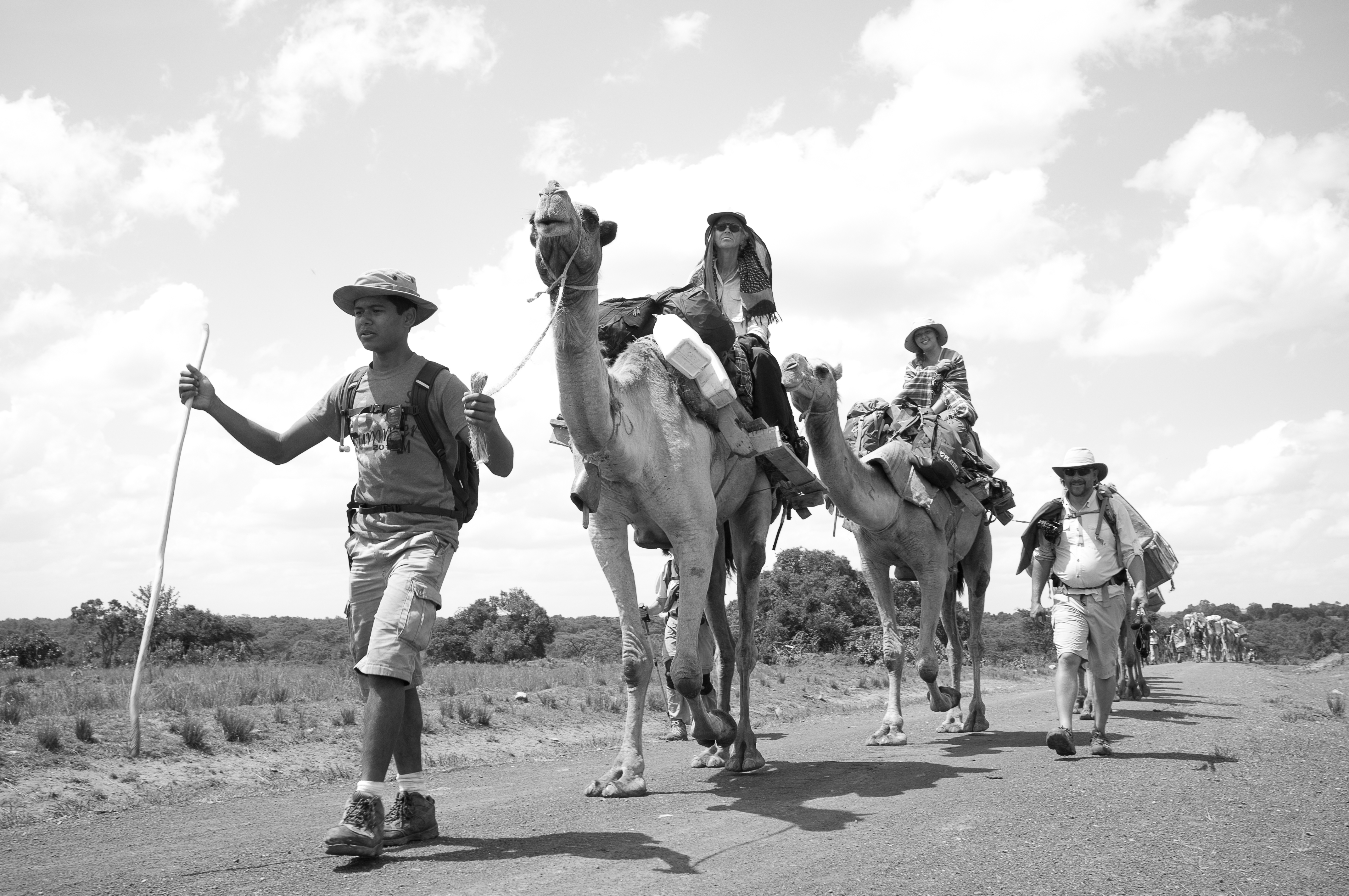
David and James lead us through savanna land in the north Mara conservancy.
Jeff James_Tembea Na Mimi_2015_227
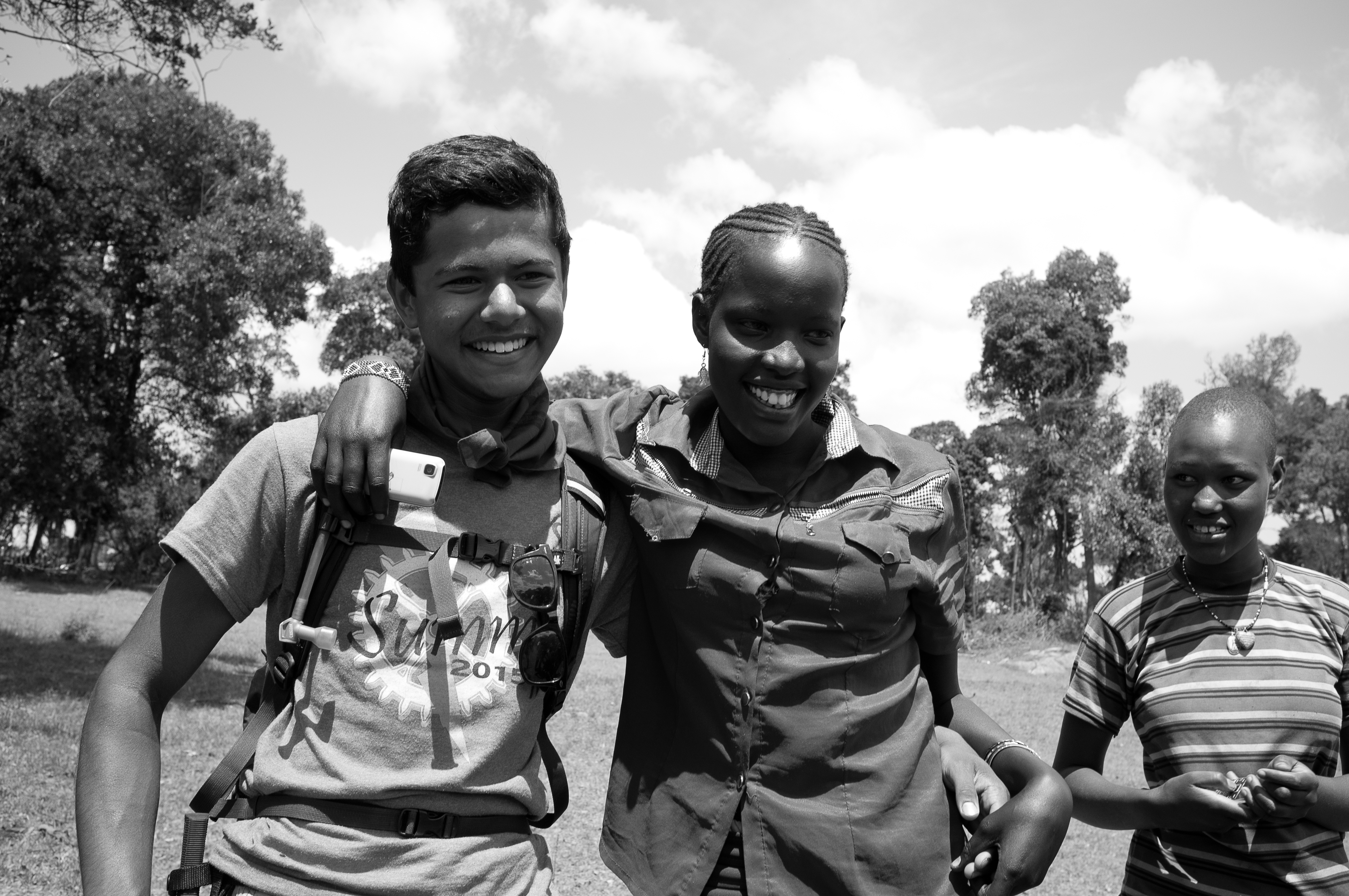
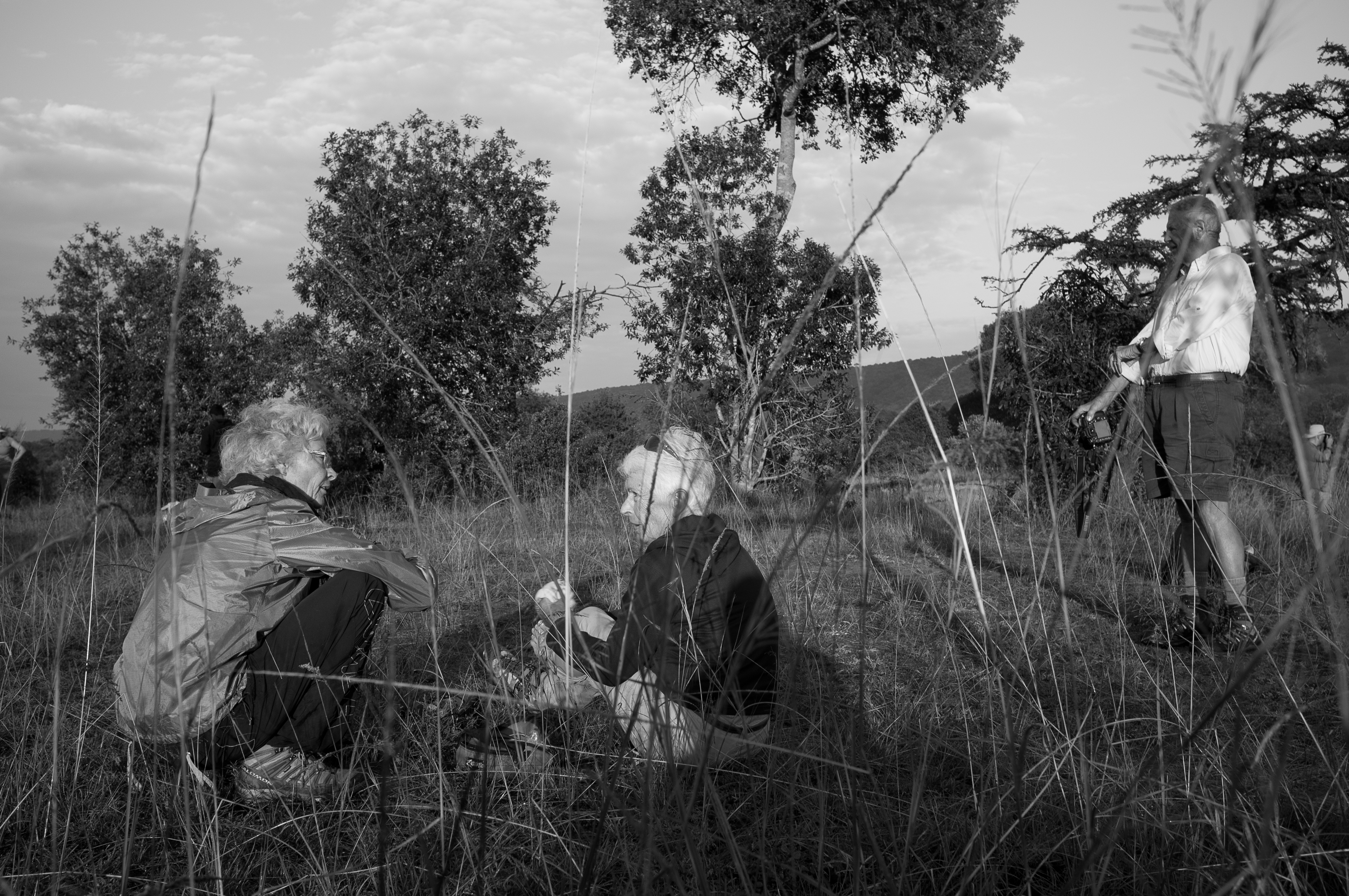
At rest along the road, Amanda, David, and Robbie.
Jeff James_Tembea Na Mimi_2015_278
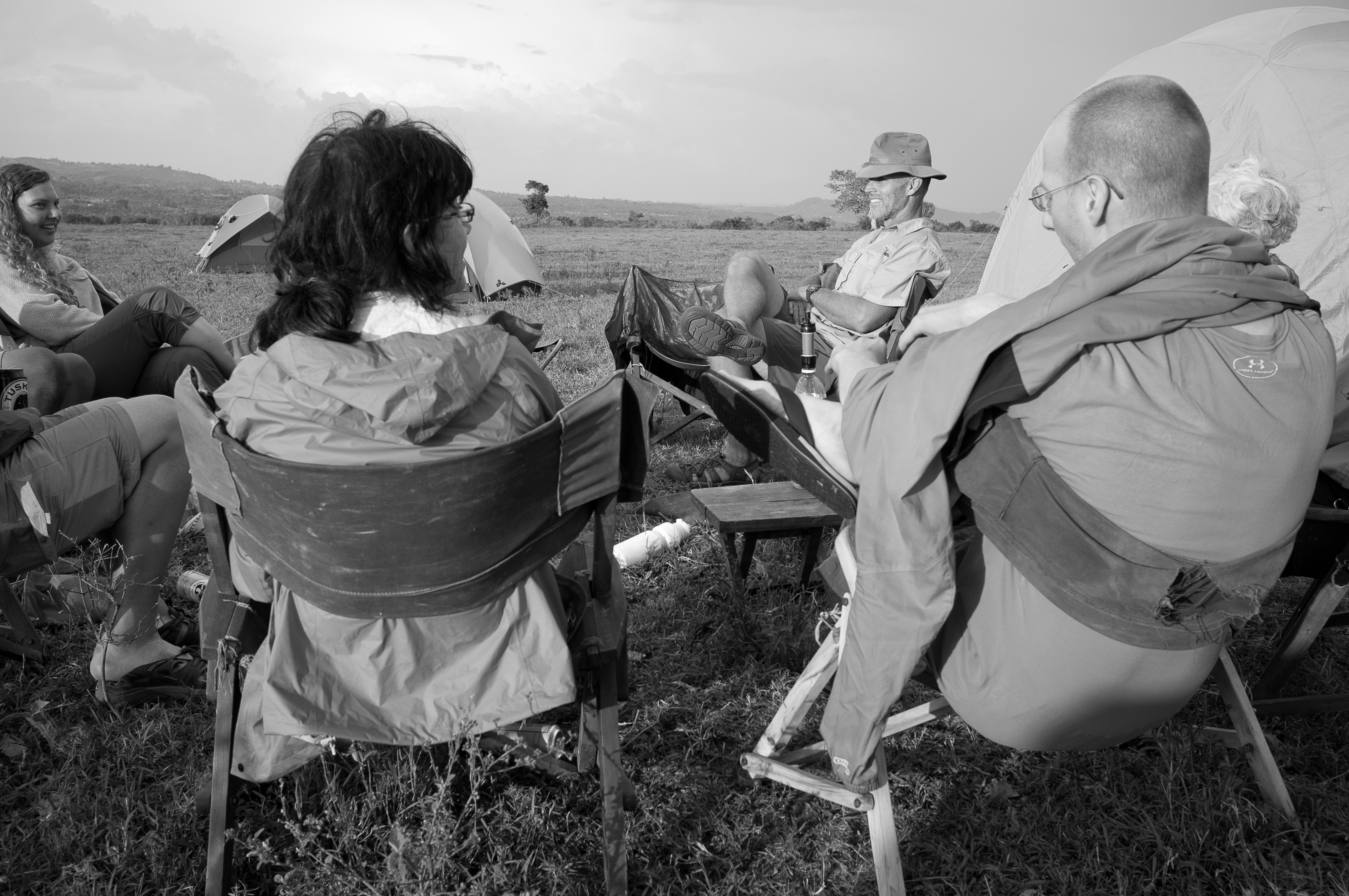
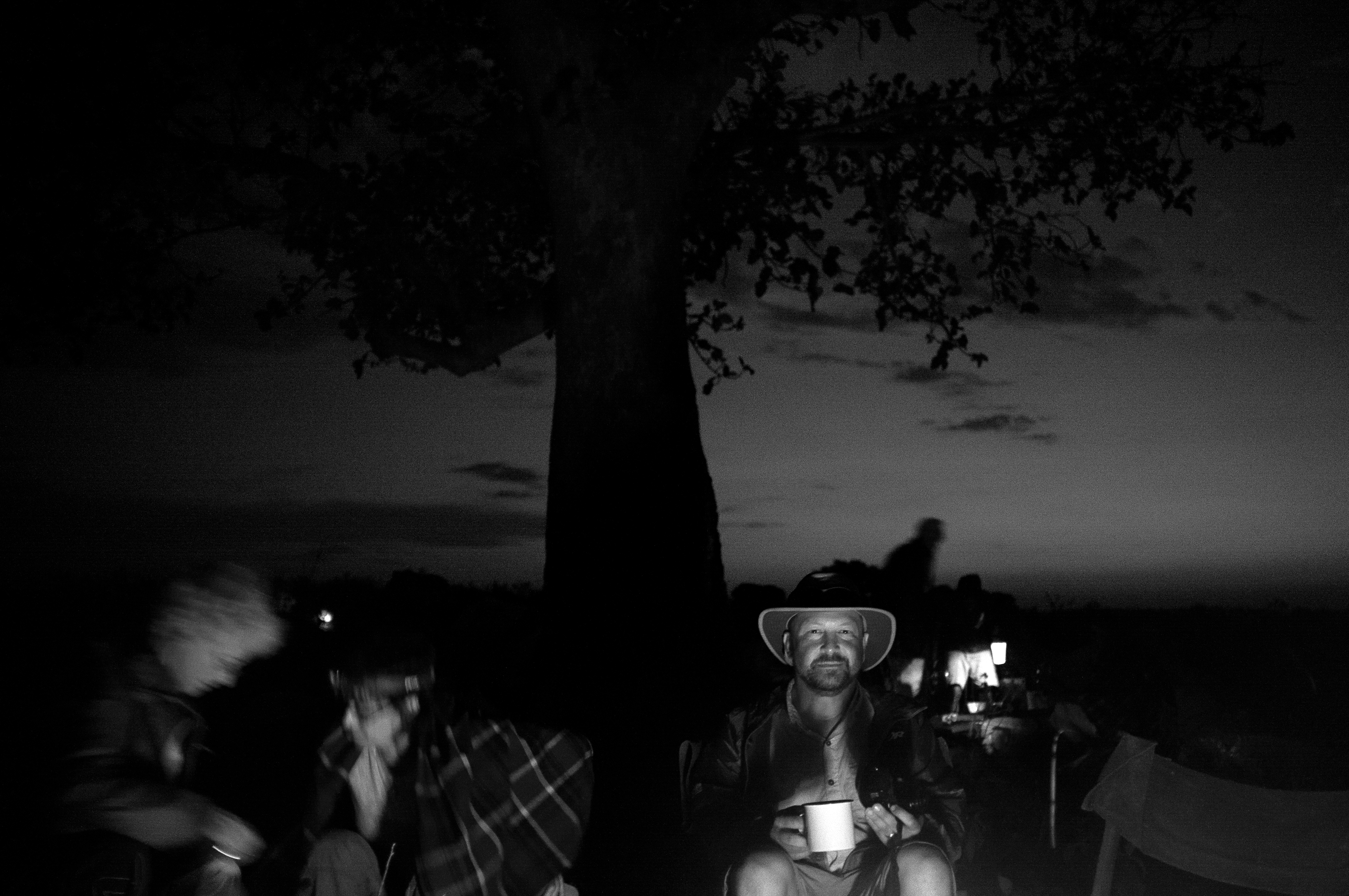
Around camp on the Migori airstrip.
Jeff James_Tembea Na Mimi_2015_313
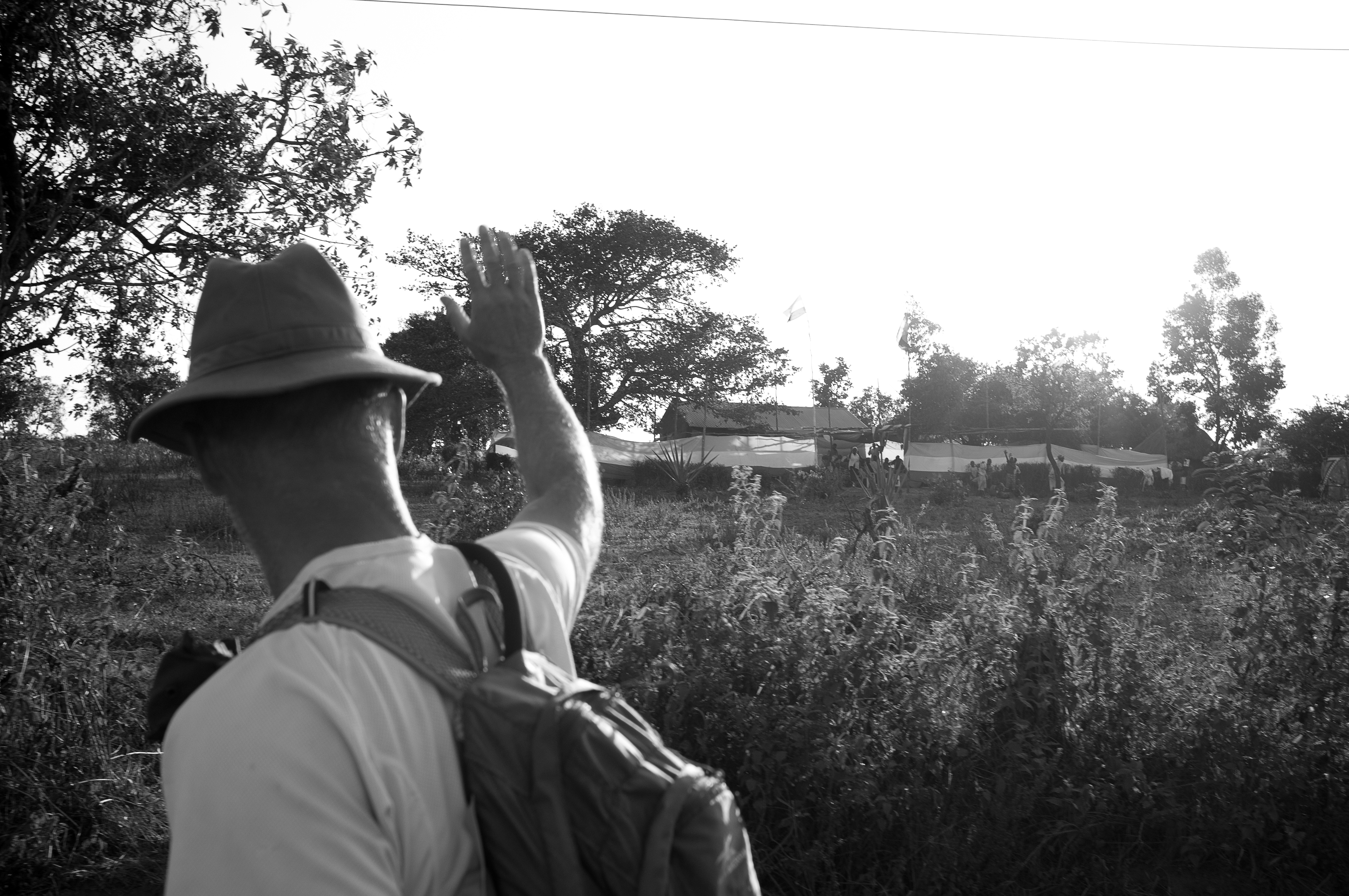
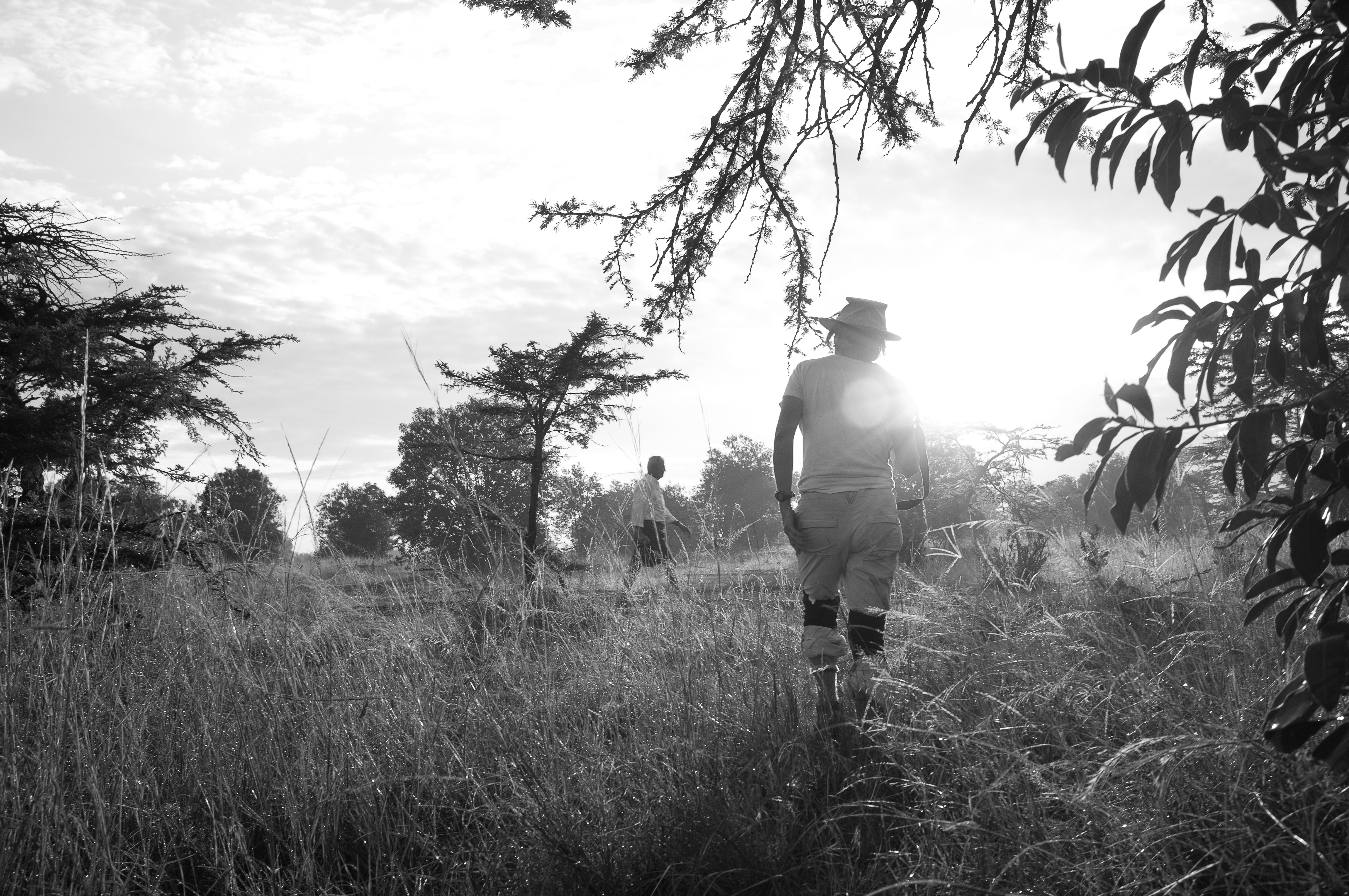
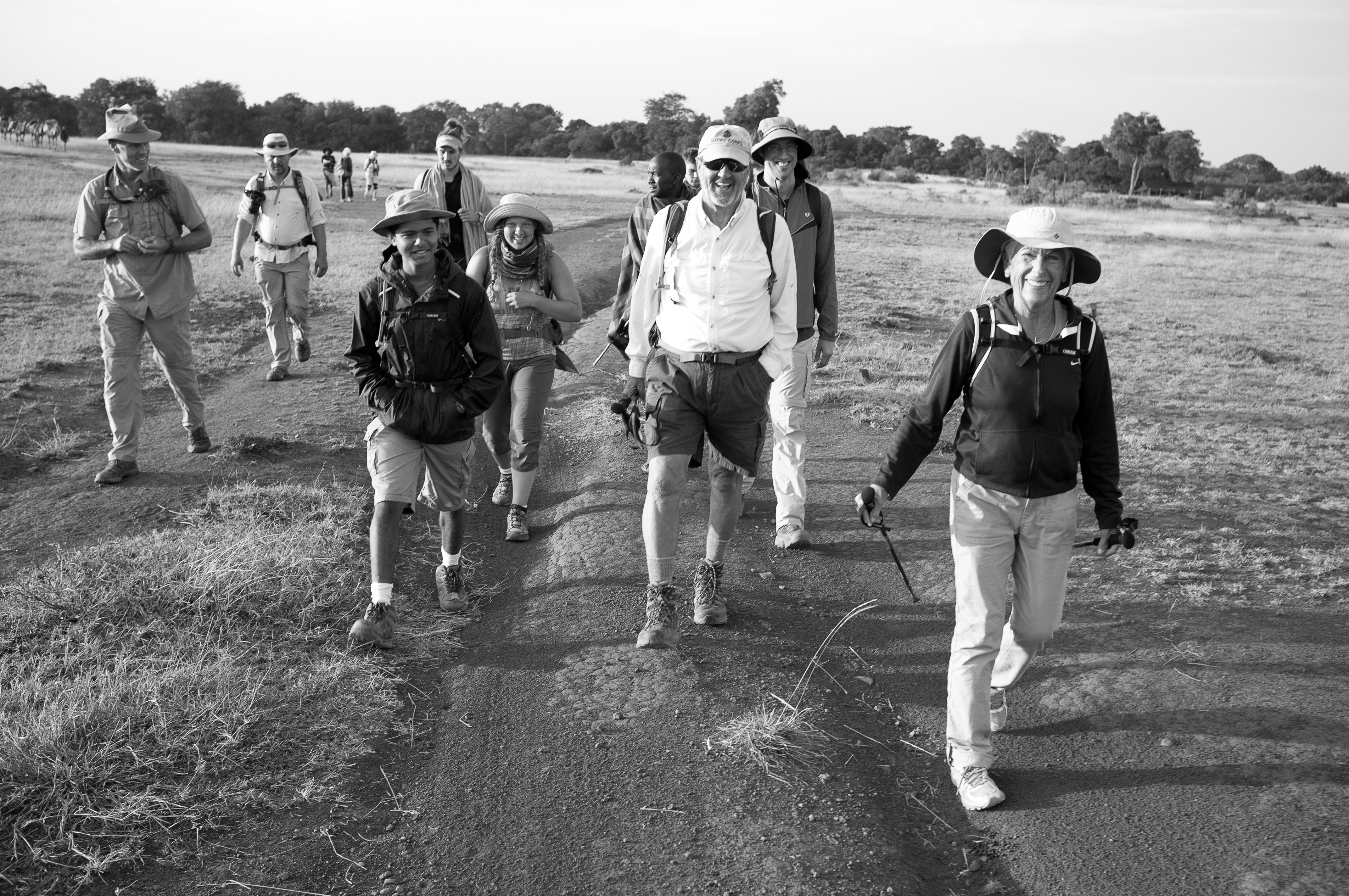
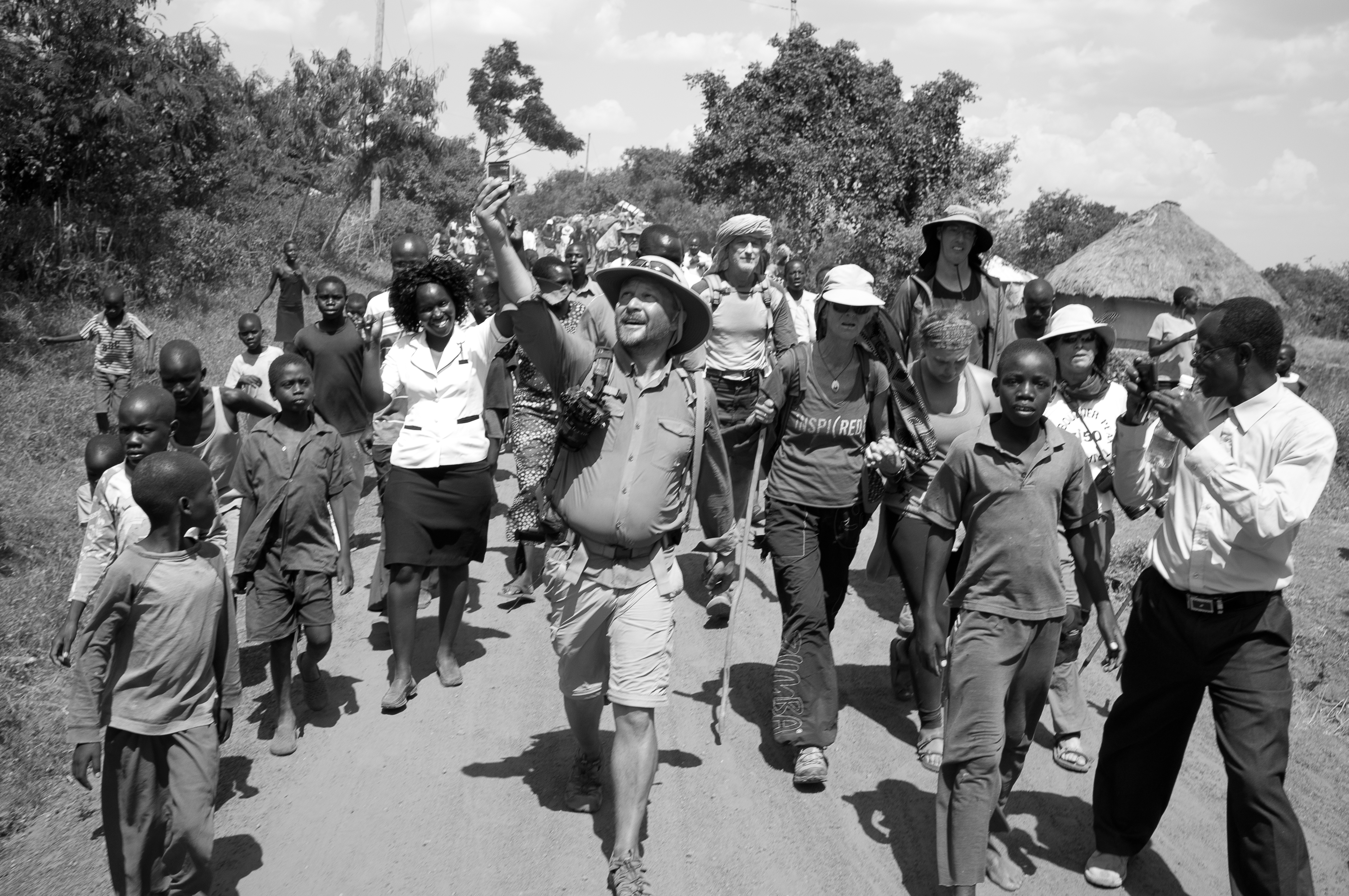
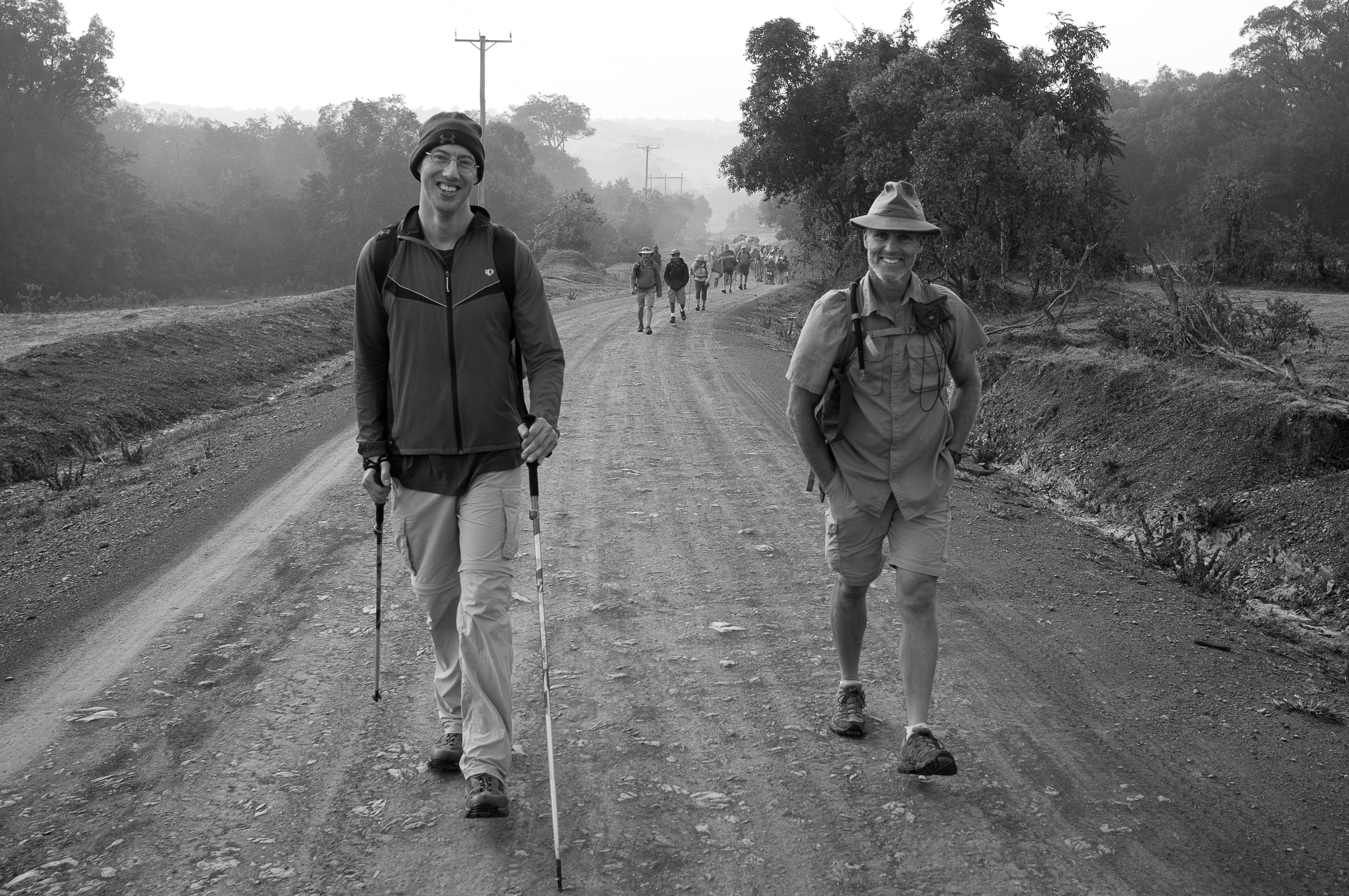
David greets the day and villagers with a friendly wave as we embark on our final day of walking.
Jeff James_Tembea Na Mimi_2015_095
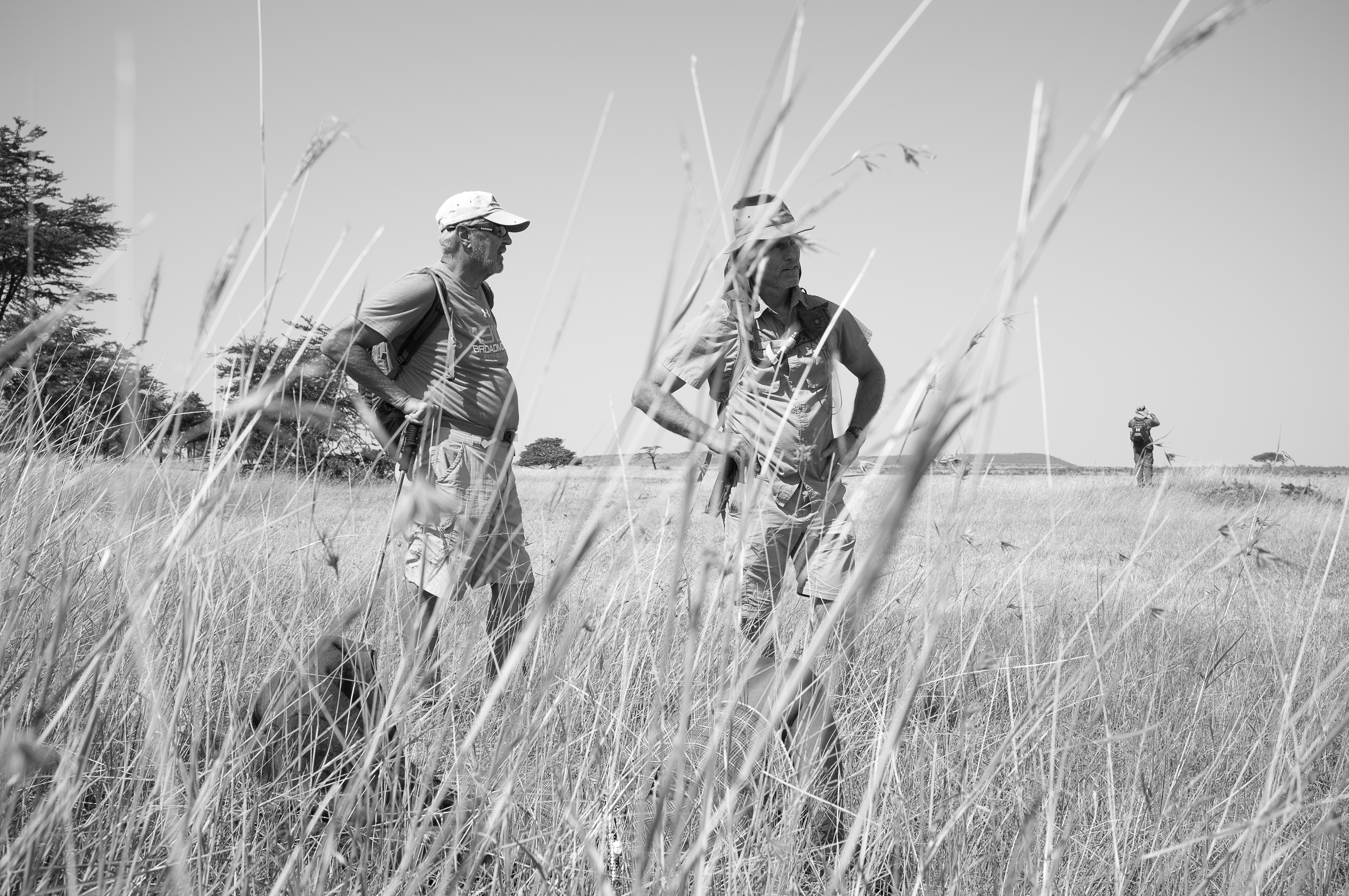
Peter and David at rest in the Mara.
Jeff James_Tembea Na Mimi_2015_048
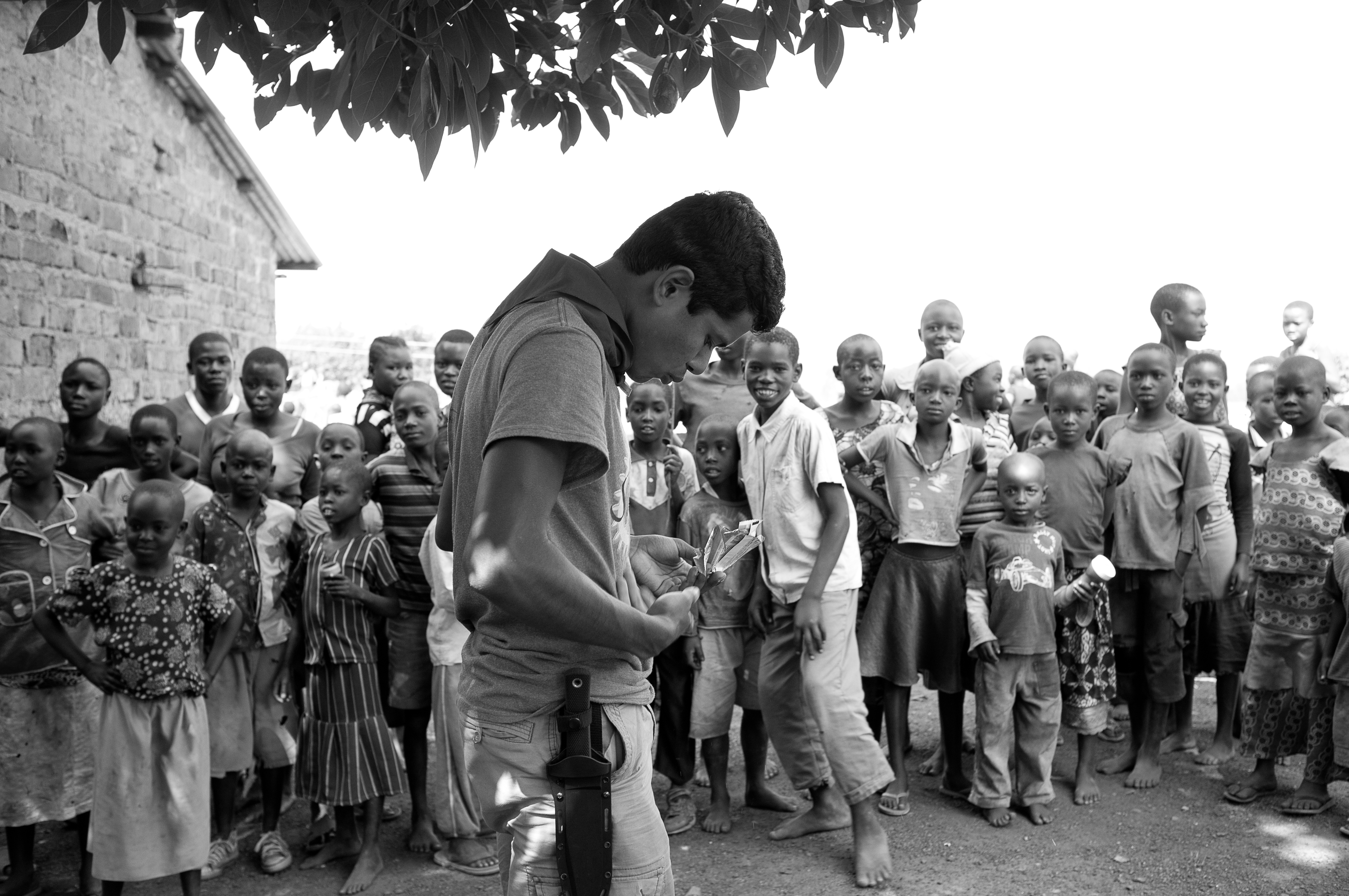
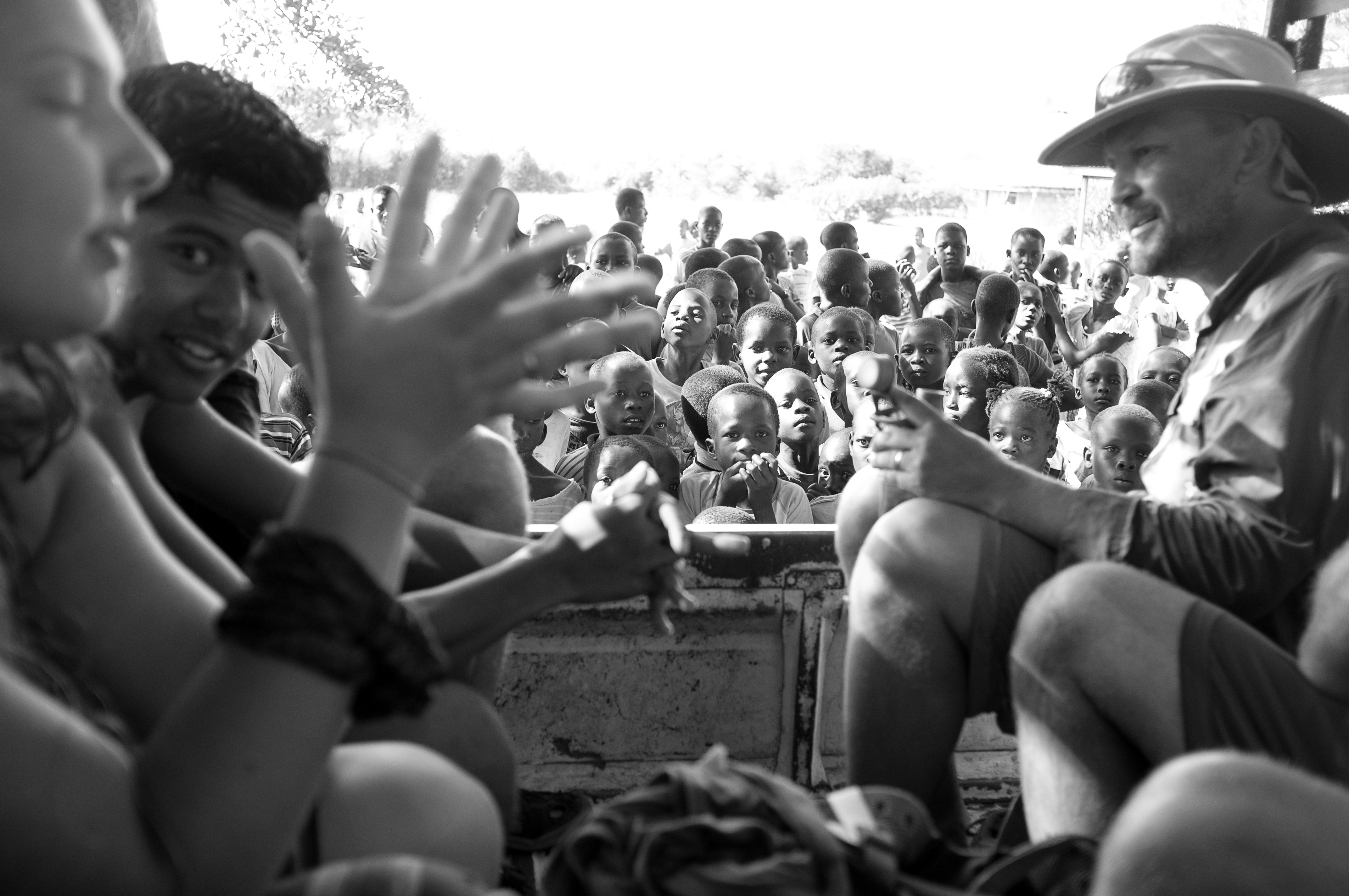
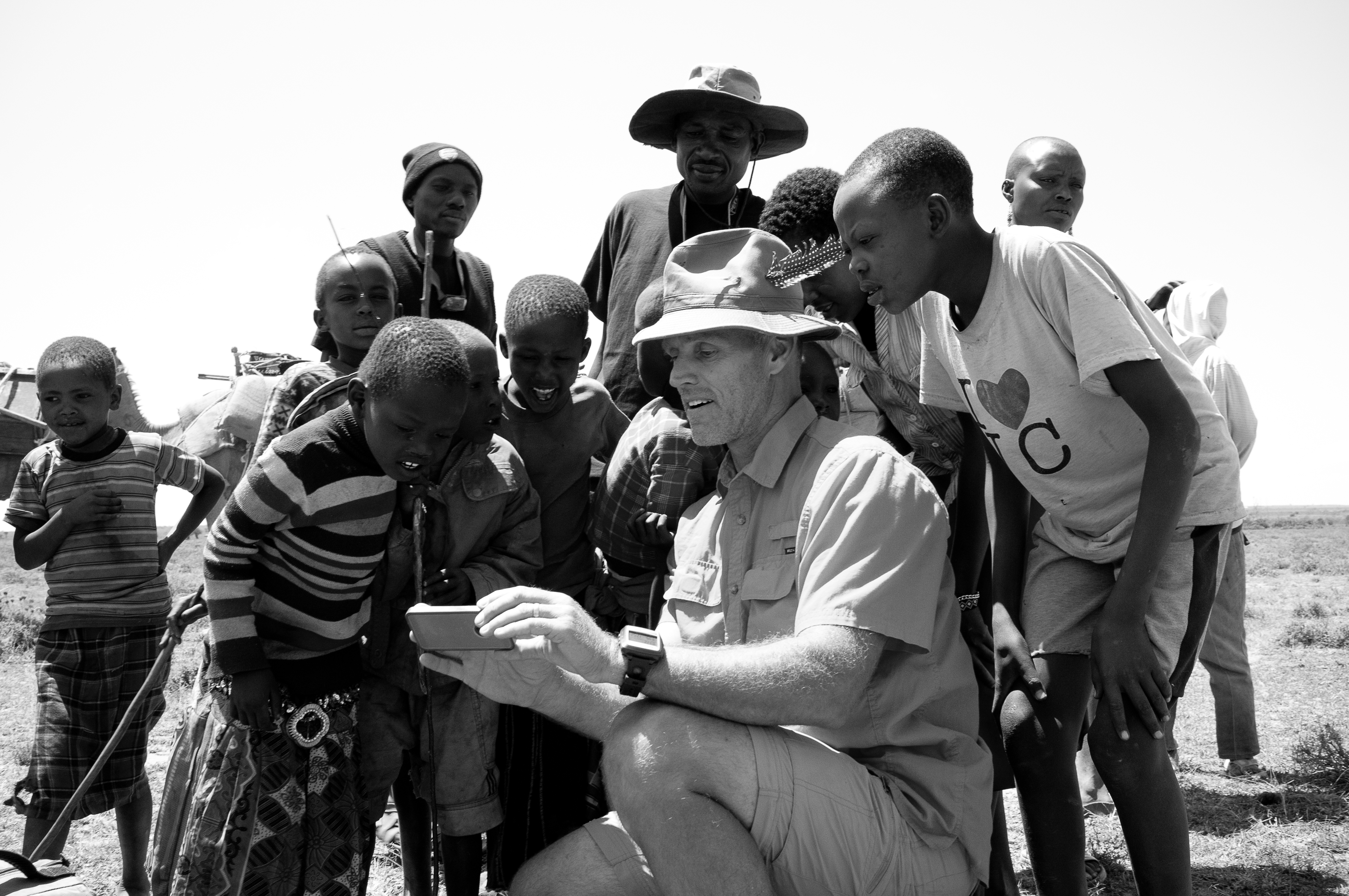
David shares videos and photos with schoolchildren who ran to meet us along the road.
Scouting lions in the Mara.
Jeff James_Tembea Na Mimi_2015_400
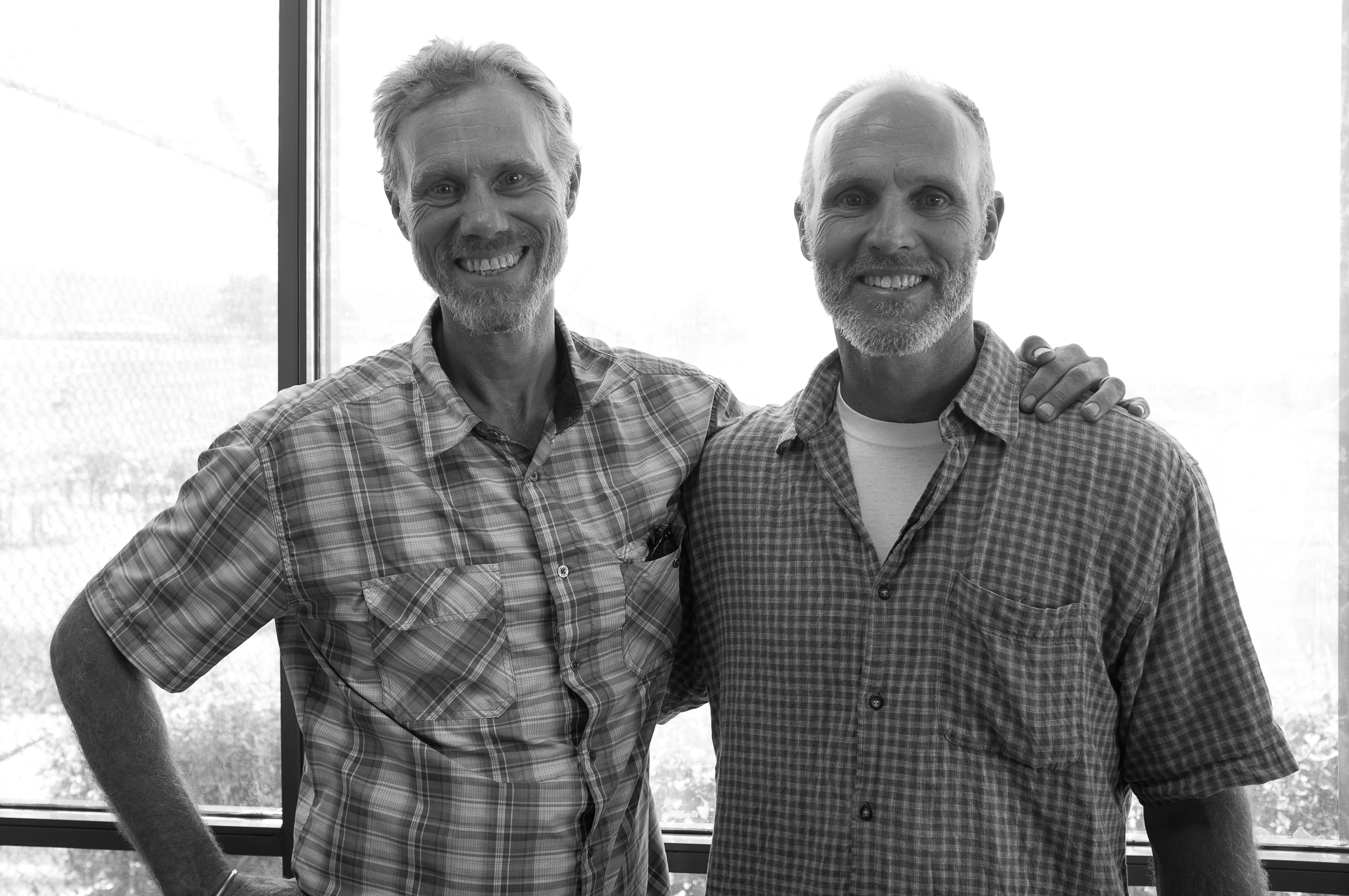
Brothers, Kisumu Airport


Jeff & Hillary JamesThe Rise and Fall of Heroes, Part 8 of Tembea Na Mimi
read more

“I Love Hills” Part 7 of Tembea Na Mimi

This is Part 7 of a multi-part essay that chronicles Tembea Na Mimi, a walk across Kenya.

by Jeff James

Jeff James_Tembea Na Mimi_2015_088

“I love hills!” Terry exhaled as she charged past me.  I wheezed an affirmative in reply, which was all I could do.  Gravity was pulling me backwards, while some insane devotion to hills was driving Terry forward. It seemed to be her mantra; she invoked it to whomever she stormed past this hilly day.

I love hills.”

As I write these words, I find myself growling them as I try to understand their source.  Not because Terry’s voice was guttural, but because they came from a primal place.  Spoken with ferocity, they were an affirmation to the self — to herself, as she climbed out of the Rift Valley, bounding upward with ease. Her walk was strong and steady, as if tethered to an umbilical cord pulley towing her to the top.

So what does it mean to love hills? In our language we have so many sayings that teach us that hills are not to be loved.  If you’re old and incapable, you’re over the hill. If you’re sick or struggling in life, it’s an uphill battle.  Hills are obstacles that slow us down. They interfere with our need for speed and efficiency.  We level them or carve tunnels through them when building roads and sidewalks.  They are to be appreciated from a distance, as a vista of rolling hills at sunset incites calm and increases property values.

But Terry loved walking up hills! What was that about? Was her love really just a desire to conquer the hill? Was a hill Terry’s Goliath, the larger foe with the less worthy cause? All adventurers and endurance athletes need to possess an inner warrior to call upon when things get tough. If conquering a hill is an affirmation of your fortitude and prowess, it is to be revered. But is it love? To conquer and to love are not the same. And perhaps that confusion is the source of many strained relationships.

Jeff James_Tembea Na Mimi_2015_135Jeff James_Tembea Na Mimi_2015_283

An alternate representation must exist for Terry. If one strides against common wisdom and loves what most despise, the source of that devotion must be sacred.

The night before my son was born, I was lying next to my wife, her belly a perfectly curved hill.  The contractions transformed the smooth, taut bow into angular peaks jutting upward, tectonic plates of elbows and knees beneath the skin. When the contractions subsided, her belly returned to normal and relaxed into a rounded summit, a sacred life about to arrive, a life to whom I was already devoted.

A hill, a symbol of emerging life, and a promise of play and laughter on the other side.

You want to know how to make Terry cry? Just ask her about her children, ask her about the kids she met and embraced along the way, and ask her about the orphans in Matoso. Ask her to describe what makes them beautiful and special, and she will lovingly tell you, with her voice cracking and tears pooling in her eyes, about the sound of their laughter, the wideness of their smiles, and their enthusiasm for life in spite of having few opportunities.

Or perhaps Terry knows, like the indigenous people of many hillside cultures, that to be closer to God one must climb to the mountain top. The summit, literally nearer to heaven, just a stone’s throw away from the celestial gates. The mantra then, “I-love-hills,” is a prayer to help her reach the top, syllables to count steps by and regulate breath, utterances of love to remind her of her sacred journey . . . up.

DSCF1815

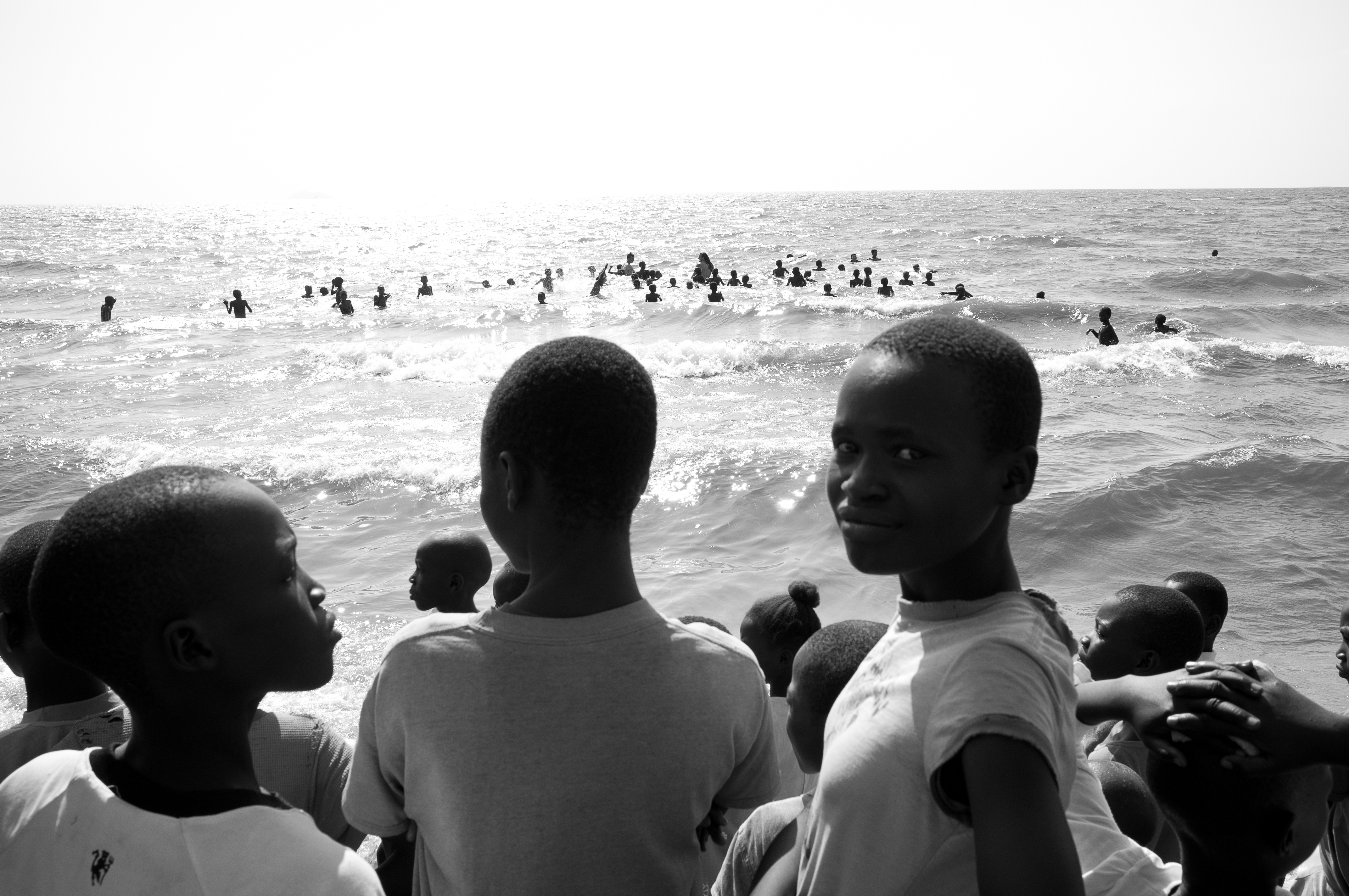
The day we reached Matoso, our goal, Terry walked towards Lake Victoria with a celebratory plunge in mind. There among the throngs of heads, bare to the sun, she met a young woman named Hillary, who spoke flawless English.  She is one of the lucky few to receive a Lalmba scholarship for secondary school, and will most likely go to college. Terry describes her like she would a mountain vista – lovely, expansive, and graceful.  Against all the odds, Hillary is successfully climbing life’s hills.  Her hard work reveals opportunity where there once was none.

Thinking of Terry’s mantra, I wondered if Hillary had one too, or if prayer was a factor in her success.  I wondered if there were any good hills nearby that she climbed to cast a better-aimed prayer, because something miraculous is working in her favor.

When we were kids we played a game called “king of the hill,” a test of strength and strategy, the victor winning the glory of being on top.  Many battles were fought on the slopes: falling down, sliding backward, getting up and charging the hill again like a warrior, until the best among us was standing on top, looking out over the heads of his weaker or less fortunate opponents. No doubt Hillary too has lived a life of valor; life’s slopes in her community are very steep.

Terry’s love for hills, whatever the source may be, mirrors Hillary’s recipe for success, I think. Perhaps the key ingredients to a life fulfilled are the recognition that there is no substitute for hard work, life is sacred, and prayer works. Hills are to be loved, the figurative and the factual, but the top is over-rated. Most lives are spent on the slopes anyway, so a healthy amount of love for climbing is prudent.

I love Hills!

My wife’s name is also Hillary; we sometimes call her Hill.  Her uncle is a runner, and he hates running up hills. He told me once that when he comes upon a hill, he thinks of his niece, and he screams “I love you, Hill!” while charging upward.  The burst of energy he gets by replacing what he psychologically hates with what he emotionally loves, allows him to surge through the hard parts.  Now that’s something to think about.

IMG_0569

Terry and James, photo by Terry Robinette

Jeff James_Tembea Na Mimi_2015_402

Terry at the Flora Hostel. Photograph by Yogesh Aradhey

Jeff James_Tembea Na Mimi_2015_279

After walking all day, Terry still has the energy to walk on Fred’s back.

Jeff James_Tembea Na Mimi_2015_214

Terry and Michael spend a stretch together. Terry was energized by walking and talking with people.

Jeff James_Tembea Na Mimi_2015_138

Terry has a quiet moment enjoying the sunset at camp.

Jeff James_Tembea Na Mimi_2015_096

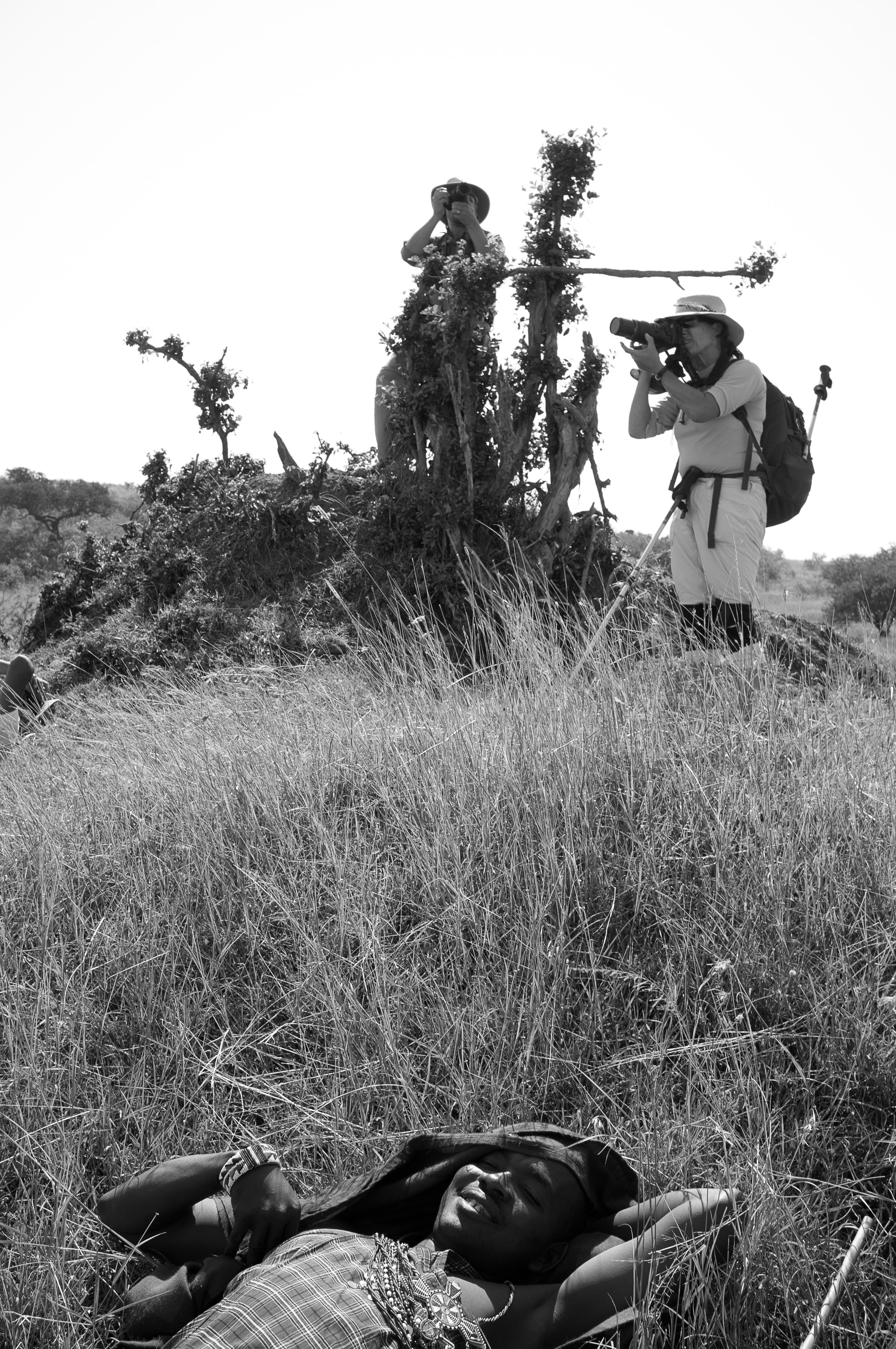
There must be wild animals in the distance. Terry and Rob are taking aim, while James enjoys a stretch in the tall grass.


DSCF1549

Terry Robinette, walker extraordinaire. Photograph by Rob Andzik
Jeff & Hillary James“I Love Hills” Part 7 of Tembea Na Mimi
read more

The Relativity of Age, Part 6 of Tembea Na Mimi

This is Part 6 of a multi-part essay that chronicles Tembea Na Mimi, a walk across Kenya.

by Jeff James

Our Elders, battle-scarred guardians, are the orators of history and culture. They are the wise leaders of our communities teaching us that age is relative, life’s pains multiply but become less noteworthy, and loss is understood best over time. A toddler’s traumatic loss of a soaring balloon pales to the loss of a pet, and that to the loss of a parent. The pain of a skinned knee can be walked off, but a new knee, like learning to walk for the first time, requires humility in place of grace.  And from humility develops wisdom, and from wisdom Elders are born.

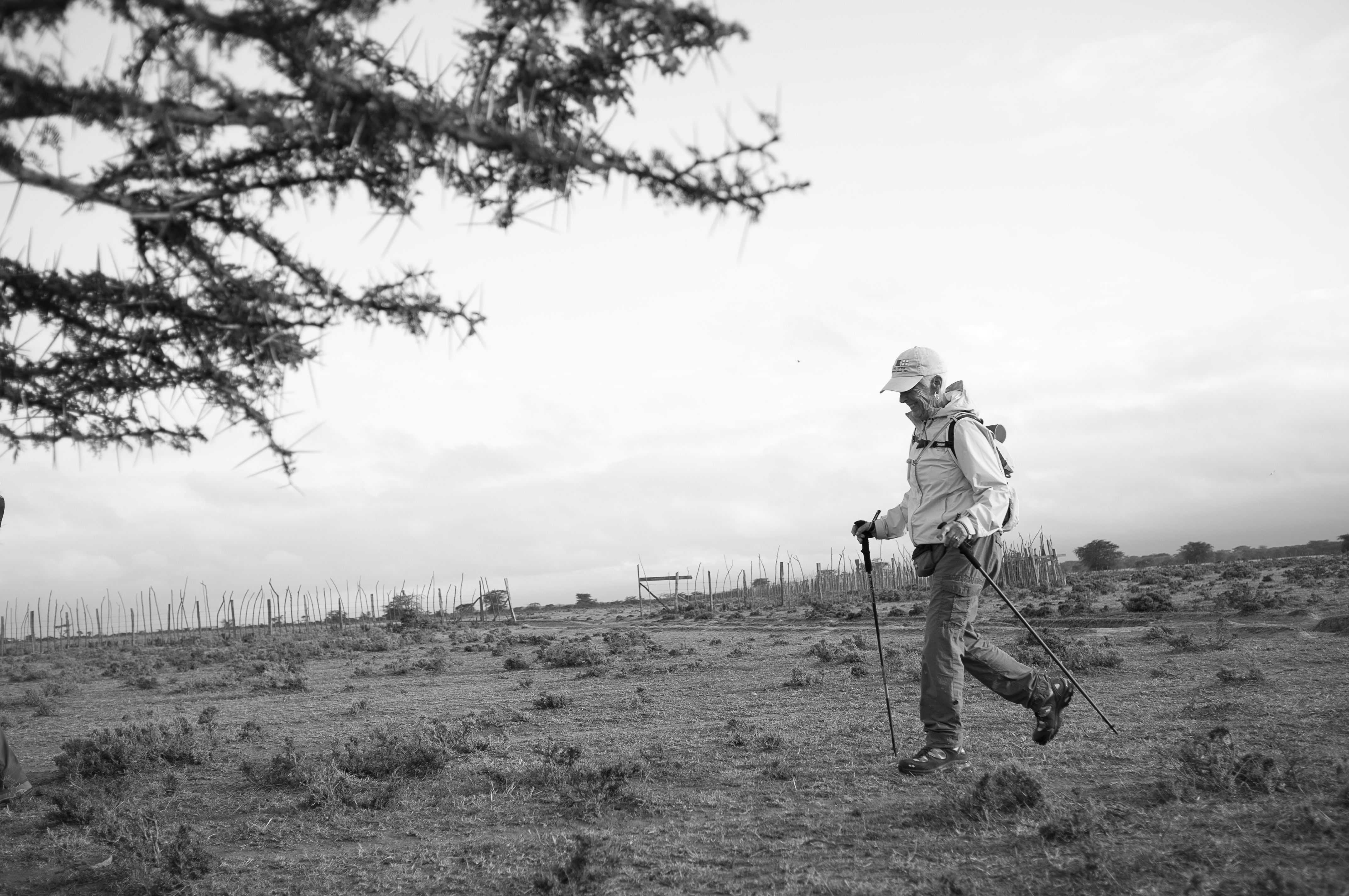
On day 3, as Peter sank into a narrow patch of shade, like an aching heap of fatigue, he grumbled, “This is the first time in my life that I have felt over 70.”  They were not words of defeat; even at 77, Peter knows not the concept of surrender.  He is a former U.S. Marine, baptized in fortitude, “Ooh Rah” until the end. His final cries will be the battle cries of a distinguished warrior, not some sissy complaining about sore feet.  In fact, Peter can’t even feel his feet. With peripheral neuropathy below the knees, he only feels numbness or pain.  But he doesn’t limp or gripe, he simply walks with a hammering purpose, his steps outpacing the camels and crew.

Jeff James_Tembea Na Mimi_2015_257

Jeff James_Tembea Na Mimi_2015_256
When he commented on his age, he was just being pragmatic. His statement was an expression of humility, a recognition that after all, perhaps being 77 does make this a little harder. Under the dappled light of that thorn tree, witnessing Peter feel his age, I wondered if pushing yourself to these physical extremes was healthy?  Is it good to be forced to contemplate your own mortality under the duress of an adventure? Had Peter not come on this trip, he might be sunning himself leisurely on the coast of North Carolina, feeling youthful and energized, rather than feeling old and drinking dirty water. I worried.

But Peter’s psychic plummet was short-lived; 2 days later he had a transformation. He had passed through the learning-to-walk phase, and had mastered his stride and breath. Age became relative once again, when on day 5, Peter boomed, “I feel like I’m 47!”  He walked like it too.  He was a fast walker, out in front leading with James, learning Kenyan history, each step spinning years off his life. He was Benjamin Button on safari.

What could cause someone to feel old one day and spry and youthful the next? How is it that expending energy rejuvenates energy?  And how is it that Peter, at 77, could overcome physical and mental fatigue, and then rebound as a new man? There was no recovery time. We were in the middle of nowhere.

I surmise age is relative, relative to many things, but here it seemed connected to the heart, to that intangible side of our consciousness where the soul resides.  When you’re walking down a dirt path and everyone but you is cloaked in the traditional vestments of poverty, you take notice and contemplate the forces at work that created such disparities. And then you walk harder, hoping that you can make a difference, with stronger strides, and hopeful prayers.  And perhaps, through the pathways of an open and engaged heart, it is possible to access a different kind of energy.   Perhaps it’s possible to time-travel to an age when you felt your strongest. For Peter that must have been at 47.

Jeff James_Tembea Na Mimi_2015_250


Mama Jane, as Bara Bara liked to sing, “Mama Jane, Mama Thea … Mama Jane, Mama Thea …,” a spry 76 year-old, was naturally nervous about this “adventure” her husband coerced her to do. Before going to Kenya she had several bouts of doubt, second-guessing whether she could do this walk or not. After a couple of 13-mile training hikes back in Colorado, Jane would exhaustedly throw herself down at home and declare, “Forget it, I’m not going!”  But with time, a rejuvenating meal, and Peter’s assurances that she could do this, she would waiver and wonder, Could I have done more?  If I can walk 13 miles, I can certainly walk 2 more, she determined.  And so Jane went to Kenya, to test her strength, and to walk with Peter. After all, Peter and Jane Obernesser have been walking together for nearly 53 years as husband and wife.

Jeff James_Tembea Na Mimi_2015_017

Nature is often conjured as an older woman, wise and gleaming with encouragement, nurturing us with gentle affirmations and milk and cookies. Other times she’s depicted with ferocity, thrashing us for our selfish ways.

Upon first meeting Jane, one might be inclined to label her as the archetypal grandmother, soft, sweet and buttery.  And no doubt that side of Jane is real and dominates, but the time and stress from walking revealed a tougher character in Jane, someone strong, who is capable of walking 20+ miles in a day with the visceral force of Mother Nature.

Once at a mid-day break, parched by intense heat and dust, Peter suggested to me that Jane should ride the camel after the break. He was concerned about her, and thought she was tired. So I went to Jane and pitched the idea, to which she politely said no, that she would prefer to walk. When I persisted, and mentioned that Peter suggested that she might want to ride, I thought her husband’s concern for her well-being would make a difference.  “He said that?” she blustered.  “He can ride if he wants, but I’m walking,” she declared.  And off she went, kicking up dust, walking into the noonday sun.

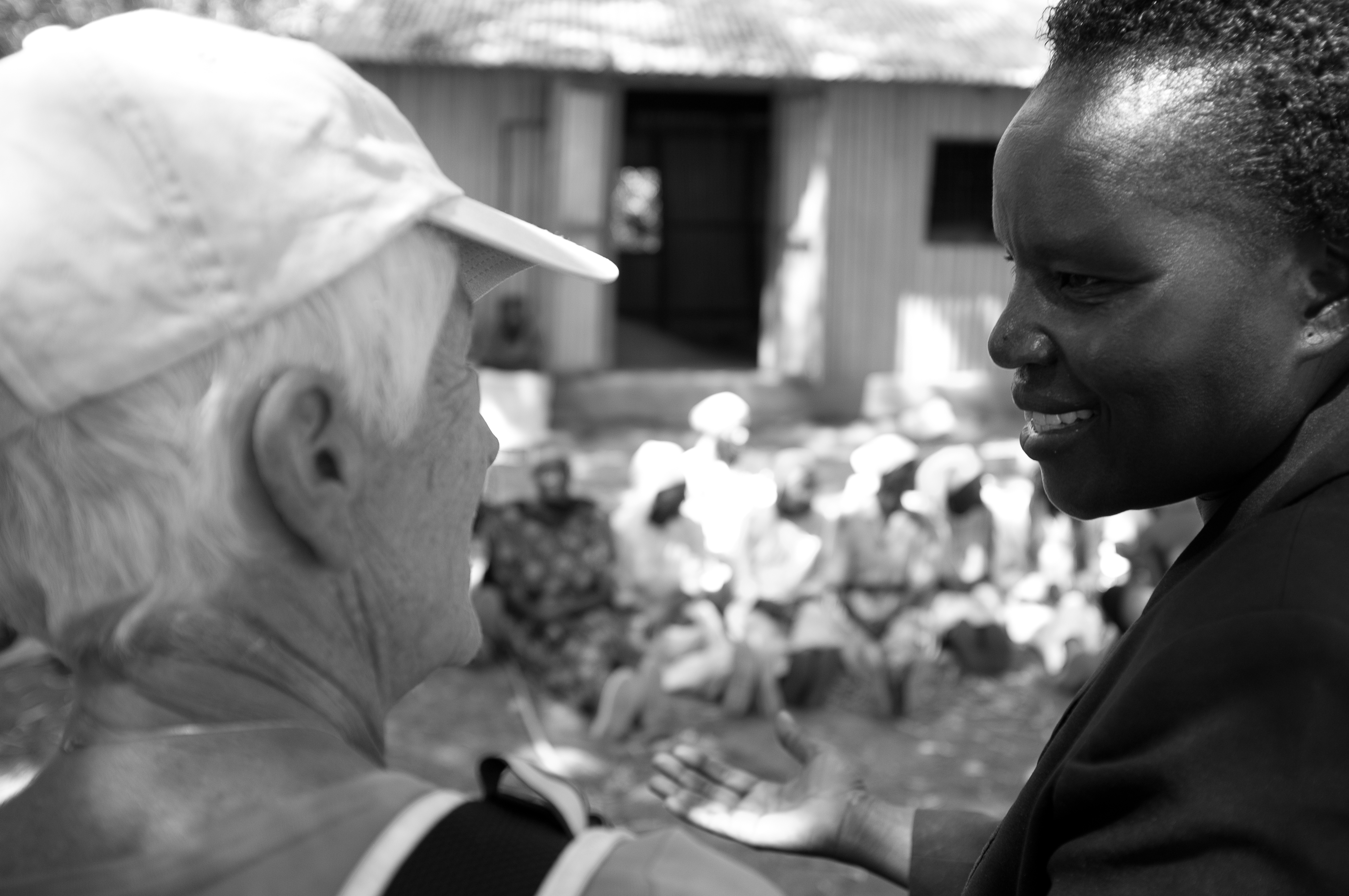
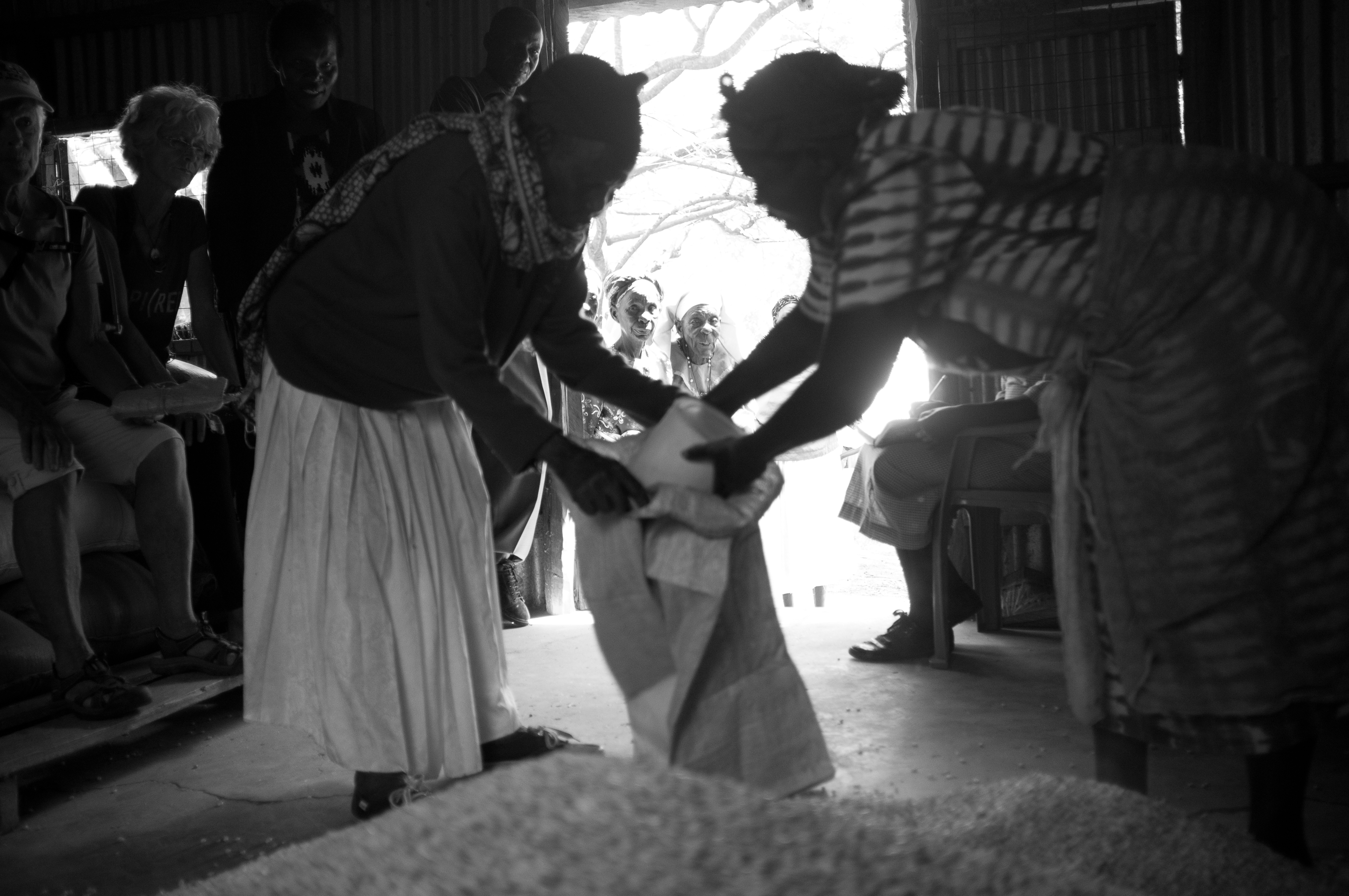
On the last day in Matoso, the guardians of the orphans, hunched grandmas weary from a lifetime of labor and loss, came to collect their weekly allotment of maize.  They lined up before us, as if presented for our inspection.  Jenipher Otieno, Lalmba’s Children’s Director, explained to us their plight and why we provide aid.  They are the guardians of multiple grandchildren whose parents, their children, died of AIDS.  A middle generation nearly wiped out, and the survivors, old women and small children, remain with little capacity to provide their basic needs.

This line of ladies was a face-to-face with reality, a boardroom meeting of the stakeholders and the investors, an opportunity for us to witness the gravitas of the need, giving perspective to our meager contributions. We walked to understand this. They are the “mimi” of “Tembea Na Mimi”, our ambulatory cause. When our backs, legs, hips, knees, and feet hurt, we considered what a lifetime of walking would feel like.

Jane’s focus had not been greater than at this moment. These were her age mates, women of her generation, struggling not only to survive but to keep their grandchildren alive and preserve their family and culture’s future. As a grandmother too, Jane’s bonds with them grew. She saw the unfair burdens that these women must hoist and wanted to share the weight.

Jeff James_Tembea Na Mimi_2015_345

Jeff James_Tembea Na Mimi_2015_347

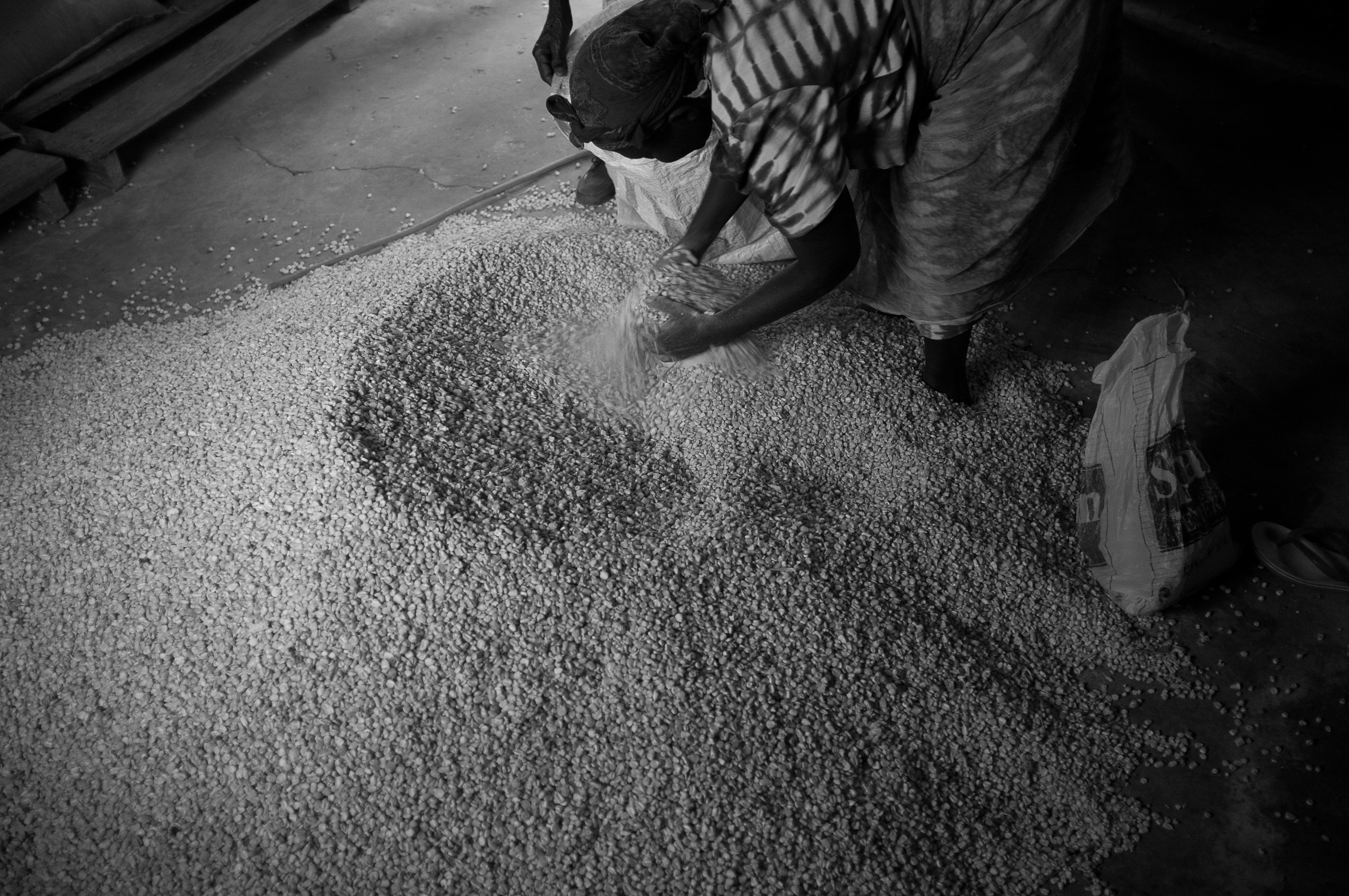
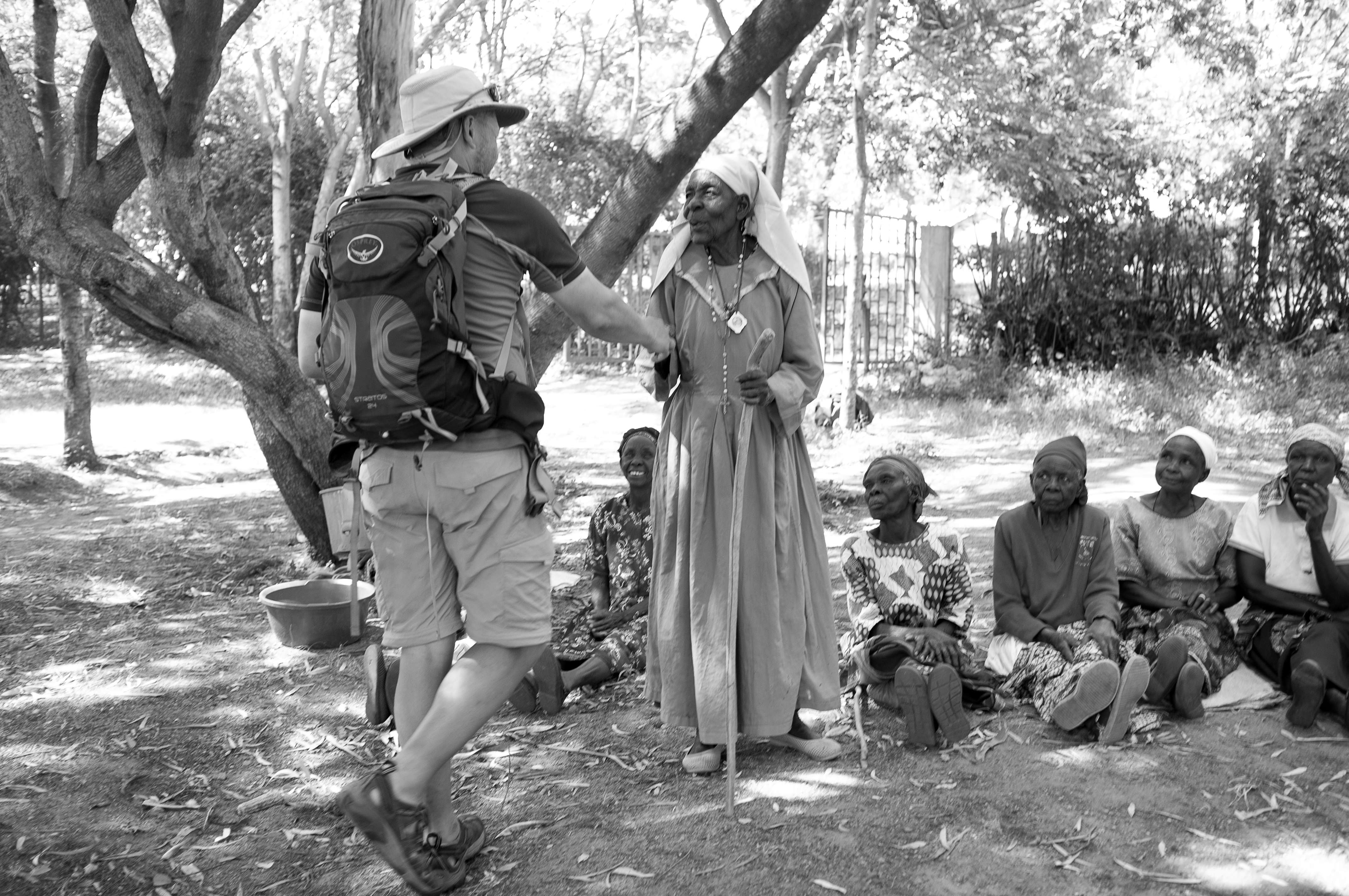
After our introductions, burlap and nylon sacks were filled with measures of maize. We all passively watched the spectacle, uncomfortable with our voyeuristic role; we would rather be helping. A woman with rheumatoid hands passed her sack to the scooper, where she received extra doses indicating her grandchildren were many. When the sack was filled, its weight and mass were clear. And Jane implored aloud, reaching toward the sack, “How will she carry that?” Jane would have gladly unburdened her of her load and carried it to her home for her. But the woman, with concealed strength, hoisted the sack to her head, clutched her walking stick in her gnarled hand, and turned to face the steep incline home.  Perhaps she was a little more hunched as she left, perhaps her impressions against the red soil were deeper for the weight, but this burden meant sustenance for her family for the next week.

Outside the tin shack, the storage room for the maize, another woman scattered a trail of kernels from a hole in the bottom of her sack.  Jane squatted down in the dirt and lovingly gathered each kernel, and uttered aloud a private affirmation, “Every one of them counts, right?”

Jeff James_Tembea Na Mimi_2015_351

Jeff James_Tembea Na Mimi_2015_352

Every one of them counts. Every year, every loss, every ache, every echo of a child’s laugh, every memory of a time of strength and courage, they all count when adding up the life of an Elder. Their wisdom is the source of our hope, an assurance that life’s dreams will continuously regenerate and life’s challenges will be tackled by the force of experience.

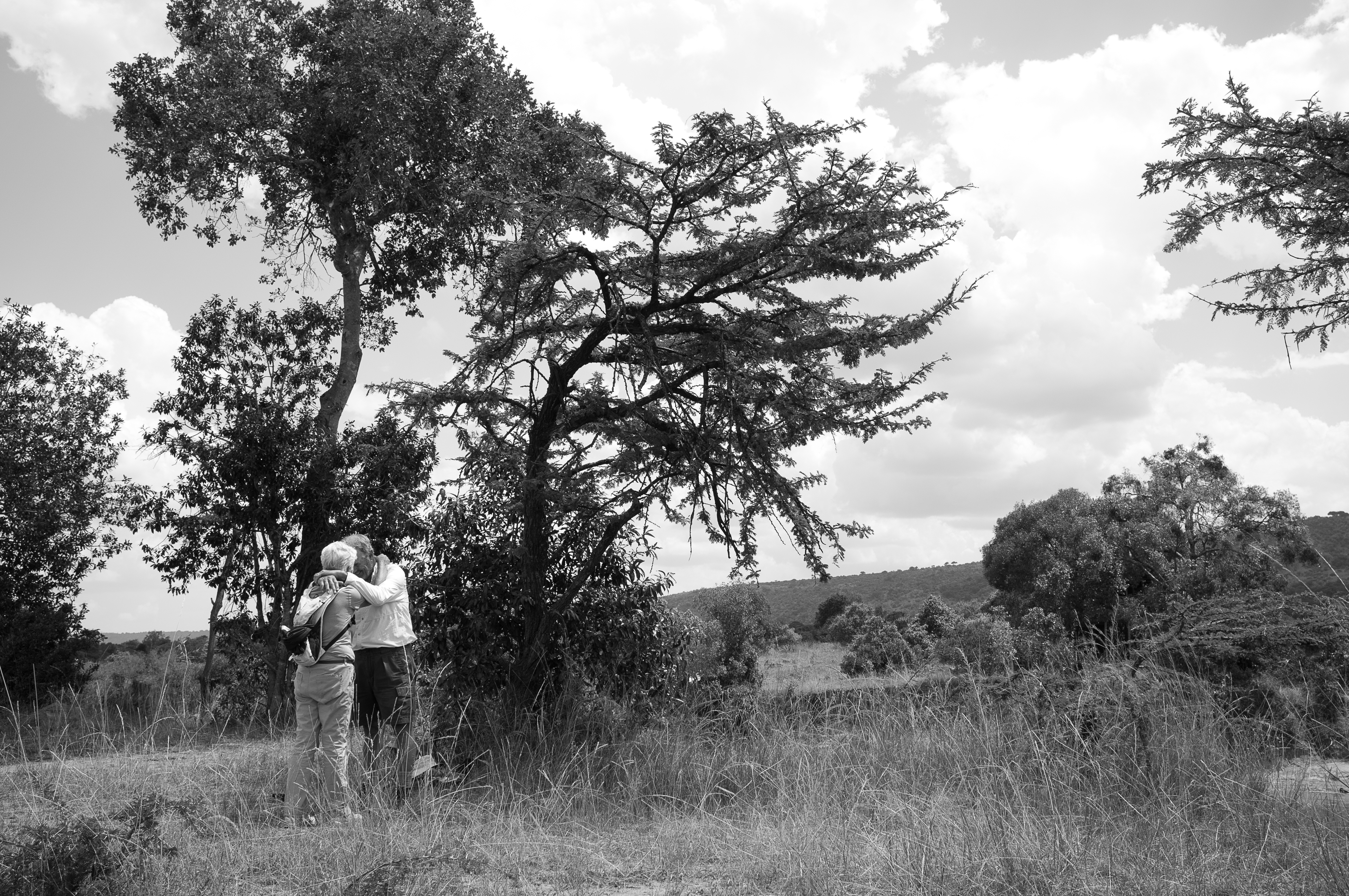
At the end of day 6, Peter, the first to arrive at camp, waited in the shade for Jane. When she ambled into camp, he yelled to her, “How’s it going, baby?” And Jane smiled at him from beneath the brim of her hat, brandishing a thumbs up.  It was going okay.  They had reached the end of the day, and could finally drape their arms across each other’s shoulders, a daily ritual, with heads bowed and foreheads touching.   They shared energy reserves and gave private and prayerful thanks for life, and perhaps renewed their vows … to keep going.

Jeff James_Tembea Na Mimi_2015_128

This morning when I woke up, my body ached and I groaned with the effort to upright myself. I’m nearly 50 with premature joint pain. I probably complain to my wife more than I should about this, secretly hoping that sympathy will be the balm to ease the way. But I know there is no balm but fortitude when it comes to aging — fortitude in the knowledge that life’s path is best navigated from the heart, pain is only a distraction aimed to slow you down, and love conquers all. I should hug my wife tonight to remind myself of that simple truth, a truth that can only be imparted by witnessing the strength and accomplishments of our Elders.

Jeff James_Tembea Na Mimi_2015_193

Jane sings a verse of “500 Miles”

Jeff James_Tembea Na Mimi_2015_358

Peter inspecting the troops. At the Ongoro Children’s Home, the orphans sing and march, welcoming us to their home.

Jeff James_Tembea Na Mimi_2015_205

Jane showers a baby with affection.

Jeff James_Tembea Na Mimi_2015_262

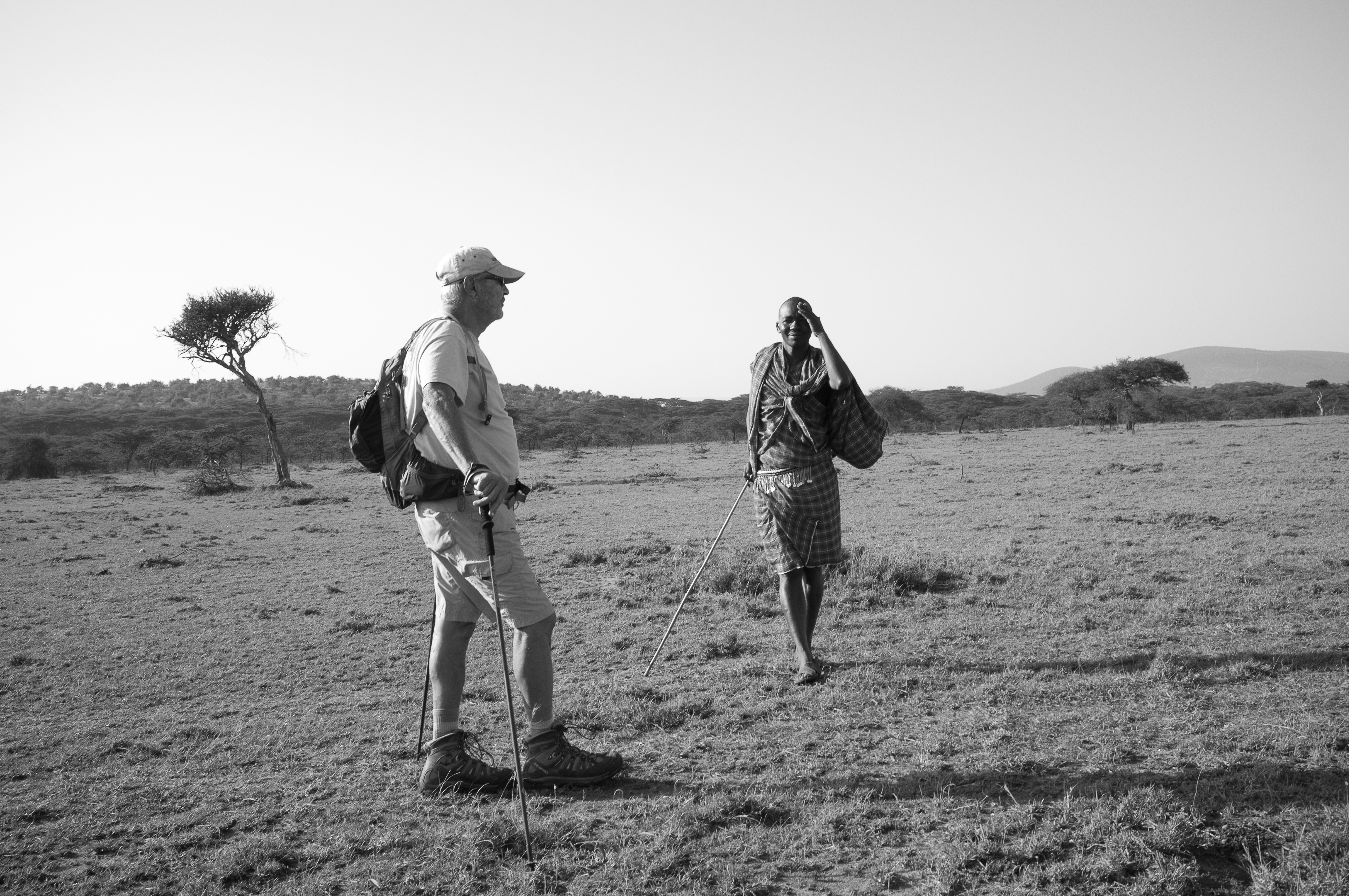
Joe and Peter lead us along the Migori road.

Jeff James_Tembea Na Mimi_2015_168

Jane and Peter ride out of the Rift Valley

Jeff James_Tembea Na Mimi_2015_005

Peter chats with the fishmonger in Nairobi.

Jeff James_Tembea Na Mimi_2015_129

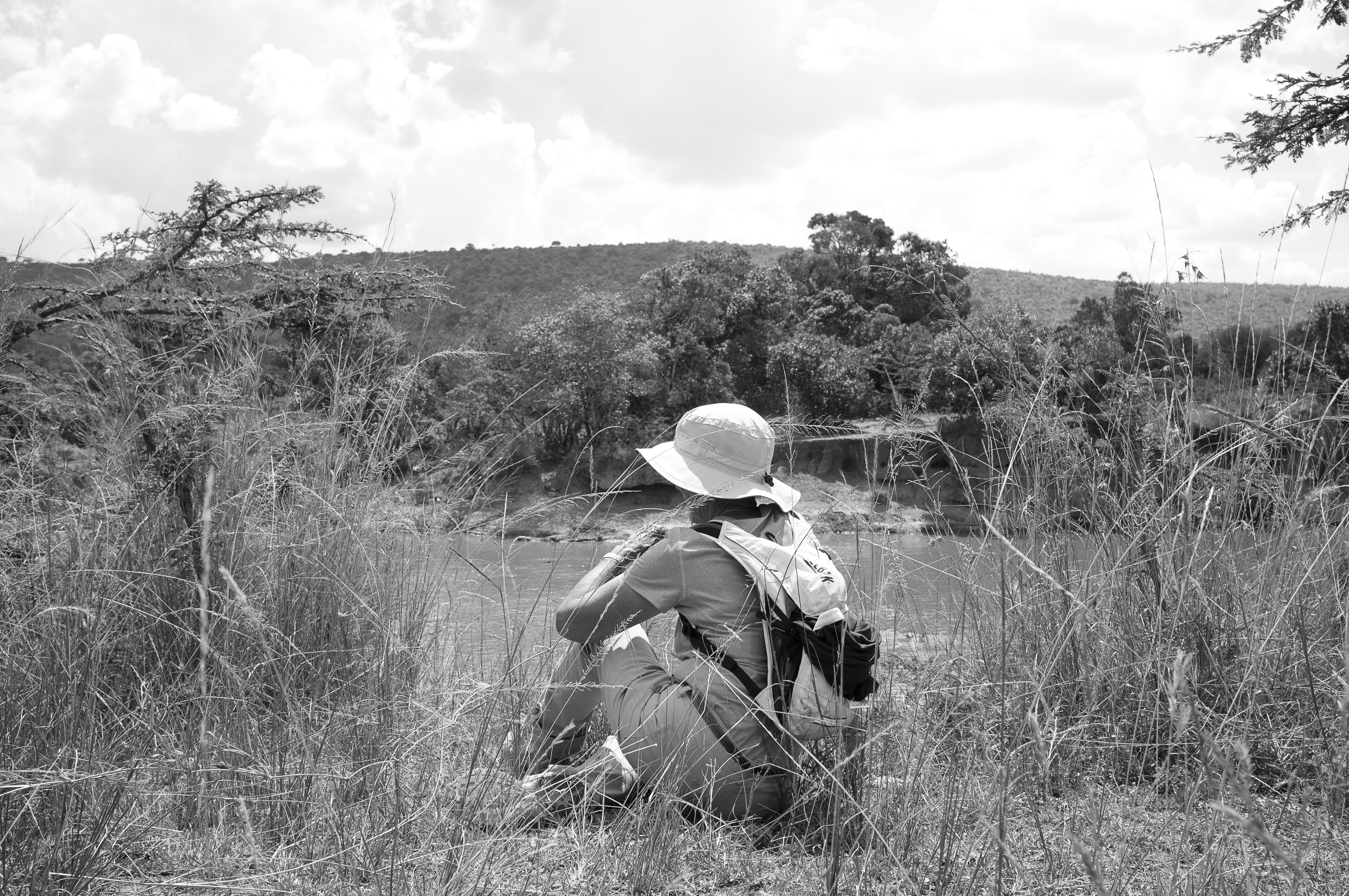
Jane observes the hippos from the banks of the Mara river.

Jeff James_Tembea Na Mimi_2015_150

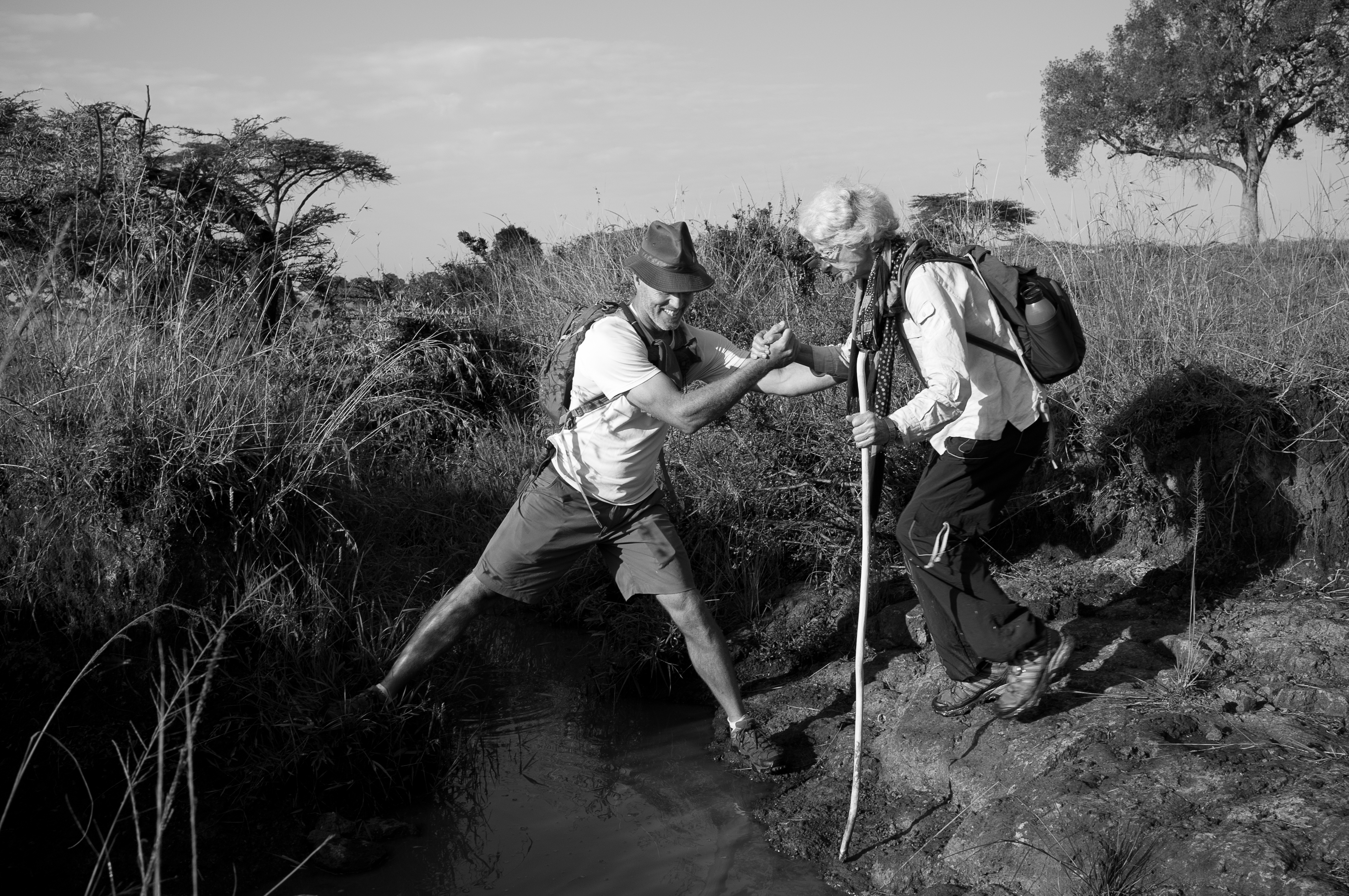
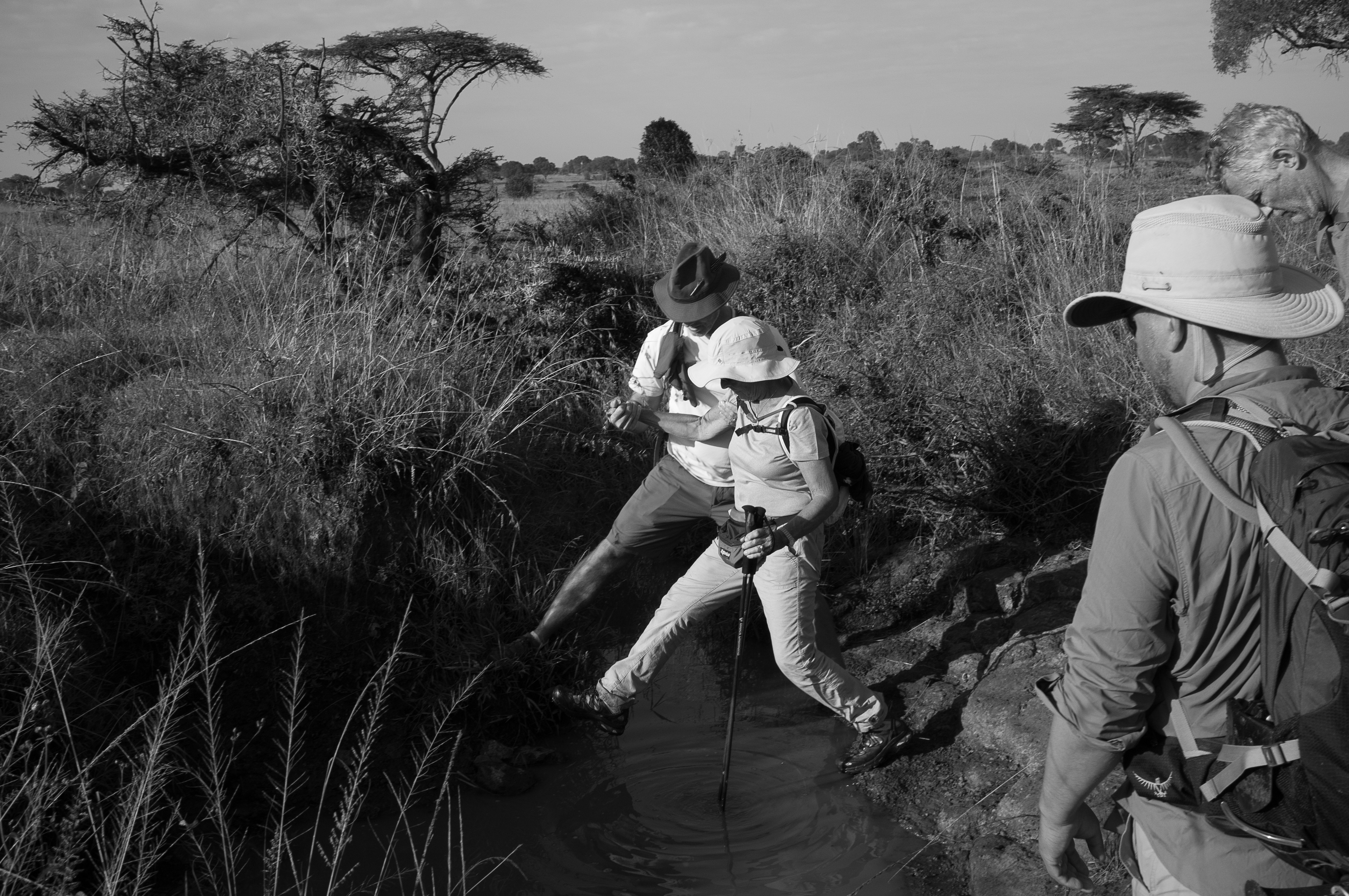
Jane getting an assist from David across a creek.

Jeff James_Tembea Na Mimi_2015_006

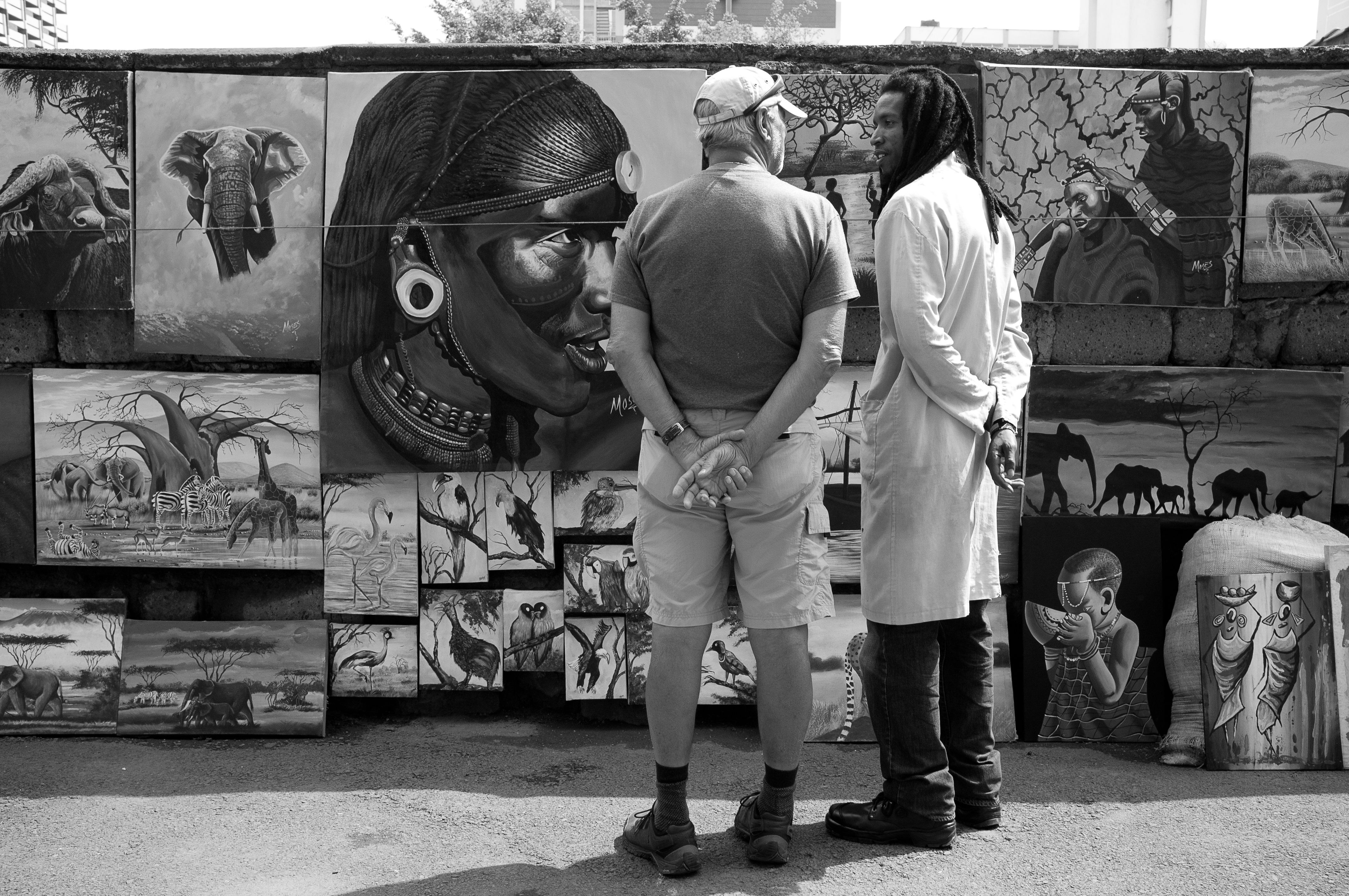
Peter negotiating with an artist at Nairobi’s City Market.

Jeff James_Tembea Na Mimi_2015_108

Our elders lead the day.

IMG_0723

Jeff & Hillary JamesThe Relativity of Age, Part 6 of Tembea Na Mimi
read more

Time and Love, Part 5 of Tembea Na Mimi

This is Part 5 of a multi-part essay that chronicles Tembea Na Mimi, a walk across Kenya.

by Jeff James

Jeff James_Tembea Na Mimi_2015_284

Rob walked with James, our Maasai guide, showering him in conversation. “What are those animals there, James?” Rob inquired, pointing far into the distance.  “They are cattle,” says James.  Cattle? They look like sheep.  Are they calves?” Rob persisted.  “They’re cattle,” James repeats.  “They sure look like sheep.  How many cows and sheep do you have, James?”

Rob taught James a song called “Put a Melody in my Heart,” which required sticking your tongue out and waggling your bottom.  An unusual sight on the Kenyan plains, but somehow fitting and funny.  James struggled with the “L” sound and could only sing “merody.”  This made them laugh like kids, inducing a great spirit for walking.  And walking is what they did, Rob probing James’ life, eager to know about his family and his culture, forging a connection deeper than the mark of their footprints on the savanna.

As the day wore on our questions pivoted, and became more time-oriented.  We’d ask, “How far ’til camp, James?” “It is just there, over that hill,” says James. “About 3km. One hour of walking.” And then 2 hours later, we’d ask again, “How many more miles to camp, James?’ And James’ reply was just the same. It was always just over the hill, a couple of kilometers away. Day after day that pattern continued and we vowed never to trust James’ time estimates again.  At first we thought it was just James, but then our next guide Gisoi came along, ushering us from the edge of the Mara conservancy to the top of the escarpment.  And after Gisoi, it was George and countless other Kenyans along the way, guiding us with time and distance estimates which were never, NEVER accurate.

We were obsessed with time.  We needed to wake up at 5:15, have our packs camel-ready by 6:15, and start walking by 7:00. We would walk for 50 minutes and rest for 10. Gadgets and maps were pulled out at breaks to triangulate our whereabouts, communicating with satellites, modern day angels tracking our steps. Rob had the best gadget, sending a ping to the heavens every 10 minutes.   We would determine the crow-fly distance, factor in number of steps taken since morning, add 20% for weaves and dips to reach the total number of miles walked. We then converted this to kilometers so our guides could understand what we were talking about. “What’s that conversion formula again?” I would turn and ask Rob.  And he would mutter some equation at me, which I would promptly forget. And when factoring was complete we would determine, almost always, that we still had miles to cover before we could camp.

We had 15 miles a day we needed to walk; we wrote it in our brochure and put it on the website.  1 cause, 10 days, 150 miles, 4 million steps . . . whatever! We did more, and we dedicated ourselves to more than one cause.  But they’re numbers and they drive us.  We westerners need our precious first world constructs of time to determine value.  If it can’t be measured it’s probably not worth doing, right? Wrong!

It’s insanity measuring life in numbers.  Kenyans were notoriously bad at time and distance estimates because those are irrelevant in their lives.  The schedules that drive life in the bush, “Africa time”, are determined by the seasons of rain and where the sun rests in the sky, not by punching clocks, board meetings, or Gantt charts.

I once received directions from an old man who said our destination was “four sees” that way.  Which meant that from where we stood to the horizon was “one see,” and the distance to our destination was that times four.  His life was not spent clocking miles in a car. He was a walker;  distance was measured by sight and time by the sun. Days and years are not counted, birthdays aren’t celebrated, and there are no guidelines about the number of meals one should eat per day.  It could be days before the next proper meal.

But life goes on. The sun rises, water is fetched, the ground is tilled, seeds sowed, wood collected, and a child dreams of going to school before running off to usher home the livestock. Neighbors share a laugh. Laughter is abundant in rural Africa, tipping the scale of life towards joy. Perhaps the essence of community is not in the tidiness of your neighbor’s hedges, but rather in the laughter shared over the top of them.   Rob seemed to recognize this.  The sound of his laughter mingled with the Africans in a shared appreciation for the joy of being alive, walking, together, on Africa time.

Esoterically, I wondered as we walked through these impoverished communities, if one’s existence is not measured by what you own or accomplish in life, how then is life’s value determined? Is there a measure for a life well lived? Is life’s value intrinsic, imparted at birth by a mother’s first kiss? Poverty’s children are not unloved; they’re just hungry for opportunity and nutrition. Perhaps in the absence of material wealth, emotional wealth becomes the greatest commodity.  Perhaps “Africa time” is not the absence of motivation, but instead the presence of love…love for the simple experience of being in this world.

On the last day of walking, we skipped many of our 10 minute breaks. From Othoo on, our stride had found new strength, our destination was soon in sight.  It was our final stretch of road. It might have been the road to Emmaus for all I knew; the large crowd around us could easily have concealed a saint.  We were euphoric, enveloped in accomplishment, energized by the bustle.

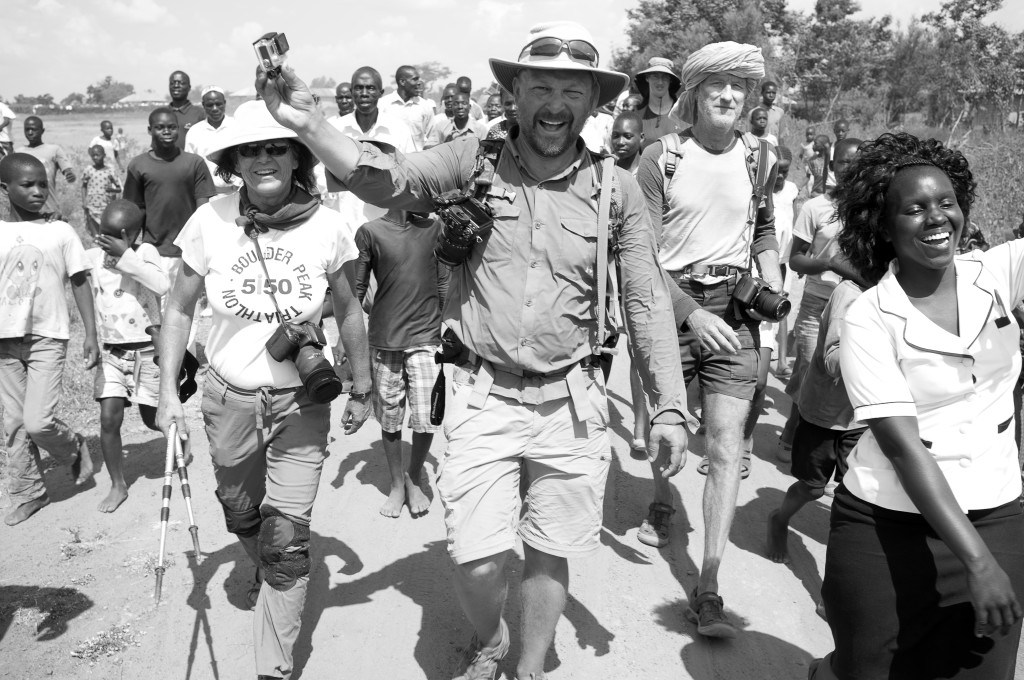
Our gadgets were finally tucked away. We knew we would arrive the way we started, walking.  I was welling with the urge to weep or laugh.  And then Rob did both.  “Jeff, look!” he cried, pointing down the road toward a chorus of nurses, healers dressed in blue and white dancing toward us, singing a gospel song. Our groups merged into one, and the song floated along for our participation.  And so we sang, “We are marching, we are marching. We are marching in the light of God.”  In the Kenyan rendition of the song, there’s a sweet howl tucked onto the end of “God,”  lovingly drawing out His name.

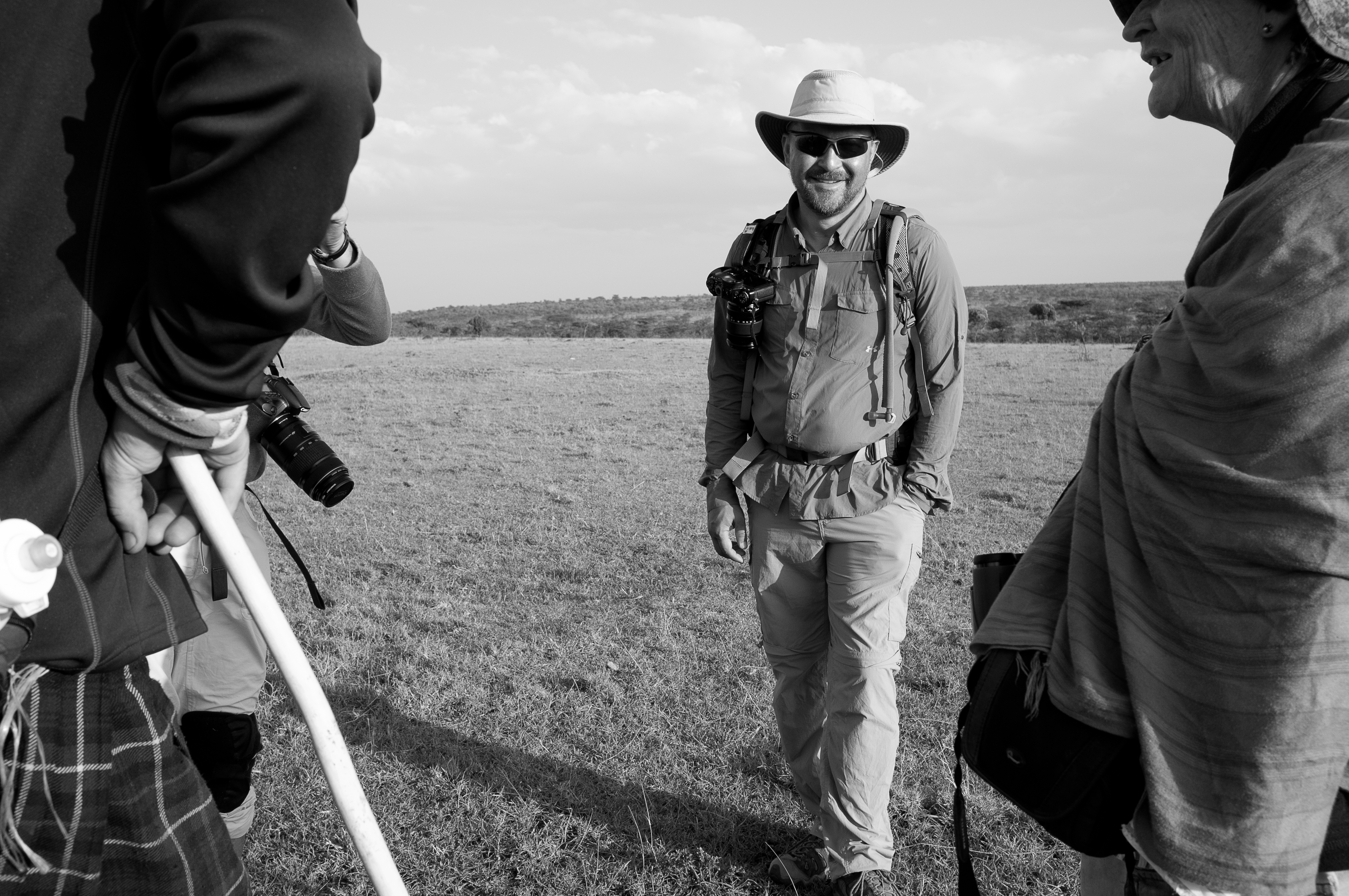
Rob Andzik embodies a brilliant balance of western time and African time. He’s an engineer who launches satellites into space, those angels that enabled us to communicate and navigate and keep to our schedule. Rob’s work world is driven by technology, and his professional life is no doubt steeped in timelines and time-boxed meetings. The world of business needs to operate that way, and it’s a rare individual who can be equally comfortable in that realm and also at ease in Africa time.  Rob is fluent in both.   There’s a Swahili saying, “Haraka, haraka, ha ina baraka,” which means hurry, hurry has no blessings.  It is the blessings in life that matter. We seek blessings by doing good, and our lives are enriched in return.  And those blessings require a different quality of time, committed time invested out of love.
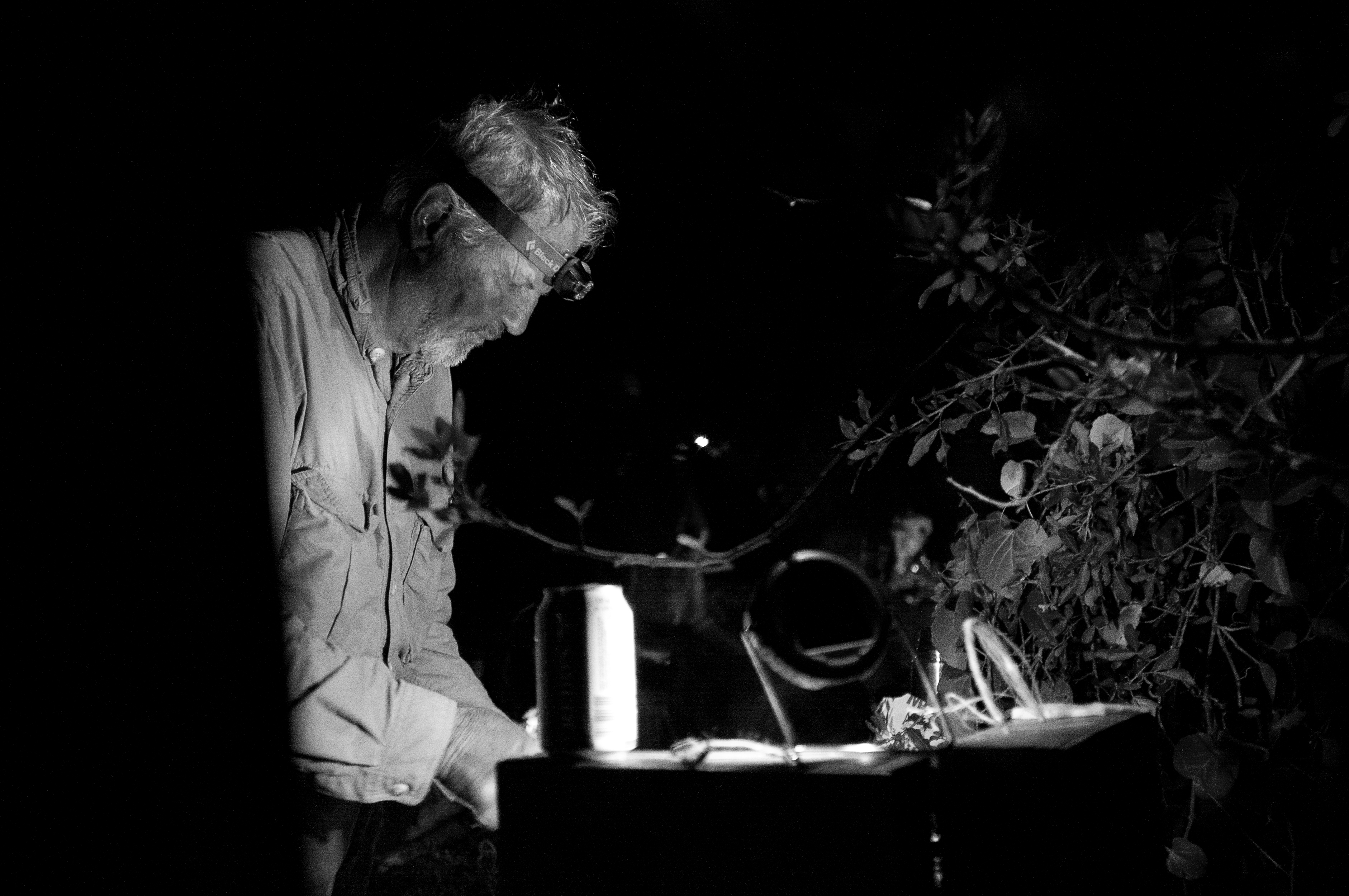
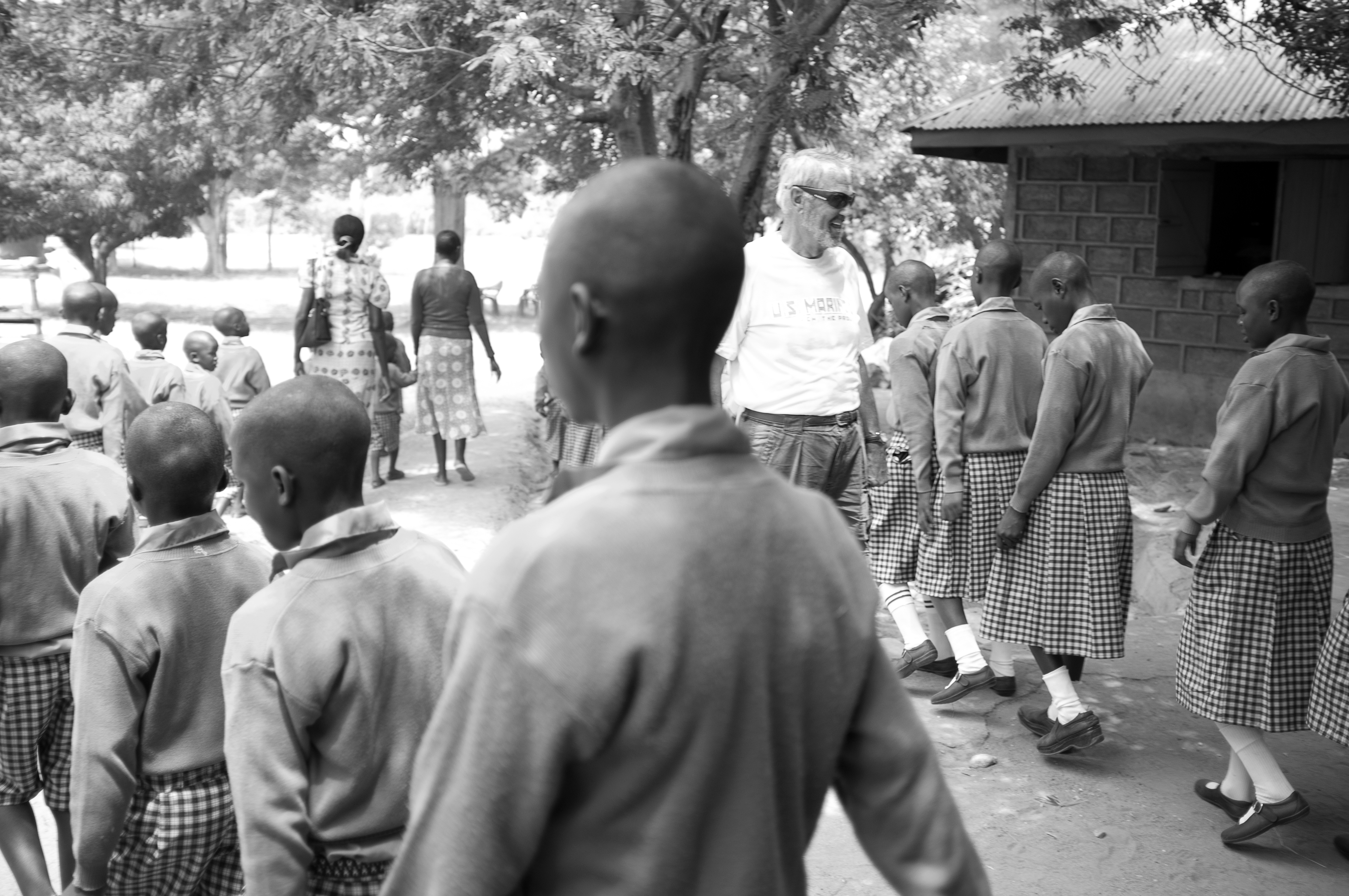
In the presence of orphans, children in need, Rob gifts them with earnest, genuine love and devoted time.  It’s an incredible sight, this man engaging with children and the downtrodden, his world of business and technology as far away as those satellites in celestial orbit floating above him.   He is a champion of the cause, the 1 cause that is many, and as Lalmba’s chairman he skillfully intertwines his time as husband, father, and engineer with being “A father to the fatherless, a defender of widows, God in his holy dwelling.” ~Psalm 68:5

Jeff James_Tembea Na Mimi_2015_332

Rob greets Joyce, Lalmba’s long-time cook in Kenya.

Jeff James_Tembea Na Mimi_2015_034

6 Am, and Rob’s pack is ready for the camel.

Jeff James_Tembea Na Mimi_2015_020

Rob and his gadget, sending pings to heaven.

Photos By Trail Camera

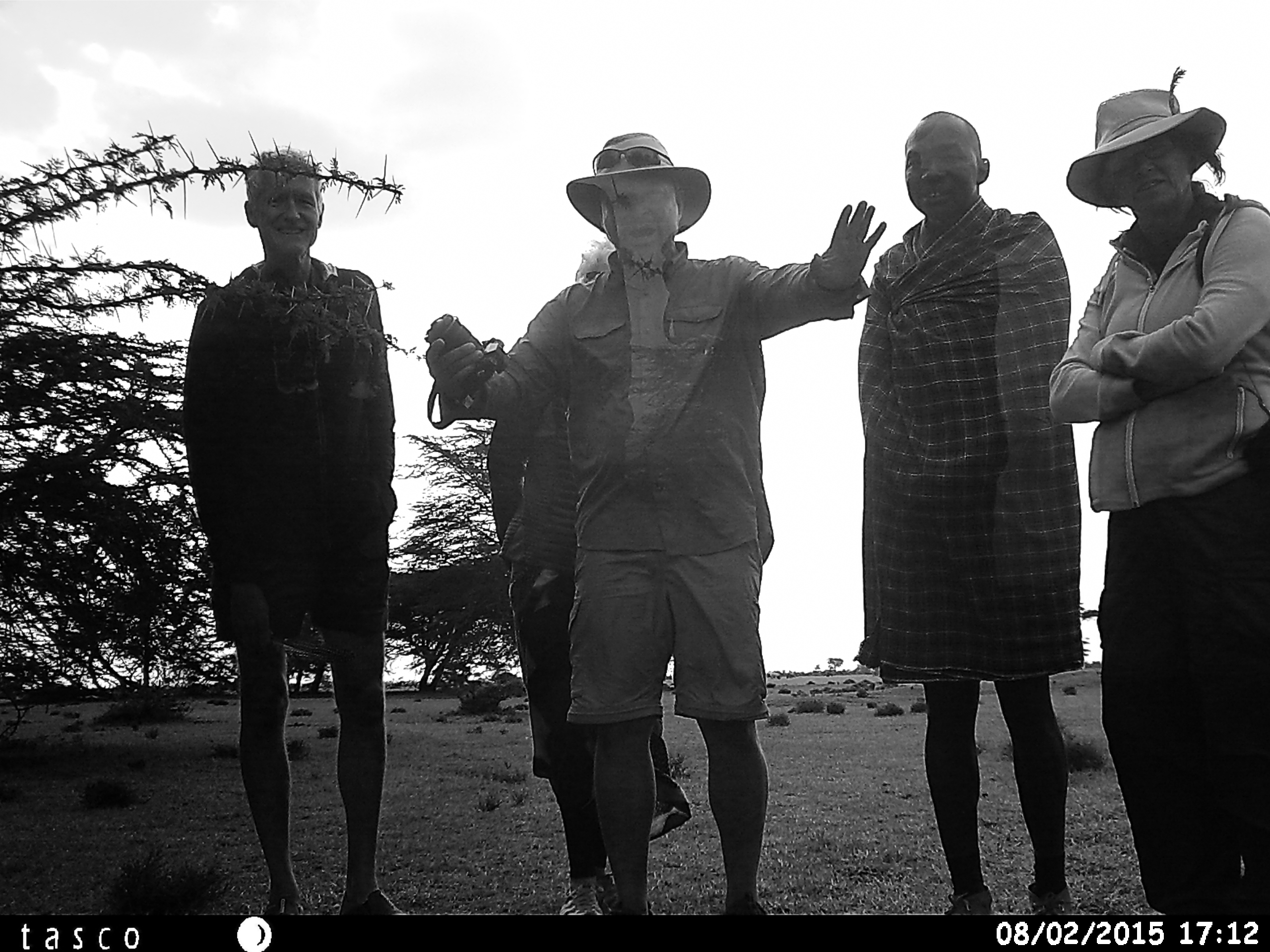
Rob photo bombing the trail camera. Intended to catch pictures of wild beasts around our camp at night, it only captured us.

Jeff James_Tembea Na Mimi_2015_089
Jeff James_Tembea Na Mimi_2015_132

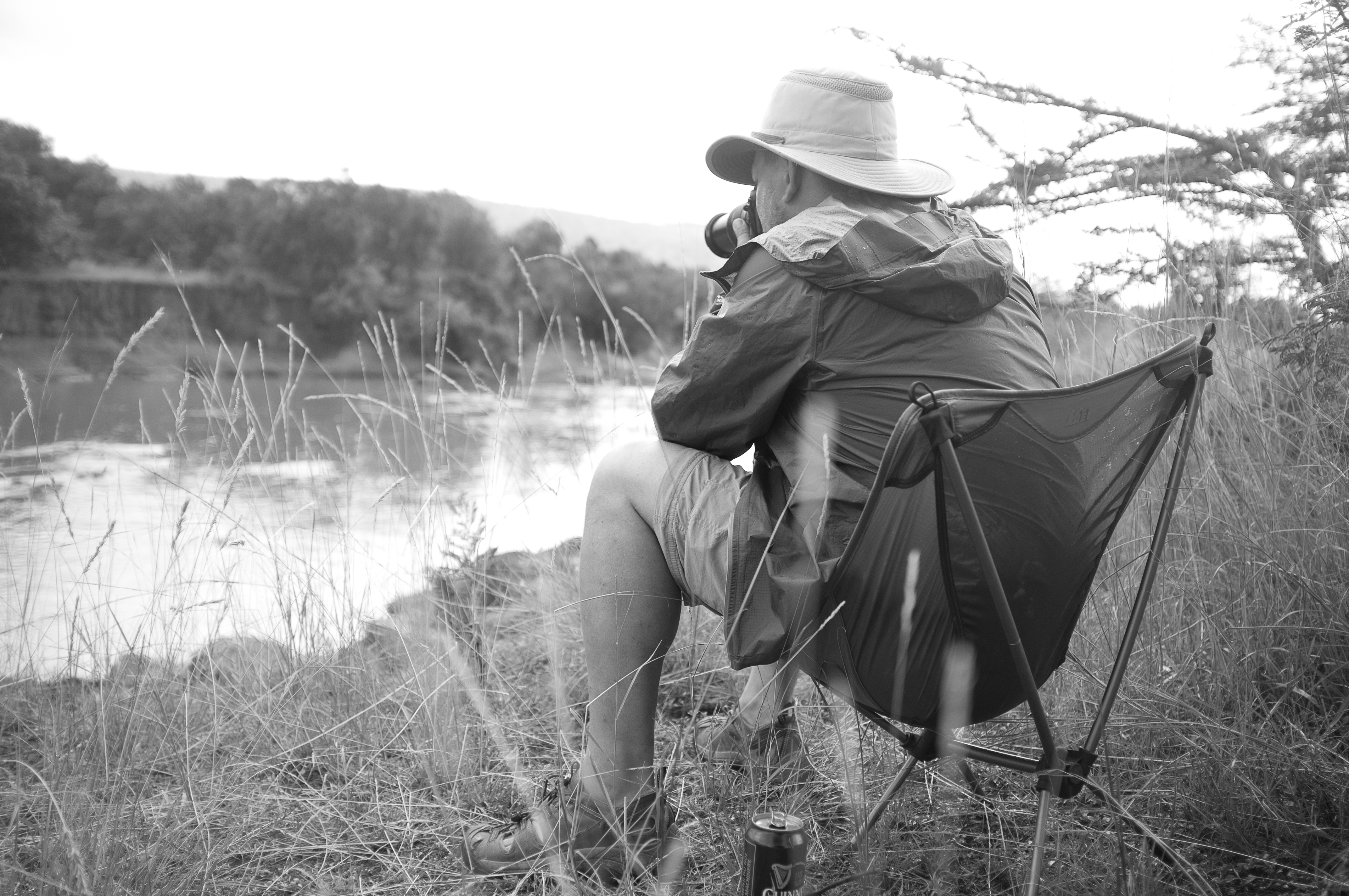
Photographing hippos on the Mara river.

Jeff James_Tembea Na Mimi_2015_336

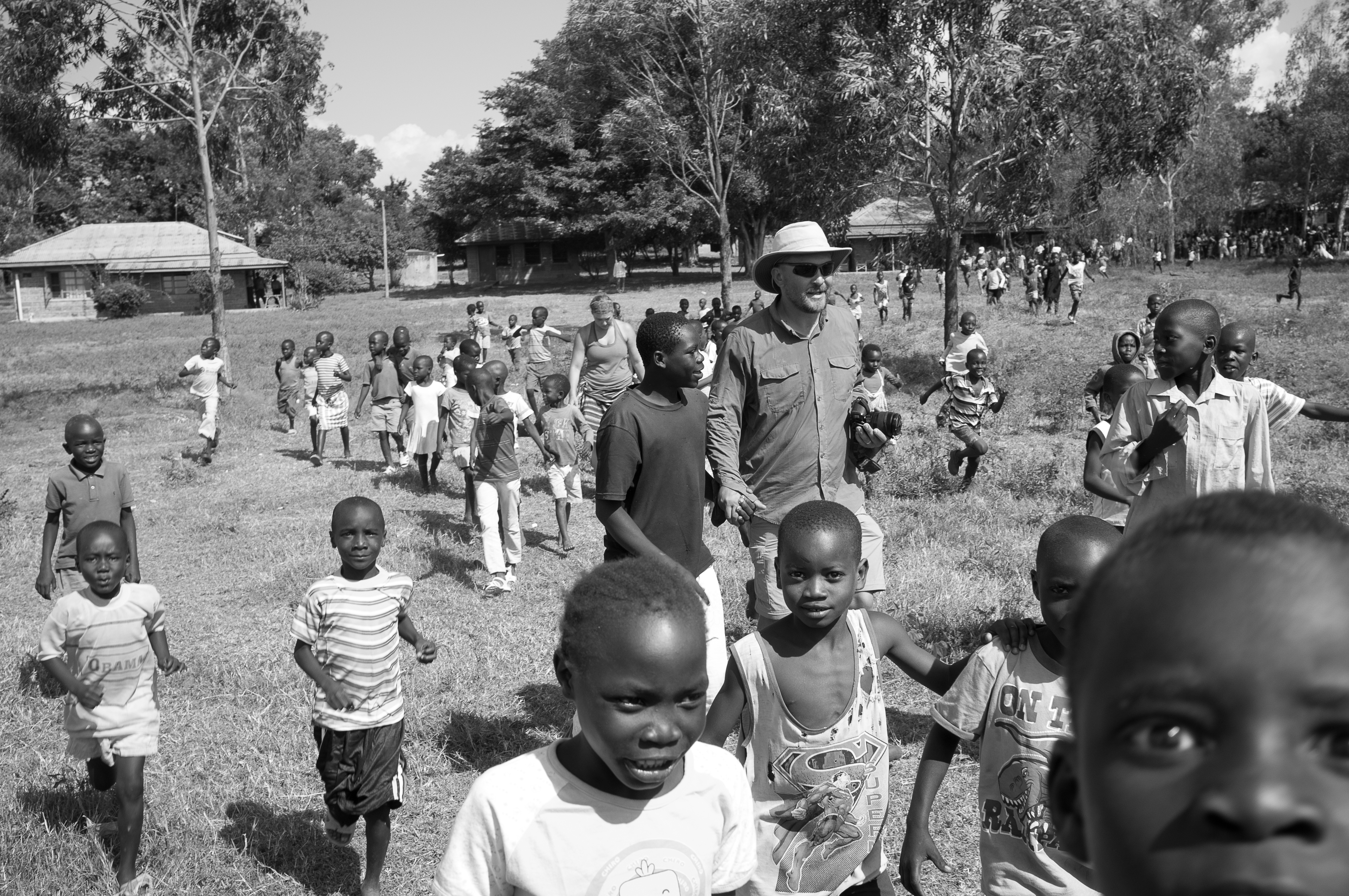
At Lalmba’s compound in Matoso, Rob walks with some children to the lake. Our journey had just ended and a swim was in order.

Jeff James_Tembea Na Mimi_2015_348

Rob greets one of the guardians from Lalmba’s RCAR program. The guardians are single grandmothers, inheritors of the plight of AIDS and responsible for keeping their grandchildren, their communities and their culture alive.

Jeff & Hillary JamesTime and Love, Part 5 of Tembea Na Mimi
read more

The Principle of Pleasure and Pain, Part 4

This is Part 4 of a multi-part essay that chronicles Tembea Na Mimi, a walk across Kenya.

by Jeff James

Jeff James_Tembea Na Mimi_2015_153

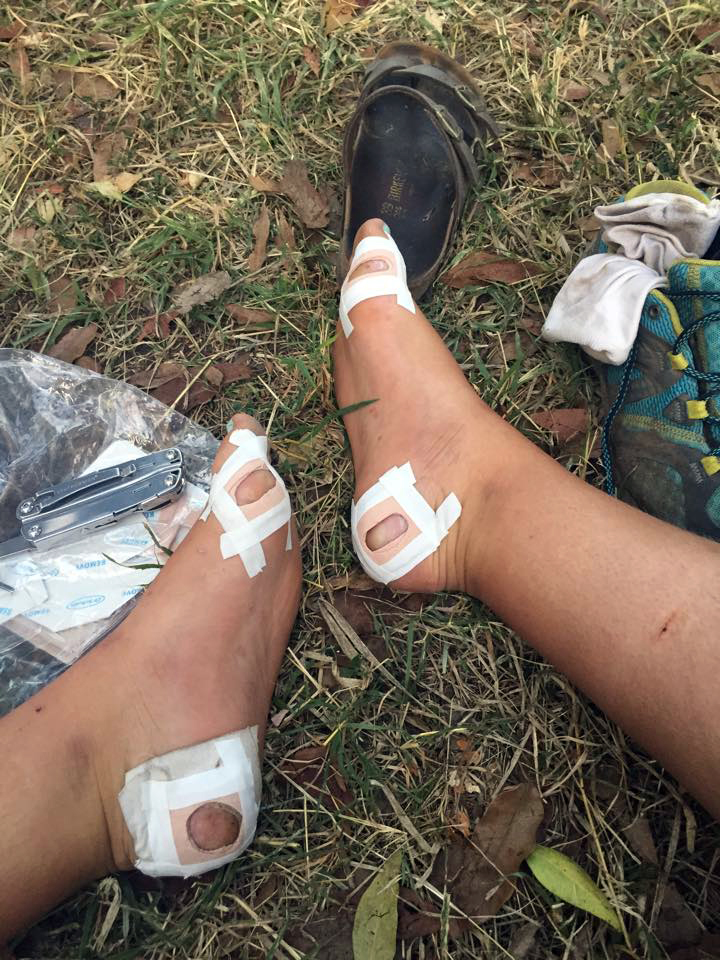
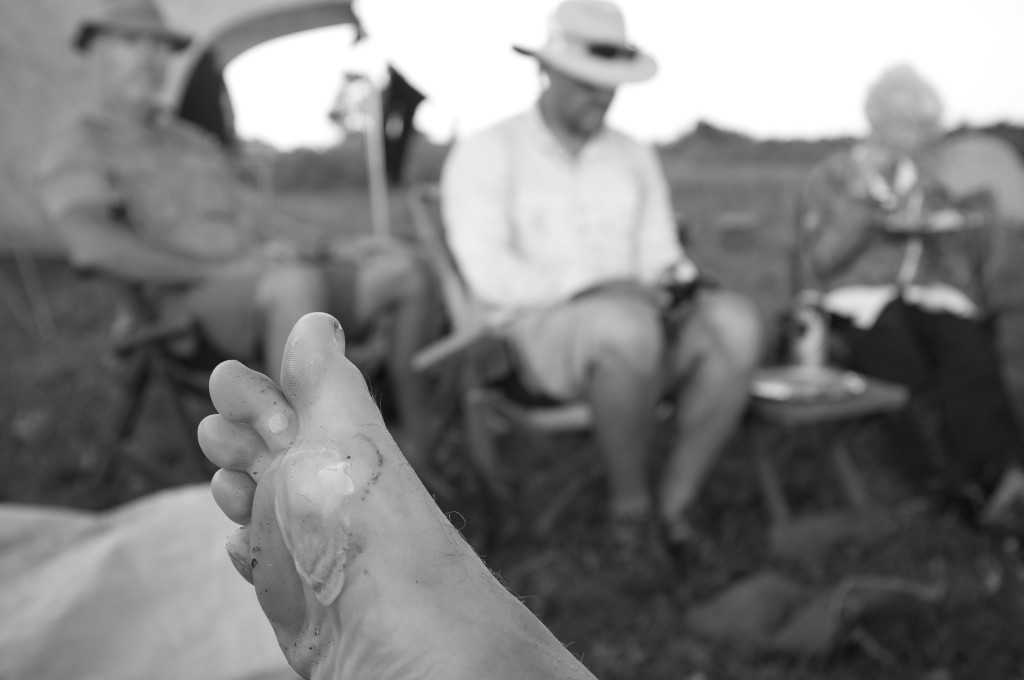
If strength is measured by one’s ability to persevere, Helena Sarcone had to be one of our strongest walkers. She was usually the last to lace her boots in the morning; bandaging her numerous blisters required time. Often she debated wearing sandals or boots; both caused new sores.  It was simply a deliberation on blister distribution.  Mapping out future blisters requires a fatalistic sense of humor, which Helena possessed in abundance.

Halena's Feet
Photo by Helena Sarcone

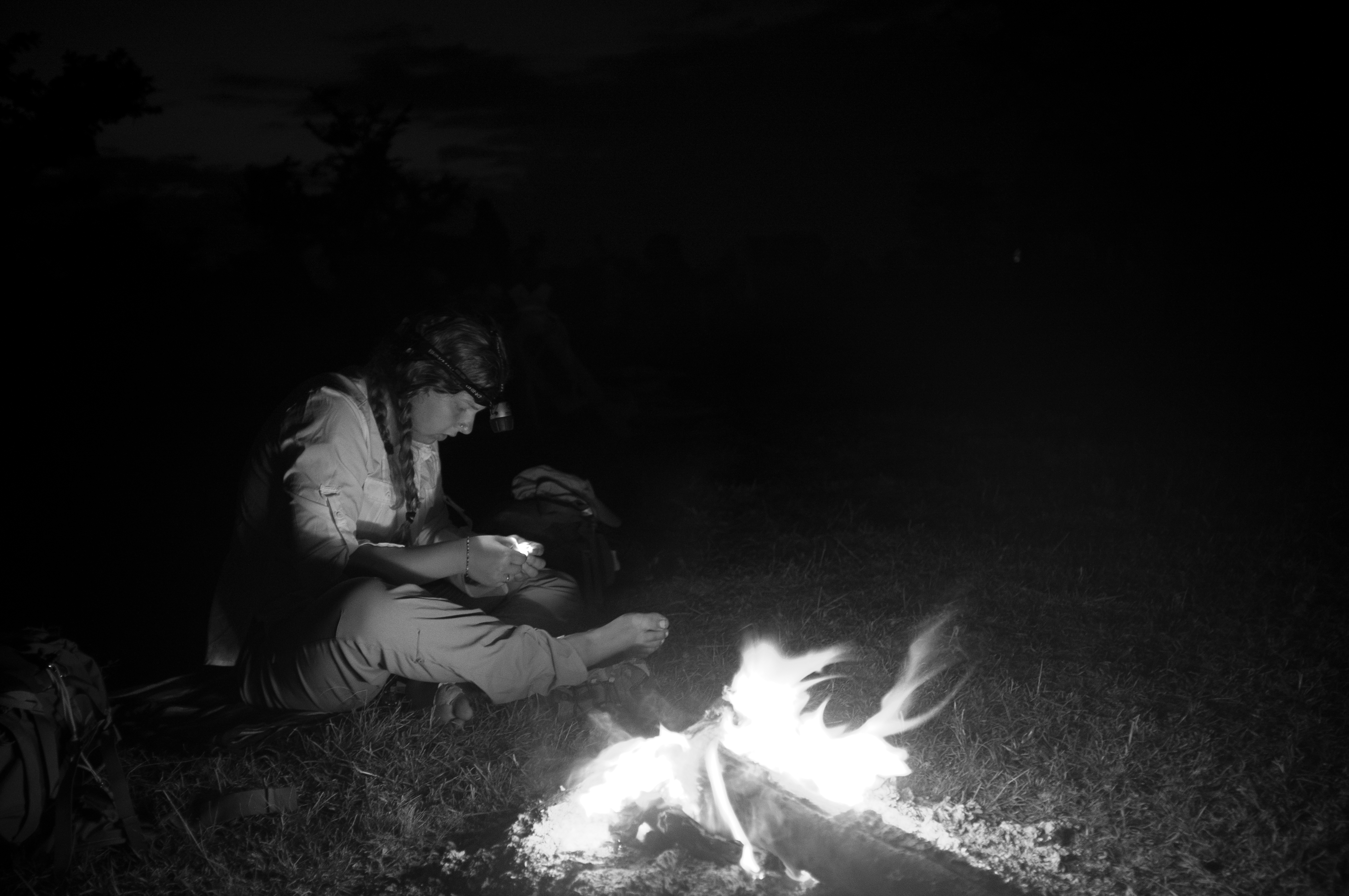
By day 3 our blister competition was in full swell. Helena had the most, but mine were the largest. We compared our wounds around the fire at night, arguing over the best way to apply moleskin — plaster it right on top of the hot spot, or cut a hole in the middle so it lay around the sore? I used the plaster-over technique and I could say it worked just fine, but I had the biggest blisters. Helena used the hole technique,  and she could say it worked better, but she had the most. Who knows? All I know is that blisters are a scourge; they hurt to walk on, each step a new sensation of pain.

So why would we do this trek, with full knowledge it will hurt?  The “Pleasure and Pain Principle” states that all human behavior is motivated by two things – seeking pleasure and avoiding pain. But with these walks, pain’s a given; there’s no avoiding it. The futile efforts of good socks and shoes and the endless crap-parade of moleskin count as attempts to avoid pain, I suppose, but they don’t work.

Each day we awoke knowing that the morning light would be radiant,  long and ancient savanna shadows would drape the cool air, and the camels would groan and gnash in contempt for their burdened backs. Those were givens. And so too was the knowledge that the day’s first steps would hurt like hell.

After an hour or so of walking, however, the individuality of each blister morphed into a single, throbbing, vibrant burn. Our steps felt more like bare feet over hot coals — a right of passage best endured without complaint. And really, what would be the point of complaining?  We had a mission to complete and a cause greater than ourselves driving us forward.

As a steady reminder of why we walk, a beautiful stream of children meandered through our caravan.  Barefoot kids effortlessly scurried around us and over broken, rocky ground. Some had babies holstered to their hips, others carried buckets or bags on their heads. One boy ran by gripping hand-hewn crutches, dragging polio-ravaged legs behind him. This land is not easy to navigate, even for the able-bodied.  Every step seems to have an element of peril, in every face a story of hard-earned survival.

Helena saw it too, and so in silent agreement and mutual respect for the path we both must walk, we eased into our stride and into a state of mind, numb to personal pain, and awakened to those who walk with us.  As walkers for a cause, we were like mystics who self-flagellate, inviting a bit of pain to bring us closer to the divine.

I’ve heard it said that all art comes from a place of pain. To create something beautiful is to recognize that pain exists.  Beauty is a salve for fresh and old wounds. In that sense, Helena is an artist, creating beauty from pain, and finding strength from a point of weakness.  Every masterpiece holds a paradoxical twist of those extremes.

The below stanzas are excerpts of a spoken work poem Helena Sarcone wrote, post-walk, in Nairobi.  These are lines that paint the beauty of pain and poverty. 

“Every time, it’s something

Something different

Jealousy, want, wonder

We all stare

Their malnourished bellies escaping under their shirts

Dirt houses held up by love

Wide eyes follow us

As they stare

On both sides, each stare is met

Some held, others forgotten

But all true”

Jeff James_Tembea Na Mimi_2015_333

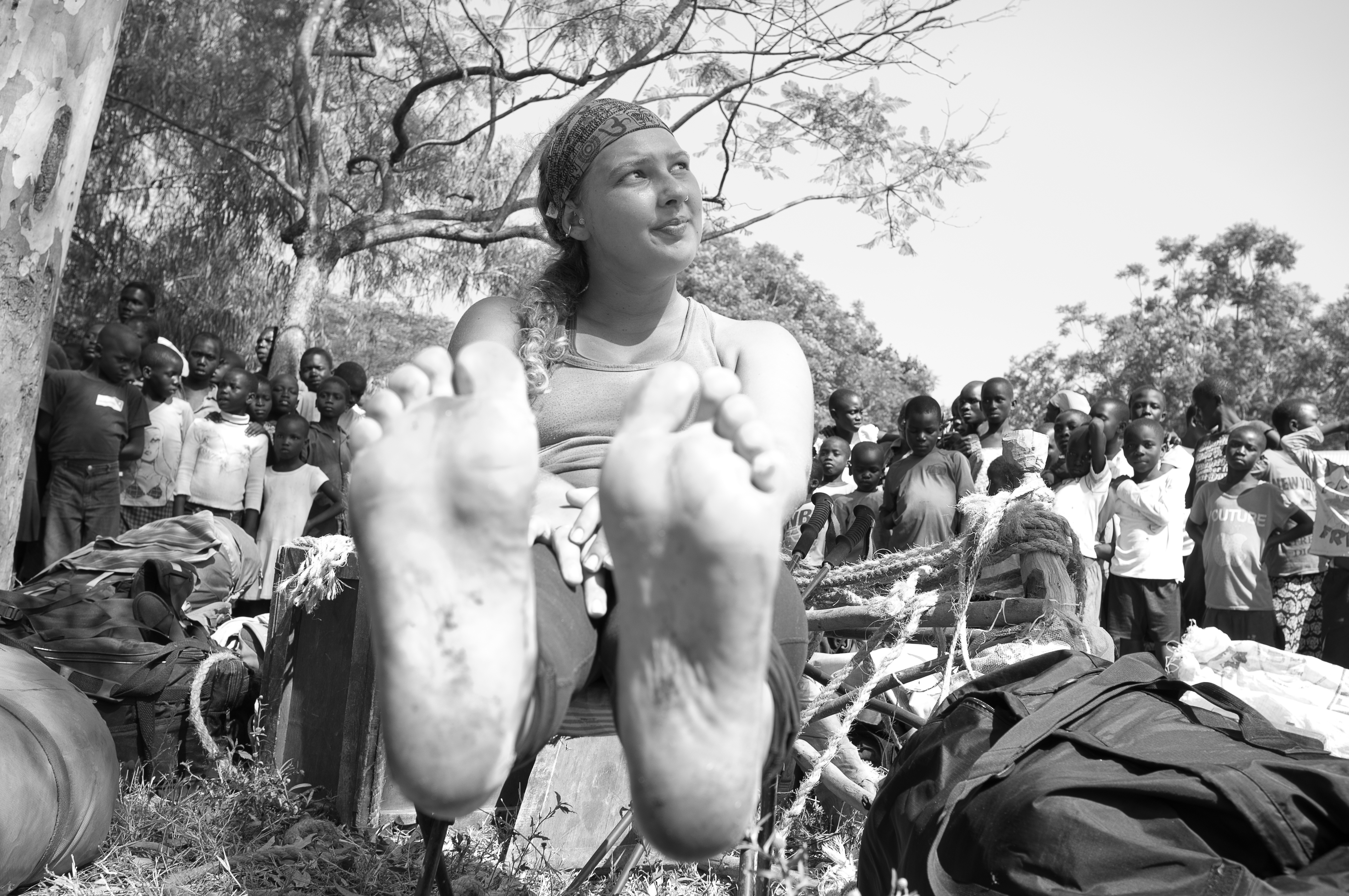
Post walk foot portrait.

Jeff James_Tembea Na Mimi_2015_301

Singing “Ooo Le La Lo” to some curious locals. Helena always initiated a song as a way to make friends.

Jeff James_Tembea Na Mimi_2015_281

Sunset on the Migori air strip.

Jeff James_Tembea Na Mimi_2015_208

A dirt house held up by love.

Jeff James_Tembea Na Mimi_2015_079Foot repair around the evening fire.

Jeff James_Tembea Na Mimi_2015_064

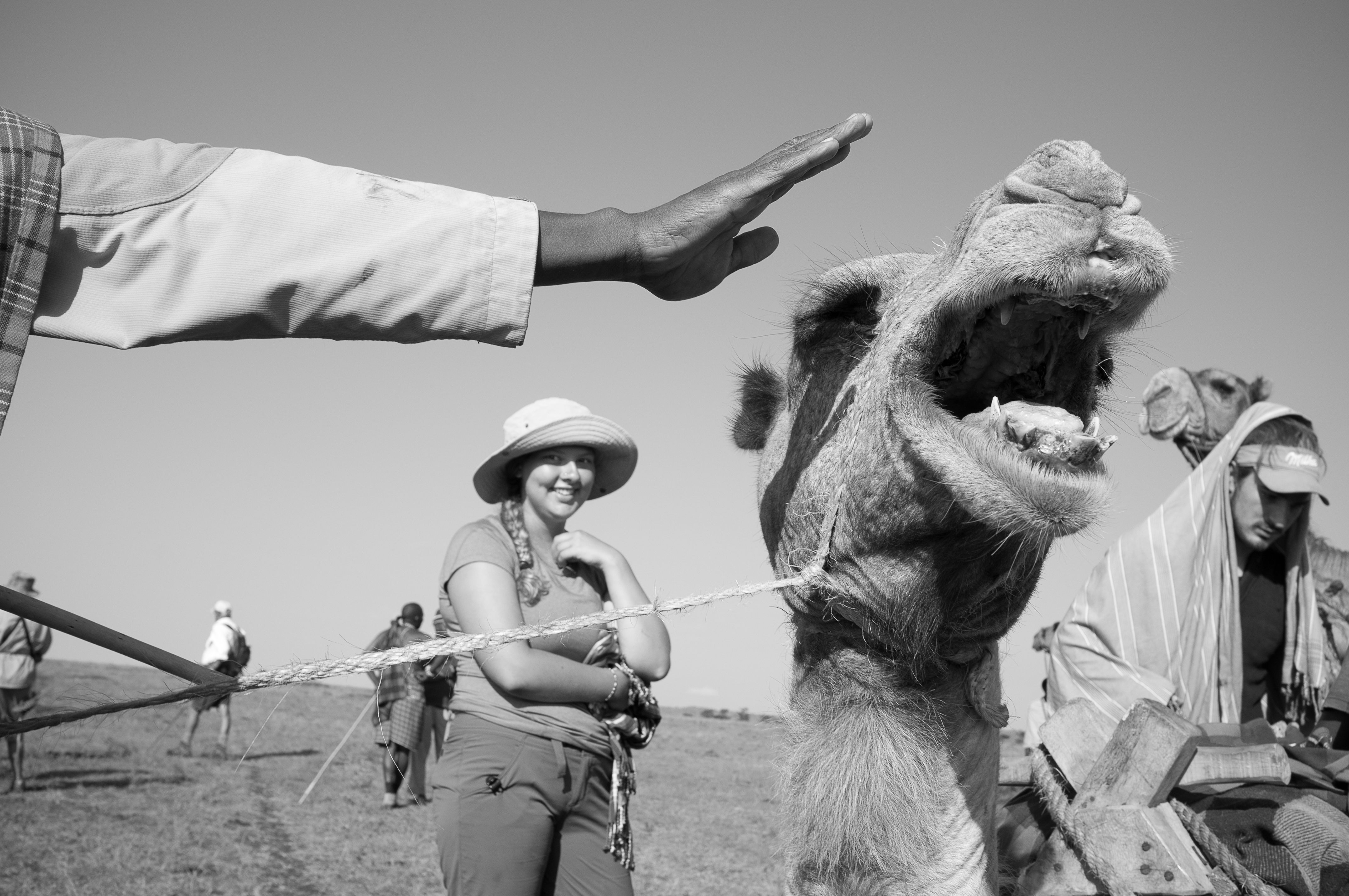
Riding high and giving the camel a try.


Jeff & Hillary JamesThe Principle of Pleasure and Pain, Part 4
read more

“Not Your Average Joe,” Part 3 of Tembea Na Mimi

This is Part 3 of a multi-part essay that chronicles Tembea Na Mimi, a walk across Kenya.

by Jeff James


“Silence is the mystery of the world to come. Speech is the organ of this present world. More than all things love silence: it brings you a fruit that the tongue cannot describe. In the beginning we have to force ourselves to be silent. But then from our very silence is born something that draws us into deeper silence. May God give you an experience of this ‘something’ that is born of silence. If you practice this, inexpressible light will dawn upon you.” —Issac of Ninive

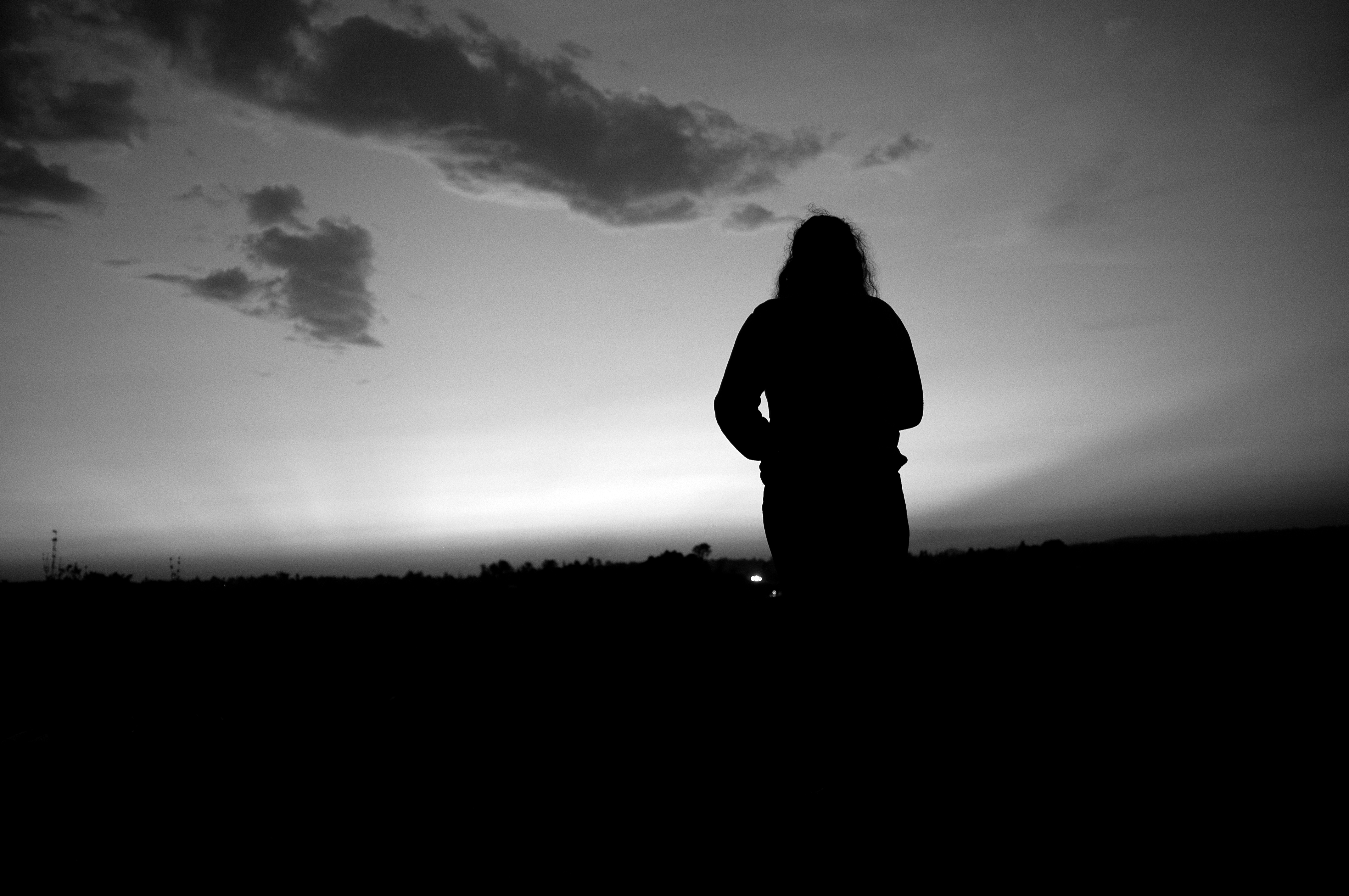
walkersLike an effigy backlit against the horizon, a totem of great power, Joe walked alone. He was a solitary figure, a classic introvert, and before arrival in Nairobi, he was a great mystery. We represented him as a silhouette in our newsletter and the stories I imagined about him were legendary.

I had his application, I knew he was Joe the engineer from Arizona. But in my imagination he was Joe the mercenary, or Joe the CIA spy using the cover of humanitarian adventurer to wage a secret war against Al Shabaab.  I expected to meet gun smugglers sitting under an acacia tree as we crested a hilltop in the middle of the bush.

Sadly, that never happened; Joe is an engineer from Arizona.  He is a humanitarian and an adventurer.  He is a solitary man, quiet and gentle. A triathlete, tall and strong.  He is a proud husband and father.

And he is more than a silhouette.  He is Joe Synk, a multi-dimensional person, who liked to walk alone.

With his head down, hat pulled low over his eyes and every inch of skin sheltered from the sun, Joe set the pace.  He led the group not out of a competitive desire to be first, but because his legs needed to move at that pace.

His steps were rhythmic, like tapping out a walking meditation, as if he were aware that silence is precious and each step is sacred. 

The Lakota Sioux believed similarly about smoking tobacco, that it is a sacred ritual and the exhaled smoke is the vehicle that carries the prayer into the universe.  

Joe’s vehicle was his feet coupled with an unbreakable stride — each step fully grounded, each carrying purpose and hope.


Jeff James_Tembea Na Mimi_2015_121


In distance walking, I’ve always referred to that mental space where the mind fully controls body and breath as the “zone.”

The zone exists somewhere between “damn, this hurts” and “oh, what a beautiful sunset.”  In the zone, you lose awareness of your body in motion, breathing is regulated and feelings of fatigue slip away. You are a windup soldier with an ever-coiled spring.  And in that perpetual motion, your thoughts are free to debate and solve humanity’s greatest problems or simply contemplate the existence of being.  As one’s body moves through space and time, so do thoughts dance in the head.

I remember thinking in one particular zone, that in America, we joke about lawsuits for tripping over a crack in the sidewalk.  But are we joking?  Born into opportunity and relative wealth, we expect our paths in life to be clear of all obstacles. I struggled to walk at times because of bad blisters on the balls of my soft feet, painfully aware that the culture I was born into created this softness. First world living is the source of my weakness, I silently grumbled. Step, step, step . . .Jeff James_Tembea Na Mimi_2015_276

Then I began thinking about life’s blessings, each step ticking them off, countless advantages, birth rights of an American, etc. Opportunities to earn and learn have always been present in my life.  But not so for most of our brethren whom we walked with and for . . . and so the thoughts flowed, and we walked on with Joe leading the group, in a zone where his purest intentions were healing the world.

I really do believe that those silent intentions, prayers if you will, have great power to heal and change the world.  The world needs more people like Joe, who quietly and firmly lead us to walk with purpose.  He is not your average Joe.  He is Joe Synk, husband, father, engineer . . . and friend from Arizona.


Jeff James_Tembea Na Mimi_2015_223

Joe and David lead us away from the Mara river where we bathed the night before in front of a crowd of curious onlookers.

Jeff James_Tembea Na Mimi_2015_299

Joe greets an elder from the community who came to see our spectacle.

Jeff James_Tembea Na Mimi_2015_201

Sunrise, facing east toward the Rift Valley, Joe readies for the day.

Sunset Lake Victoria, Matoso, Kenya. Jane and Joe share a private conversation at the See Lodge.

Jeff & Hillary James“Not Your Average Joe,” Part 3 of Tembea Na Mimi
read more

“Lawrence”, Part 2 of Tembea Na Mimi

This is Part 2 of a multi-part essay that chronicles Tembea Na Mimi, a walk across Kenya.

by Jeff James

Jeff James_Tembea Na Mimi_2015_050

He was “our Lawrence,” tall and lean, culturally fluid, graceful in life, and impeccable in manners.  His name is Michael Nation, and he walked like a Somali tribesman.

As we walked the Migori road, a Somali man driving a matatu pulled alongside our ambling forms, excitedly asking “Are you from Somalia?”  Our pink skin quickly gave answer, but his excitement didn’t fade. We were walking with 22 mixed-breed Somali camels through Luo land! Camels in this part of Kenya were unheard of, and this man felt like he’d returned home.

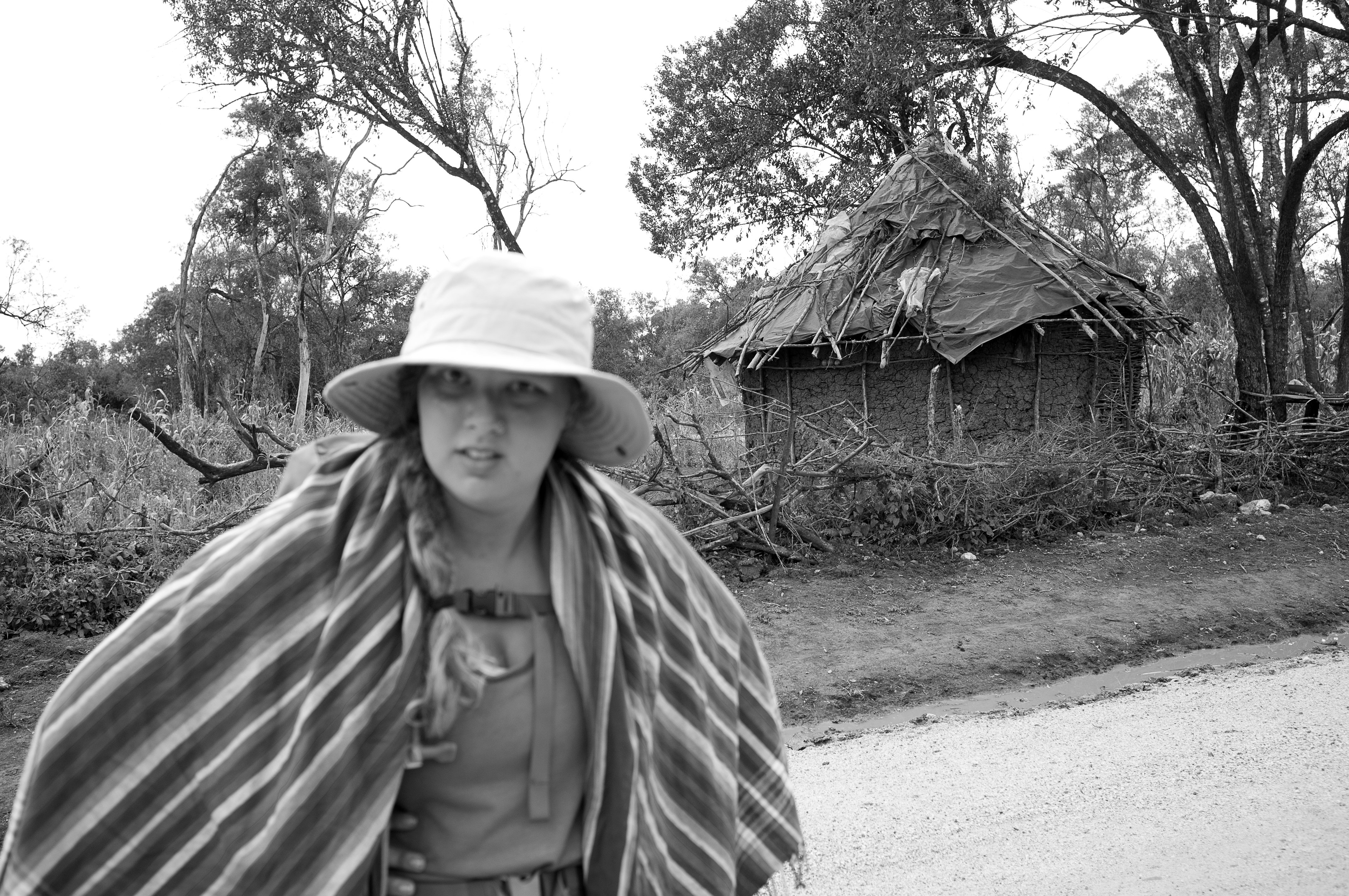
His interest in us energized me.  I started stepping a little higher, reaching a little further, striving to minimize impact and harness the energy of each step into forward momentum. I imagined myself walking like a Kenyan. They walked with ease, bodies gliding over broken landscapes as if they were paved pathways. Their heads and bodies remained motionless as their legs effortlessly moved forward.  For brief moments, when I tried really hard, I could be as graceful in my stride too, but mostly, I lumbered.  My body jostled and lurched forward, like an American accustomed to sidewalks.

Jeff & Hillary James“Lawrence”, Part 2 of Tembea Na Mimi
read more

Ooo Le La Lo, Part 1 of Tembea Na Mimi

This is Part 1 of a multi-part essay that chronicles Tembea Na Mimi, a walk across Kenya.

by Jeff James

Jeff James_Tembea Na Mimi_2015_244

The blisters on my feet have healed and the limp has gone away, but what lingers the longest are these words softly sung from recent, precious memories:  “Ooo le la lo, ooo le la lo, ooo le la lo, la le loooo . . .” It’s a call and response song, and no matter where I am or what I’m doing when that memory calls, I respond: “Le laaa lo, le la-la lo. Le laaa lo, le la-la loooo.”   It’s a song with a melody that rides the crest of your breath, and just makes you want to smile.

Meaningless words they were, but we all understood them to mean love and friendship.  And we witnessed this song bridging language and culture, closing many divides between us.

We sang with our guides around the fire at night and we sang with hundreds of people who gathered to watch us pick ourselves up and wring ourselves out after being pummeled by monsoon rains.

We sang with orphans, and patiently waited for their echoed response, which invariably came.  Once sung, these were words that had to be repeated, even if only silently in the quiet of the mind.

A song, 22 camels, 2 Canadians, 9 Americans, 2 Scots, 9 Kenyans, “thereabouts,” and a lot of land to cover, we marched for 10 days covering 163 miles.

But the distance and time are no longer relevant; they never really were. They are just numbers to help quantify what we did, vying to impress you with our strength and commitment to complete a great physical challenge.

The real adventure story is not the physical challenges or the daring passages through wild lands (although there were plenty of those). It’s the people who came together to complete this mission who are the fabric of this tapestry.  The fabric of all adventures is woven by the characters who lived them.    

Over the course of the next several weeks, I will reveal to you a journey rich in adventure, saturated with ardent altruism and with noble deeds.  These are good people. Expect good stories. 

Jeff James_Tembea Na Mimi_2015_245
Thea Nation shares a song and dance with Bara Bara, our lead guide.

First, there’s Mama Thea who taught us the song to heal and lift our beaten spirits.  She was a healer by trade, a retired hospice nurse, who has no doubt provided comfort to hundreds of dying lives, and as I’ve experienced firsthand, to the vibrant as well.  I use that term loosely.

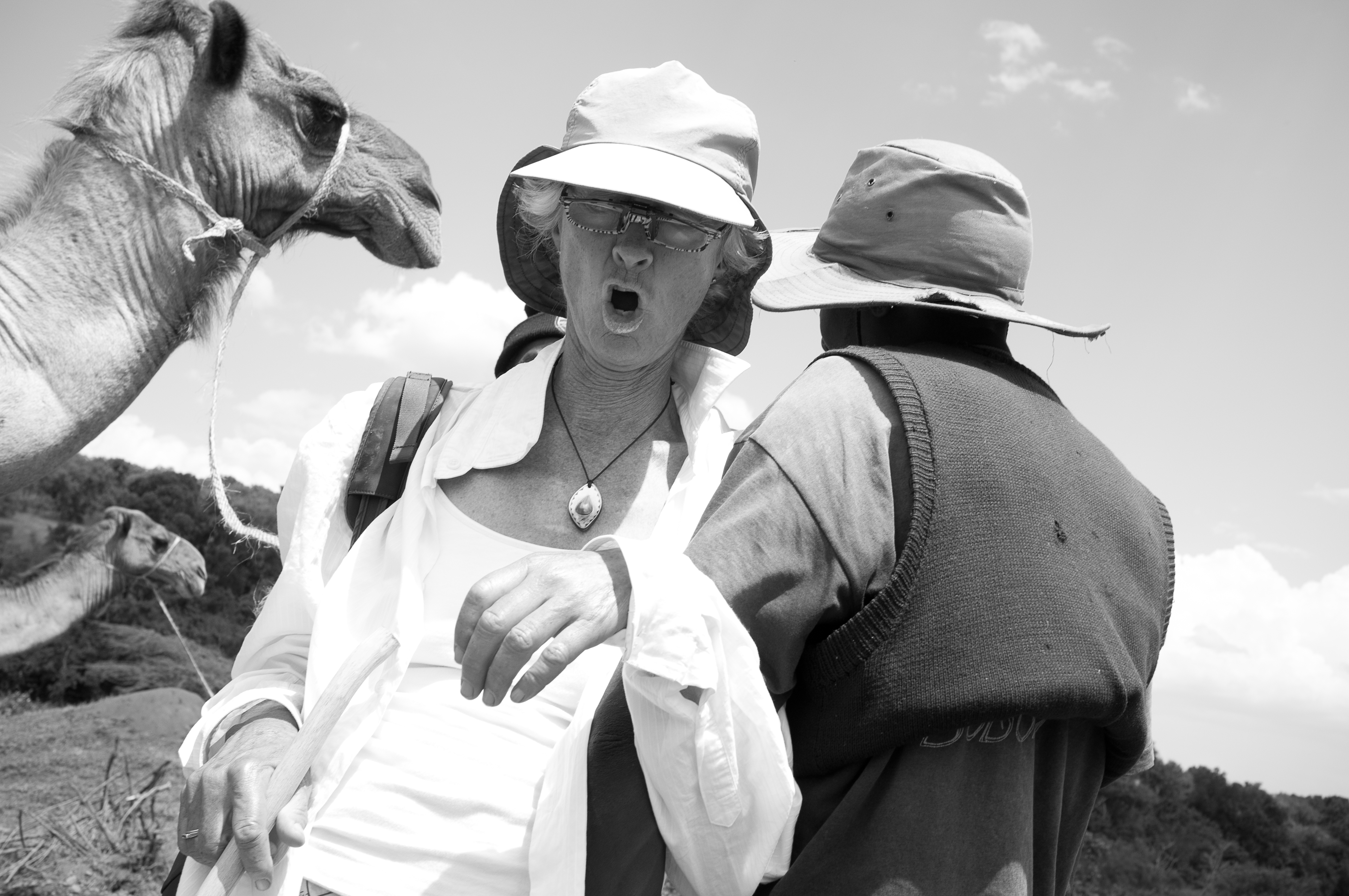
Thea massaged the feet of the sore and dressed the blistered wounds of the ailing.  At the sight of one mangled foot she declared it “positively unattractive,” and then proceeded to clean and mend.  She is a healer. Thea Nation, R.N. (retired nurse) she liked to exclaim.  She was the anchor thread to our tapestry, the zig to our zag, our comic relief and confidant, she was the Queen Mother. Riding high atop the camel, she surfed to the camel’s gait, arms outstretched, fluid and regal.   All wanted to bow in her presence; some did.  

I don’t know when Thea began a life of service, I suspect she’s been a giver her entire life.  Her history with Lalmba spans 30 years, first aiding Eritrean refugees in the Sudan in the 1980’s.

When I met her in Nairobi, she had just finished serving as a hospice nurse in Tanzania.  I have no doubt her CV is filled with great deeds of humanitarianism.  I have even less doubt that her healing extends far beyond the confines of her profession.  She touches the lives of everyone she meets.  She makes everyone feel special and a little happier to have shared an experience with her, no matter how brief.


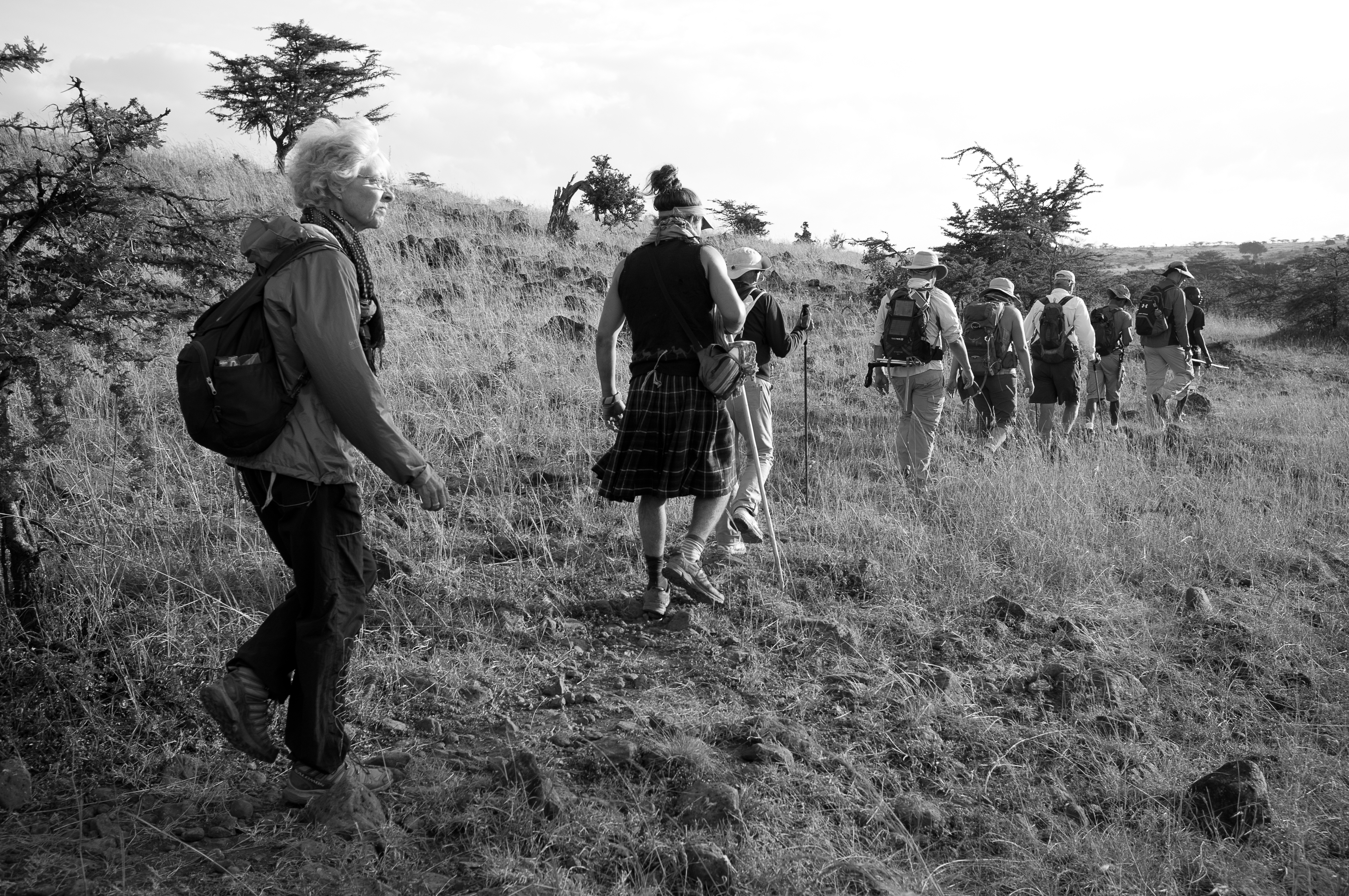
Thea enjoys the morning light. Morning time, when the shadows are long and the legs fresh (yes, that is a kilt you see), it’s the ideal time for looking around. As the afternoon wanes and the legs and feet tire, we struggled to look past our feet. Each step becomes measured by the energy left to keep us upright and moving forward.
Jeff James_Tembea Na Mimi_2015_046
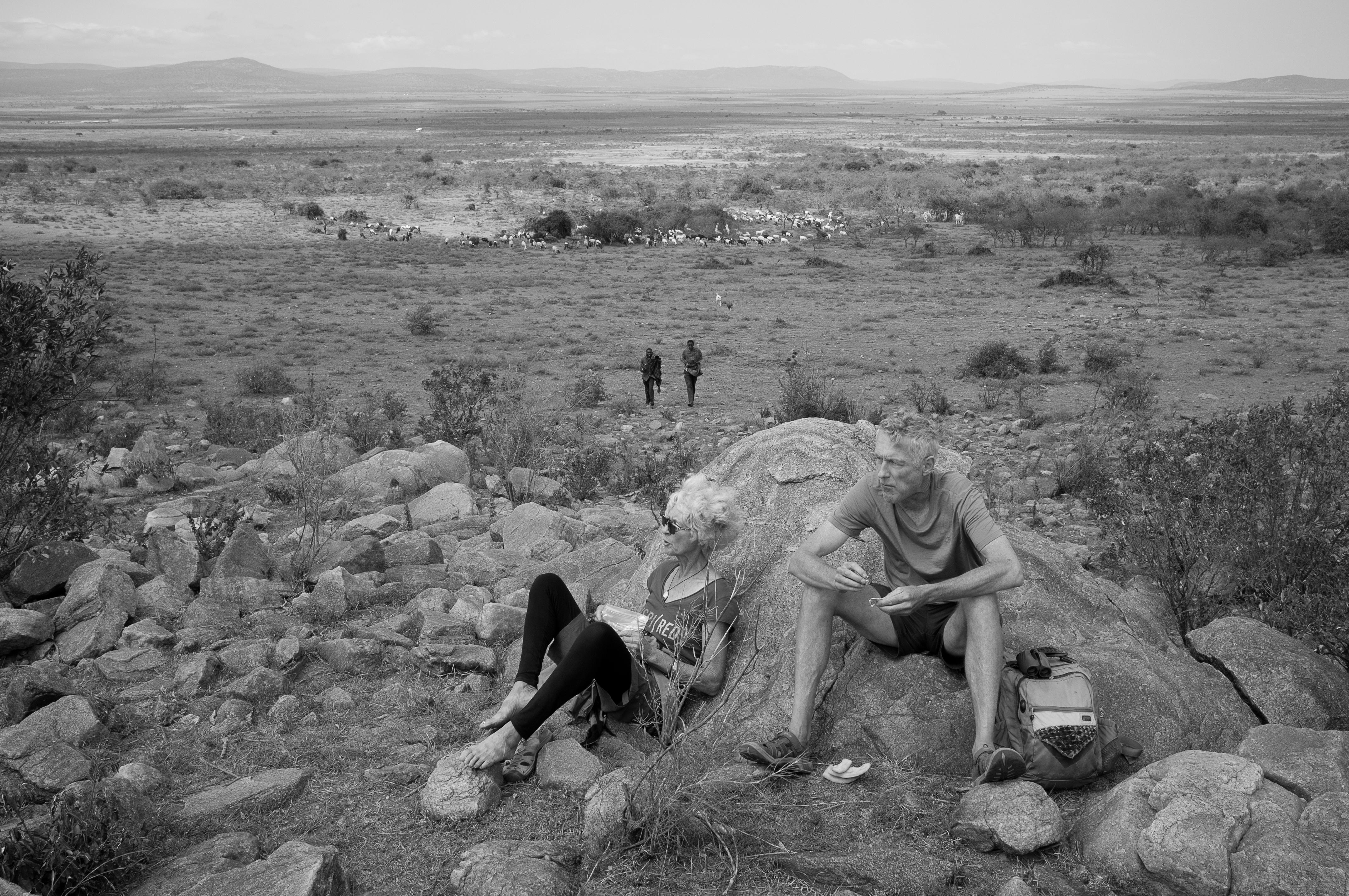
Thea and Michael Nation (siblings) share a boulder and some trail food. Here we are in the north Maasai Mara conservancy, heading southwest, looking out over pastoral land grazed by Maasai livestock, primarily goats, sheep and cattle.
Jeff James_Tembea Na Mimi_2015_136
Thea and Jane Obernesser enjoying the sunset and a conversation after a long day of walking.
Jeff James_Tembea Na Mimi_2015_159
Thea hugs James, our Maasai guide, goodbye. James was hired to guide us through the Mara conservancy. We said goodbye after day 6 and met a new guide to take us to Kihanche. James could spot wildlife miles away. We all strived to develop the Maasai Eye.
Jeff James_Tembea Na Mimi_2015_226
Thea hydrates along the roadside.
Jeff James_Tembea Na Mimi_2015_305
After the monsoon.  Thea leads a group of children in singing “Ooo Le La Lo.”
Jeff James_Tembea Na Mimi_2015_353
Thea makes friends with one of Lalmba’s RCAR children, a young girl with drug-resistant HIV.
Jeff & Hillary JamesOoo Le La Lo, Part 1 of Tembea Na Mimi
read more

Hugh’s News, Vol. 52, No. 3 – June 2015

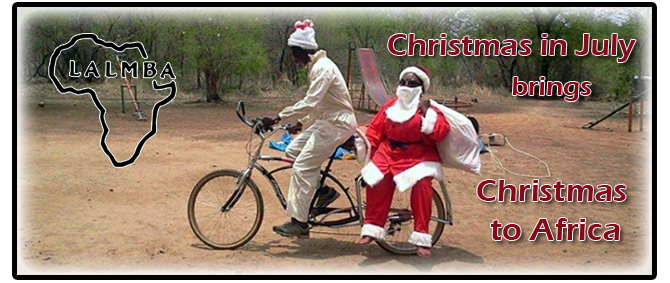
Merry Christmas!!

“Huh? It’s June, you dope, a little early in the season, don’t you think?!”

santa-bicycleYes, we know, but we have so many delightful African treasures we have collected over the past 50 years!  While you’re sunning yourself this summer, browse our Marketplace page (http://www.lalmba.org/market-place/) and get a head start on your shopping. Where else will your early Christmas shopping improve the lives of the poor in a forgotten corner of Africa?  Each African item has been handcrafted by a local artisan working hard to make ends meet.

Go to our Marketplace page to see the all the items we have for sale:

http://www.lalmba.org/market-place/


Does Lalmba Really Make A Difference?

We can think of no better way to convey the good that Lalmba accomplishes than by telling you stories of real people whose lives have been changed because of Lalmba.

GuerillmoMeet Geremew.  He was born in a remote village outside of Chiri, Ethiopia, where he and his six siblings lost their father during an earthquake.  He was six months old at the time.  His mother, who suffers mental problems, took them to the closest sizeable town a few days’ walk away in search of support.  She found none, and the desperate family was homeless and hungry.  Begging on the street with her 6 children at her side, she had no option but to give her children away to people to work as servants in their homes.  She thought, “At least then my children will be fed.”   Geremew was lucky enough to be taken in by someone who allowed him to attend school when he wasn’t working.   He was not well cared for, however, and was found by Lalmba’s Children’s Director in a very malnourished state, barely dressed, and shunned at school.  Because his living situation was so unhealthy, Geremew was brought to Lalmba Children’s Home 9 years ago.  He is now attending the 10th grade in the local school, where he is performing well, and hopes to become a Health Officer (like a doctor) and work for Lalmba’s Chiri Health Center someday.

These stories are not uncommon.  Lalmba means hope for so many impoverished children with a bleak future of servitude ahead of them.

What we find so encouraging is how much good can be accomplished with relatively little in this part of the world.  A child’s life can be transformed forever by what we pay for a monthly car payment!

  • $100 pays for all of Geremew’s needs—food, clothing, housing, school supplies, and care for 4 months.
  • $300 pays for Geremew’s inclusion in our children’s home for the entire year.
  • $700 pays for the nutrition program, which trains families of malnourished infants on how to prepare nutritious meals to prevent future malnutrition in their children.
  • $1000 pays for 5 destitute children who live with extended relatives to attend school this year instead of work as servants or in the fields.

We inhabit is a topsy-turvy world full of great imbalances.   Each one of us could have been born on the floor of a mud hut in a tiny village in Africa. But instead we live in a place of plenty.  The lives of our African brothers and sisters are no less beautiful than ours, full of happiness and pain just like our own, but their human struggles are magnified by lack of access to basic needs.  Lalmba strives to meet those physical needs as much as possible, so that they face less needless tragedy in their lives.

It is enriching for all of us who do not ignore life’s imbalances.  By acting with compassion for our fellow humans who have so little, we answer the call to make this world a slightly happier, healthier and more hopeful planet.


Tembea Na Mimi:  A Walk Across Kenya!

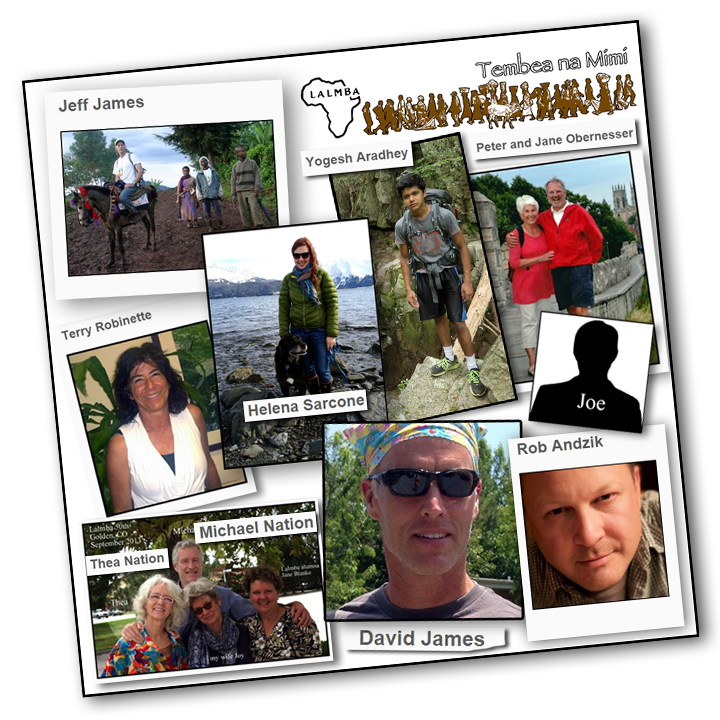
walkers

It’s really going to happen, folks. On August 3, 11 Lalmba supporters will embark on the adventure of a lifetime!  We are going to push ourselves to exhaustion, and face extreme physical and mental challenges as we plod 150 miles over 10 days across the ancient, wild lands of Kenya, East Africa.  We are not aware that this exact route has ever been attempted before.  We will end our adventure at the lakeside village of Matoso, the home of Lalmba’s largest program, which serves about 1200 destitute children.

Why are we doing this?

Like the explorers before us, we will endure hardship for a cause greater than ourselves.  We will walk the land of the people we serve. We will bear witness to their great needs, to the great beauty of their country and culture, and we will strive to understand what it means to spend a lifetime walking in poverty.

When we come home, we will bring back stories of the great challenges, the breathtaking beauty,

and the real people we met who are struggling to survive.  Please consider sponsoring one of us. Your sponsorship goes directly to Lalmba. All the walkers are paying their own expenses.


To learn more and sponsor a walker, visit our website:

Jeff & Hillary JamesHugh’s News, Vol. 52, No. 3 – June 2015
read more

2014 Annual Report

2014 Annual Report

DSCF8141b

Mission

Empowering rural communities in Africa to provide their own people with high quality basic health care, effective public health initiatives, microfinance and support for vulnerable children. We have a special love for children, whom we see not as a burden, but as part of a brilliant future for Africa.

Vision

We envision a healthy, prosperous community where all at-risk children are educated, preventable disease is eradicated, and opportunities exist for people to provide for themselves and their families.


Letter From The President and Vice President

james family 2015In 2014 we evaluated our mission statement and our programs to ensure they are well-aligned.  We espouse a guiding philosophy that is solution-oriented.  We do not want to put Band-Aids on real human problems – problems that we know are solvable if the root causes are correctly identified, and the tools to fix them are provided.  So, what is the problem?  The problem is systemic poverty, and Lalmba is constructing the path to move beyond it to a more promising future.

For any plan to succeed and for solutions to be sustainable, they must be community-led.  Our mission statement discusses “empowering rural communities to provide their own people” with their needs.  What are those things a community needs to be healthy, prosperous, and independent?   4 basic indicators of a healthy community are access to education, health care, economic opportunity, and nutrition.   A community without any one of these is a struggling community.  Here’s how Lalmba addresses those needs and how we assess when our job is done in a community.  Because if problems truly are solvable, then one day we will be able to declare mission accomplished.

  • Education – First and foremost, children must have access to education. The children in these communities who go to school come from families who have a means of income.  The children who don’t attend school are destitute; their families can’t afford the costs, which leave the children as uneducated laborers or servants, guaranteeing another generation of poverty for that family. We call those children “at-risk.”

In 2014, Lalmba enabled 1166 at-risk children to get an education. We believe that the greatest way to change the future is to invest in the children of today, empowering them to be the future leaders of their communities.

  • Health Care – There is ample evidence showing a direct correlation between physical health and economic prosperity, both individually and at the community level. People who are sick can’t work; communities without health care don’t thrive.

In 2014 at our clinics in Ethiopia and Kenya, we treated nearly 50,000 people, saving thousands of lives, and allowing sick adults to get back to work sooner.  Children are healed so that sickness does not impede their learning.  Babies are treated for malnutrition, and families trained on how to provide nutritious meals, to make them all healthier with more potential.

Our public health teams, travelling to the most remote communities, teach people about the importance of sanitation for overall health, and how to prevent disease before it starts.

  • Access to Economic Opportunity – Financially healthy communities have diverse business opportunities, and access to start-up funds for entrepreneurs. In rural communities, access to affordable loans is extremely limited.  We provide small loans to the poor who know how to pull themselves out of poverty, but lack the means to get started.  In 2014 we gave small business loans to 52 people, placing them firmly on a path to independence.

The success of this program has spurred us on to revamp our RCAR program, giving small business loans to the parents or guardians of the children we support. We hope to see our microloan program grow exponentially in the coming years so that more families can reach independence.

  • Access to Nutrition – Under normal situations, we believe that if the above 3 needs are met and in balance, a community can provide for its own nutritional needs. In extreme situations, such as extended drought or politically imposed famine, charities must step in to help with nutrition. But the danger of creating food dependency is real.

We provide supplemental nutrition only when necessary and only as long as necessary. For example, we have orphans in our RCAR program living with a guardian (most likely an ailing grandmother) who is incapable of working to provide food. Without our nutrition intervention these children would truly go hungry. Likewise, in our Elder Care program we provide food sustenance for elders who have no one else to care for them.

How do we know when an area of our mission is complete?  Lalmba first began in these rural communities because there was no provision of any of these services locally.  Over time, with our community development efforts, we have been looking for the emergence of similar services locally.  If services are being duplicated, then we see that as a sign that this community is reaching the ability to meet its own needs.

Here’s a powerful example. 16 years ago Lalmba opened the first modern medical facility in Chiri, Ethiopia. At that time, Chiri was a small farming village with no electricity, no running water, no telephone service, and a horse path wide enough to be called a road.  Today, it has become a trading point for farmers in the southwest. Chiri now has 2 private clinics, a government health center, and a private pharmacy. There is still an abundance of poverty, lack of access to education and business opportunity, but the trend is favorable that this community will soon be able to meet its own health care needs. We are close to saying ‘mission accomplished’ in the area of health care there!

So the exciting news is that we can begin a gradual and sustainable handover of health care responsibilities to our partners in Ethiopia, the Catholic Church and the Ethiopian government. And we can begin a prayerful and thoughtful search for that next end-of-the-road community, the community with no health care, a high prevalence of at-risk children, and a lack of economic opportunity. Then we can begin empowering a new community with the tools to shape a future that is filled with hope.

Jeff and Hillary James

President and Vice President, Lalmba Association


WHAT’S LALMBA DOING?

DSCF8149Lalmba is empowering rural communities in East Africa to provide for their own needs.  We’re striving to end generations of poverty by addressing the 4 basic needs for people and communities to thrive:  Access to Education, Health Care, Economic Opportunity, and Nutrition.

Lalmba tackles these objectives by giving priority attention to the most vulnerable of citizens — the poor, the children, and the marginalized. We prioritize at-risk children and ensure they are receiving an education, health care, and have a place to call home.  We see a future where today’s children are tomorrow’s leaders.

At our health care facilities in Ethiopia and in Kenya, we save lives on a daily basis, and we educate these communities about disease prevention, achieving healthier, more self-reliant communities.

Our Microloan programs provide small business loans to entrepreneurs and to RCAR guardians, sparking economic growth and introducing business opportunities for the poor, who traditionally have no options.


Primary Health Care

DSCF8220Lalmba runs static health facilities in Kenya and Ethiopia, where we diagnose and treat illnesses for the poorest of the poor. We strive to heal the sick so that they can have the strength, not only to survive, but to grow and be part of transforming a poor community into a prosperous one.   At each facility, we charge a service fee to those who can afford to pay, but we turn away no one – those without the means to pay are given free treatment.

In Kenya we operate the Matoso Clinic and the Ochuna Dispensary, serving a catchment population of about 100,000 people.  In 2014, we treated nearly 30,000 patients suffering from an array of illnesses. The most common diseases treated are malaria, anemia, bilharzia, malnutrition, pneumonia, UTI, diabetes, STI, dog bites, and diarrhea.

HIV has done great damage to the family structure, leaving behind orphaned children and elderly parents with no one to care for them in their declining years.  We change this dynamic through intensive HIV counseling, education, and treatment for those who test positive.  In 2014, 1558 people were enrolled in our counseling program, and 1036 people received antiretroviral therapy.

In Ethiopia, we operate the Chiri Health Center, serving a catchment population of 150,000 people. In 2014, we treated nearly 20,000 people for a range of illnesses. The most common diseases treated were pneumonia, malnutrition, parasitic infections, skin infections, musculoskeletal disease, dyspepsia, acute respiratory infection, UTI, diarrhea, Otitis and other ear infections.

We have a 15-bed hospital ward where we provided 24 hour intensive treatment to 655 critically ill patients, saving and discharging 631 of them.  These inpatients included 205 severely malnourished children, who required 3-4 weeks of intensive care. They would have died without it.

In Eritrea, Lalmba provided a grant to assist the Catholic Church in purchasing medicines and supplies to run the Halhal Health Center (catchment population of 12,676) and the Boggu health station (catchment population of 3783).  In 2014, 11,454 people were given outpatient care at these two facilities. The most common illnesses treated were pneumonia, diarrhea, skin infections, ear infections, and eye infections.


Public Health Care

DSCF9380In Kenya and Ethiopia, our public health programs aim to prevent disease before it starts. This is where the long-term battle for health is won.  A diagnosis of malaria can mean weeks in bed for a child or parent, for example.   A person who stays healthy won’t need those weeks away from work or school, improving their financial and educational potential.

Intensive health education tailored to the cultural needs, the most prevalent health issues, and the learning abilities of the people we serve is a goal of this program.  Early intervention in the form of prenatal care, well-baby checks, and immunizations makes up the other part of our public health program.

  • In Kenya, nearly 5000 people were touched by our PH team in 2014. Mobile clinics traveled to remote communities 2-3 times each week to provide education, immunizations, and mother/child health intervention. Education topics included HIV/AIDS prevention, transmission and treatment, hygiene, malaria prevention, clean water, and nutrition.
  • In Ethiopia, our public health team provided education to about 16,000 people. This team has been very successful in finding creative ways to teach a largely uneducated population. They built a portable stage and created a series of dramas utilizing props and costumes to teach relevant health topics, such as Mother/child health, EPI, nutrition, communicable diseases, environmental and water sanitation, TB, HIV/AIDS, and public safety. The Ethiopia team is also an invaluable partner to government health workers, providing strategic support to treat people who are furthest from established health sites.

We also:

  • Make and sell low-cost latrine slabs
  • Provide mosquito nets to prevent malaria
  • Help community members sell a bleach product that makes drinking water safe
  • Provide cooking classes to train people to use the local foods to prepare well-balanced, nutritious meals.

Children at Risk

JJ005444bIn 2014, Lalmba provided for the basic needs of 1186 at-risk children.

This number includes 20 at-risk children for whom Lalmba provides a grant to the Catholic Church in Eritrea to provide clothing, food, school materials, school fees and uniforms.  Although Lalmba cannot have an on-the-ground presence in Eritrea at this time due to governmental restrictions, we continue to support vulnerable children in the place of Lalmba’s founding 52 years ago.

Without Lalmba’s intervention, their futures would involve no formal education, no health care, and little chance for prosperity.

In 2014, we also introduced a new microloan program which lends business startup money to guardians of our RCAR orphans, women who know how to reach independence, but lack the means to get started.

Lalmba Children’s Homes

Lalmba children’s homes provide for 56 children who have no one to care for them. We strive to provide them all the advantages that they would have if they had 2 healthy and working parents. They do not live in luxury or at a higher standard than their peers. They wear local clothes, live in modest houses, and have chores and responsibilities. We want them to be prepared for adulthood, which comes fast in this part of the world.  We also want them to reach their fullest potential, and encourage them to excel scholastically.


JJ005452b


RCAR (Reaching Children at Risk)

RCAR is where we see the most potential in providing for the greatest number of children. In 2014, Lalmba ensured that 1130 destitute children were nourished, clothed, educated, and had access to health care. Some of the children are orphans; all of them are completely destitute.  The difference between an RCAR child and a Children’s Home child is that RCAR children have someone who can help care for them, a guardian. Often that person is a single mother, an aging and ailing grandmother, a distant relative or a neighbor.  All are financially strapped and struggling to surviveWe assist them by providing for the basic needs of the child and ensuring that they are in school.  We endeavor to be a resource for the entire family, guiding them towards a path of self-reliance.


Elder Care

JJ005407bIn this part of Africa there is no such thing as social security or retirement, no assisted living communities for the elderly.  For generations, the family structure has provided the safety net for the elderly when they become too old to care for themselves.  But that safety net has been eroded by HIV/AIDS.  Not only do scores of orphaned children have no one to care for them, but many elderly widows and widowers who lost their children to AIDS are left alone with orphaned grandchildren. For many elders, this burden is too much and they suffer from hunger and neglect.

For the past 3 years, Lalmba has been providing some modest assistance to the elderly who lack family with resources to assist them: a bar of soap, a mattress and blanket, some food supplies. Last year we supported 60 impoverished elderly in Kenya.  For some, we provide a simple chair so that they can sit upright and get off the ground. Our nurses also visit each elder monthly to ensure they are getting the proper care and nutrition to be as comfortable as possible in their final years.


Microfinance

JJ004234bOur loan programs provided small business loans to 52 people, 43 women and 9 men, in 2014.  These loans enable mothers and fathers to earn a living to provide for their families. Many loan recipients have become successful enough to grow their businesses and provide jobs and income for others. The goal is to provide a way out of poverty and effect economic change in the entire community.

Our program has a 100% repayment rate! It works so well because of community support, and no new loans are given until former loans are repaid. We partner with community volunteers, successful business people, who help train all new loan recipients in smart business practices, guiding them to success by helping them plan for growth and meet their repayment schedules. Some of the business professions Lalmba has supported in these remote communities include farmer, fisherman, produce vendor, tailor, welder, carpenter, butcher, restaurant owner, schoolteacher, hair stylist, spice distributor, and more.

In 2015, we will continue to expand microloans, business training and mentoring to RCAR guardians, to encourage their independence from ongoing support.


The People Who Make Lalmba a Success

Lalmba succeeds because of the people (volunteers and employees) who selflessly work for us and believe that through our mission and our work, a way out of poverty is possible.

Here in the U.S.

  • We have one, very dedicated part-time volunteer who works to keep our supporters thanked for their generous financial support.
  • We have two medical doctors (Lalmba Medical Directors), who passionately embrace our mission and are dedicated to service. They advise on how to meet all of our health care goals and visit projects annually to ensure we provide the highest care possible with our limited resources.
  • Because of these volunteers and their dedication, Hillary and Jeff (Lalmba’s only paid employees) can put more energy directing Lalmba’s vision and mission, strategic planning and capacity building, recruiting volunteers, and keeping the organization financially healthy through robust fundraising efforts that plainly tell the stories of the people we serve.

In Africa

JJ004694bLalmba’s programs are run by nearly 100 African staff and 3-6 expatriate volunteers who are specialists in medicine, public health, financial management, and program development.  In 2014, 10 expats from 4 different countries (Holland, United States, Chile, and Kenya) served as expert volunteers, mentoring our African staff and ensuring that our program goals are met.  Our paid African staff serve in many professional and support roles, from our Project Director in Kenya, Marico Osiyo, to our Public Health manager in Ethiopia, Social Kassa, to Zirhun Ademe, the chief of guards in Ethiopia. We have cleaners, drivers, guards, nurses, groundskeepers, health officers, housemothers who care for the orphans, and administrators.  All of these people are vital to our operations. We also have many African volunteers who spend several hours each month on oversight committees, teaching in their villages, monitoring and mentoring microloan recipients, or visiting HIV patients or the elderly in their homes between clinic appointments.


Looking Forward

16212647880_9f7fcea869_kWe look down the road often, wondering about that end-of-the-road community that still lacks its basic needs. We look forward to the day when resources are abundant enough to allow us to expand to help more communities in desperate poverty.

Lalmba believes in long-term investment.  We don’t believe there are quick fixes to generational poverty.

Development is made sustainable with time, commitment, and a focused effort on the root causes: lack of access to education, health care, nutrition, and jobs.

The communities we serve in Ethiopia and Kenya remain dramatically impoverished, but we do not believe they will need our help forever. Change and empowerment are on the rise and these communities will one day be free of foreign aid.   To ensure independence is truly our goal, we constantly evaluate our programs for any sign that we are fostering dependence instead of empowerment.  If we see signs that our efforts are impeding local enterprise or ingenuity, we know it’s time to shift our efforts to encourage local people to take charge and provide for their community.   We strongly support emerging enterprises like the private and government run health facilities in Chiri.  We will ensure that our efforts complement and do not impede their success.

As we look forward, we plan to continue our life-saving and life-changing services that bring so much hope to those we serve.  We plan to strategically downsize any duplicated services in order to focus our efforts on the most critical needs of the area, and to empower local enterprise. Because of our long-term commitment to these communities, we will not leave until we see that all 4 areas of need are being addressed by the community itself.  Simultaneously, we pray for guidance to explore more remote communities where there is no modern health care, where at-risk children hope for an education, and where businesses are few, but aspiration is high.

We will always keep children at the forefront of our efforts. We know that today’s children provide the greatest chance of ending poverty tomorrow.  But we are just one small organization. Looking to the future, we see cooperation and collaboration as a promising way to advance our mission more effectively and more broadly, bringing us closer to achieving our vision, and ending extreme poverty in these communities once and for all.


2014 Financials

In 2014, Lalmba received no funding from government or large private grants. Our income came from small, private donors, small businesses, some church groups, and a few family foundations who support our work and believe in our mission.  Our clinics in Ethiopia and Kenya charge a small fee to patients who seek treatment, but that income represents only about 8% of our overall budget.

Here in the U.S., Lalmba strives to keep our administrative costs low (about 17% of the budget) in order for most of our income to be spent in the field helping those in need. One way we do this is by not renting office space.   Our two U.S. employees, Hillary and Jeff, work from their home.

Donated funds buy medicines, medical supplies, food and school fees for destitute children, fuel and repairs for our vehicles, and pay the salaries of our 100+ African employees.

Lalmba maintains a small savings to ensure the stability of our programs, but in recent years with inconsistent donations, inflation, and program costs on the rise, that savings has decreased.  As an organization, it is one of our highest priorities to alter this trend, manage expenses and find alternative ways of generating income.

2014 Income and Spending

Total income for 2014 was $561,997. Of this income, 70% ($391,720) came from individual donors, 21% ($115,343) came from family foundations, 8% ($46,117) came from clinic income in Africa, and 1% ($8,817) from investments and interest.

Total expenses for 2014 were $763,922. Of expenditures, 82% ($626,416) was for programs, 17% ($129,867) for administrative costs, and 1% ($7639) for fundraising.

Note: Our 2015 budget has been reduced to $553,419, realigning our income and expenses to achieve a balanced budget.


The Lalmba Team

In addition to the generous 838 donors who gave us the financial means to do this work, and the 100+ African staff who work tirelessly to fulfill our goals, Lalmba is accomplishing its mission through the dedicated efforts of our volunteers, both in the U.S. and in Africa. Here are the people who gave their time to this life-saving work in 2014:

Board of Directors

Kevin Collins, treasurer

Hugh Downey, chairman

Marty Downey, member

Reginald Guy, secretary

Hillary James, member

Harry Lindmark, member

Bill Masure, member

USA Volunteers & Staff

Michelle Anderson, Donor Relations

Rob Andzik, Consultant

Kim Chen, MD, Medical Director

David Leonard, MD, Medical Director

Hillary James, Vice President

Jeff James, President

Ethiopia Volunteers

Barbara Forster, Project Director

Mudit Gilotra, MD, Medical Director

Aditi Kamdar, MD, Asst. Medical Director

Mercy Simiyu, MPH, Public Health Director

Celine Barthelemy, MPH, Public Health Director

Kenya Volunteers

Ariel Castillo, MD, Medical and PH Director

Boudewijn Bakker, MD, Medical Director

Annet Bakker, Program Specialist

Denise Hunt, FNP, Medical Director

William Westbrook, Program Development Consultant

Jeff & Hillary James2014 Annual Report
read more