

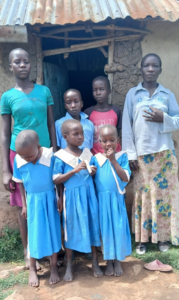
In Othora village, near Lalmba’s Matoso clinic on the shore of Lake Victoria, Caroline Anyango Awino is raising six children on her own. Her husband Joseph, a fisherman, died in 2023. Caroline was often ill. There was rarely money for school uniforms, so the children stayed home. When they fell sick, the family treated them with local herbs. The older children went into the village to beg for food.
None of that was solved from across an ocean. It was a Lalmba area advisory committee – local people
who know these families and these communities – who noticed the household and brought it to our Reaching Children At Risk (RCAR) team. The team sat with Caroline, walked through her home, and enrolled the family in RCAR.
What changed is plain. All six children are back in school, from the eldest in grade 8 to the youngest in grade 2. They have uniforms. When they are sick, they are seen and treated. Caroline is still unwell, and the family’s life is not easy. But the
children are in their classrooms, and that is no small thing for a mother Caroline (right) with her children near Othora, Kenya. All six who, a year ago, watched them go are back in school. without.
The committee that found them is Kenyan. The team that enrolled them is Kenyan. What you send is what lets them act. Six children back in their classrooms. Uniforms that fit. A clinic visit instead of a handful of herbs. They are among more than a thousand the teams in Kenya and Ethiopia keep in school.

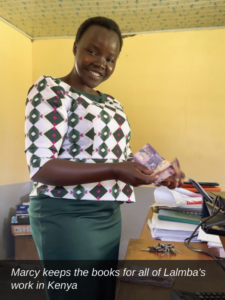 In a small office in Kenya, Marcy counts out a stack of shilling notes by hand, a calculator and a row of ledgers at her elbow. It is payroll day. Every figure has to be right, because the people waiting on it are the clinicians, field staff, and even the groundskeepers who carry the work. She keeps the books for
everything Lalmba does in Kenya, on her own.
She is one of three accountants. In Ethiopia, Tsiyon keeps the books for the clinic at Agaro Bushi, where she serves as both accountant and newly promoted general manager. Ayelech keeps the accounts for the RCAR program in Ethiopia. All three have been with Lalmba for years, and all three carry the trait that marks a good accountant anywhere in the world: they take real pride in getting it exactly right.
Their work is quiet and constant. Every month they reconcile what came in against what went out, line by line, and close the books before any report crosses an ocean. Payroll alone is one of the largest and most exacting responsibilities they hold, paying the staff who run the clinics and stand with families. They help ensure your gift does what it is supposed to do once it reaches Kenya or Ethiopia. In a typical month, that adds up to around 3,000 patients seen at the clinics in Kenya and Ethiopia and more than two dozen babies safely delivered.
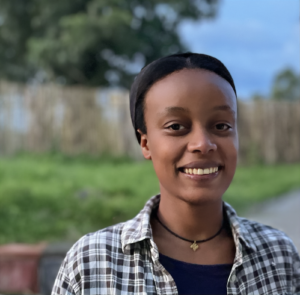
Tsiyon
Atinafu, Lalmba’s Ethiopia country director, has watched other organizations arrive in Ethiopia, spend large sums on something that changes little, and leave. Lalmba, he says, is not that. Lalmba stays, builds with local hands, and is still there decades later.
Stewardship does not come by chance. It is three people who treat your gift the way you would: count it, record it, make it travel as far as it can go.
Stewardship, in practice, has names. Marcy. Tsiyon.Ayelech.



 Every weekday morning at Lalmba’s Matoso Clinic in Kenya, before the doors open to the public, our team gathers. They greet one another, join in song and prayer, make announcements, and prepare for the day ahead. It is a great way to start the morning and prepare for any challenges the day may bring.
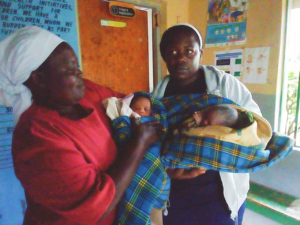 As the staff heard the news, the team erupted in applause and cheers for Steve’s dedication. In this part of the world, a safe delivery is a hard-won victory. Four in one weekend is a monumental achievement.


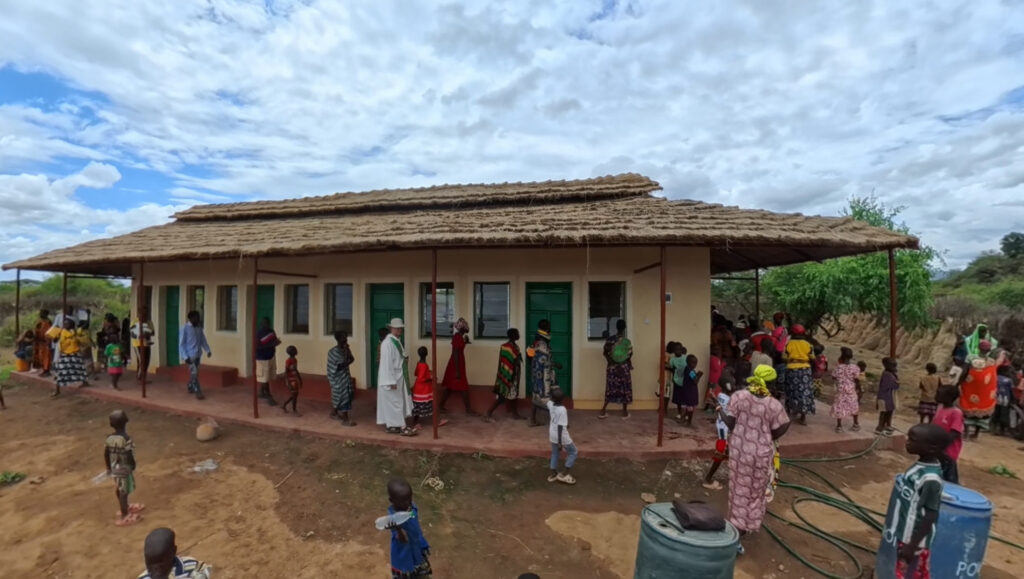
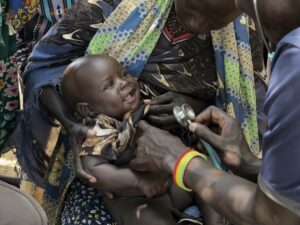 Lalmba proudly partners with the Missionary Community of Saint Paul the Apostle (MCSPA), whose local staff have served this region for years. This new dispensary is a direct and powerful response to the struggles this community faces in an incredibly remote region. It was funded through Lalmba by a former Lalmba volunteer, a doctor whose service in Sudan decades ago moved him and his family to make this lasting gift.
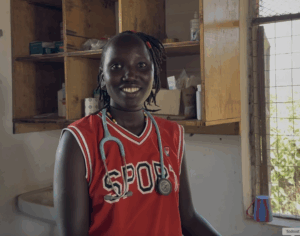 As the only dedicated medical building for over 50 kilometers in any direction, this small clinic, on the edge of a refugee village at the base of Naturomoe hill, provides a Clinical Officer, Francis, and Nurse, Akales, a fixed place to treat injuries, deliver immunizations, and save lives. It is a sign of our shared commitment to communities at the end of the road.
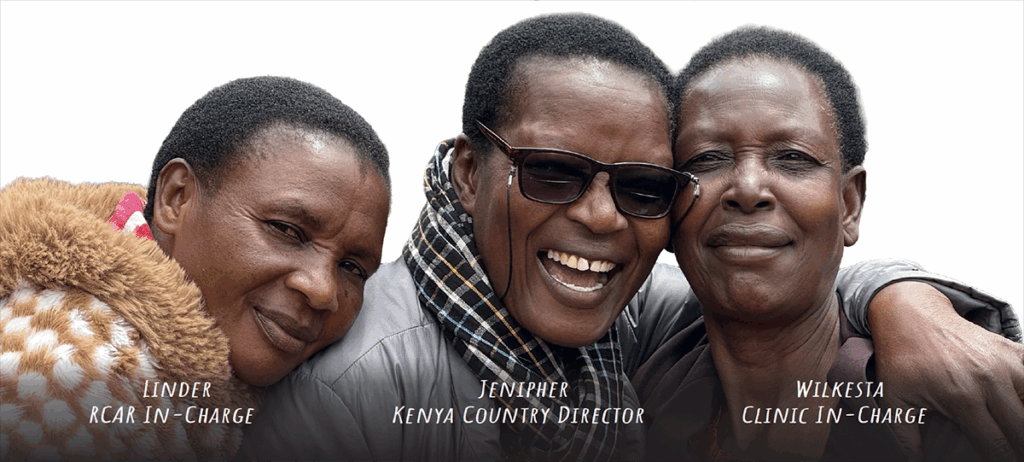
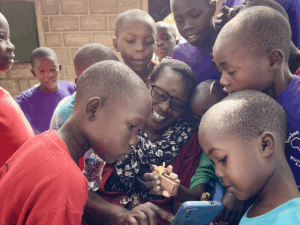 “In early 2021, at the start of our community outreach, we found three orphaned children living in an open, makeshift shelter. Their parents were gone, and their elderly grandfather couldn’t provide a proper home. Lalmba immediately built a shelter for the grandfather. Though the children were too old for our children’s home, we refused to abandon them. I personally took in one boy, and my colleague Linder took in a girl. It was a privilege to watch them thrive. The girl is now happily married and starting a family; the boy I took in is also grown, married, and living a happy life. That story and the place we found them still move me deeply. This is just one example of the lives changed through Lalmba’s home-based care. While we can’t house every child, by modeling this kind of care—as Linder (Linda), I, and other community guardians have done—we meet the needs of many. The commitment of Lalmba and the support of our donors bring real change to our community, one child and one family at a time.”
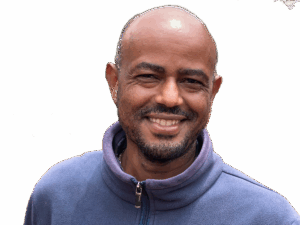 “Lalmba holds a great history in my life — I was once one of the children they supported. After losing my family and feeling hopeless about my education, Lalmba provided essential aid like school materials, medical care, and even paid my rent when I became an orphan without shelter. That support changed everything. Through determination, I continued my education and am now the Ethiopia Country Director for Lalmba. When I serve these children today, I see myself in their eyes and know I am living proof that Lalmba acts as a real mother and father, giving a chance at a fulfilling life. This is the greatest history I have — it’s my life.”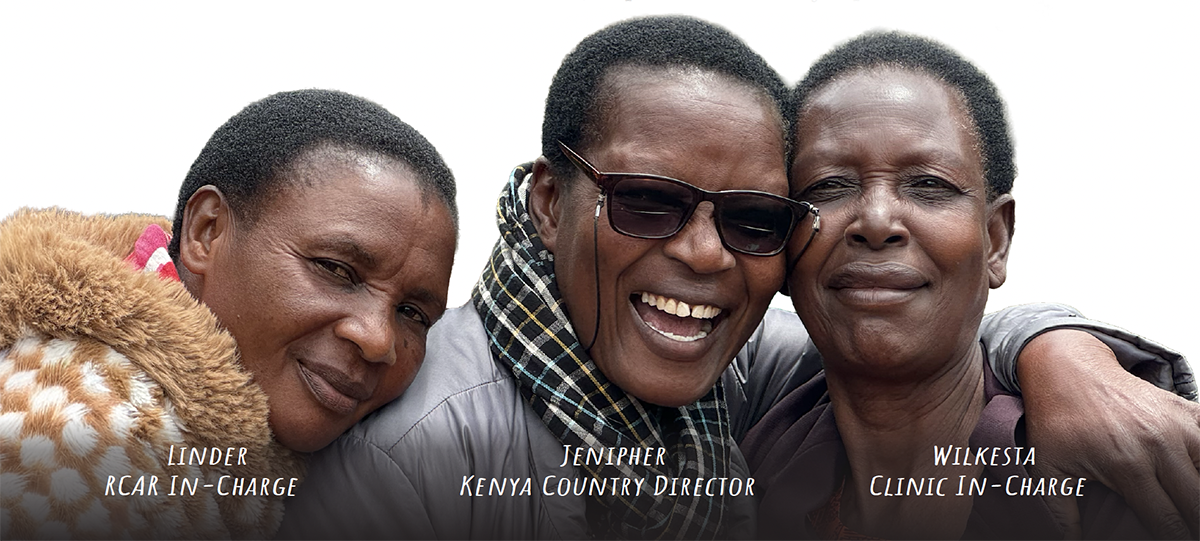
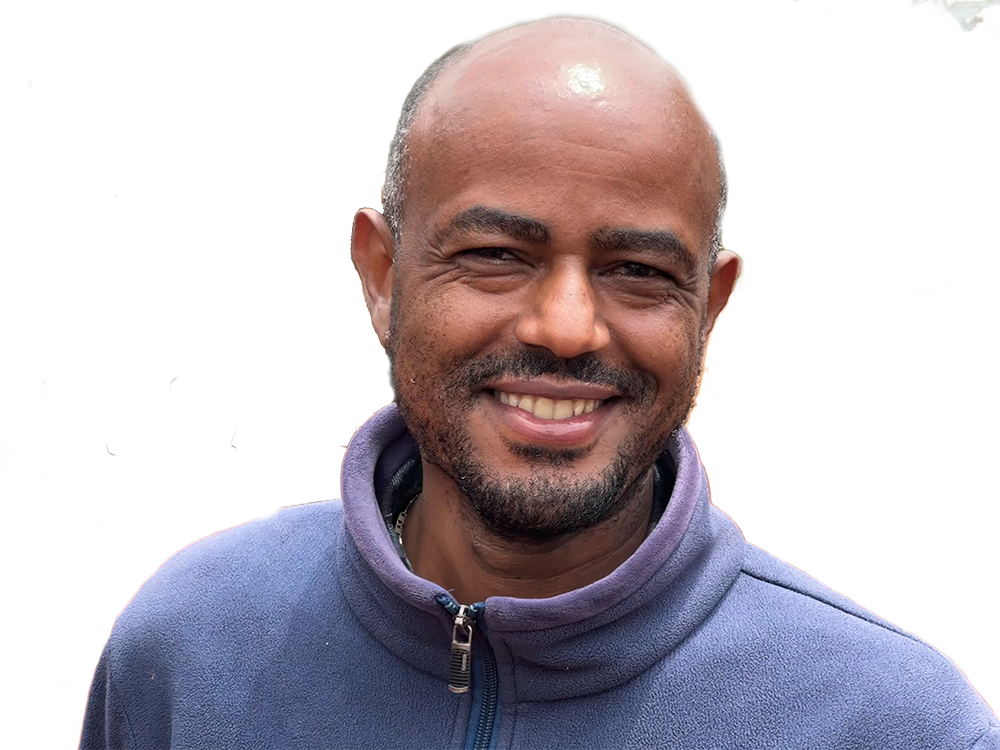
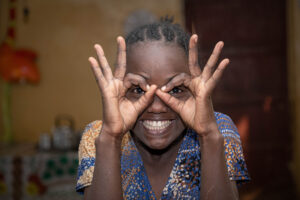 When Atinafu looks at the children Lalmba serves today, he sees himself. He is a reminder of how Lalmba works.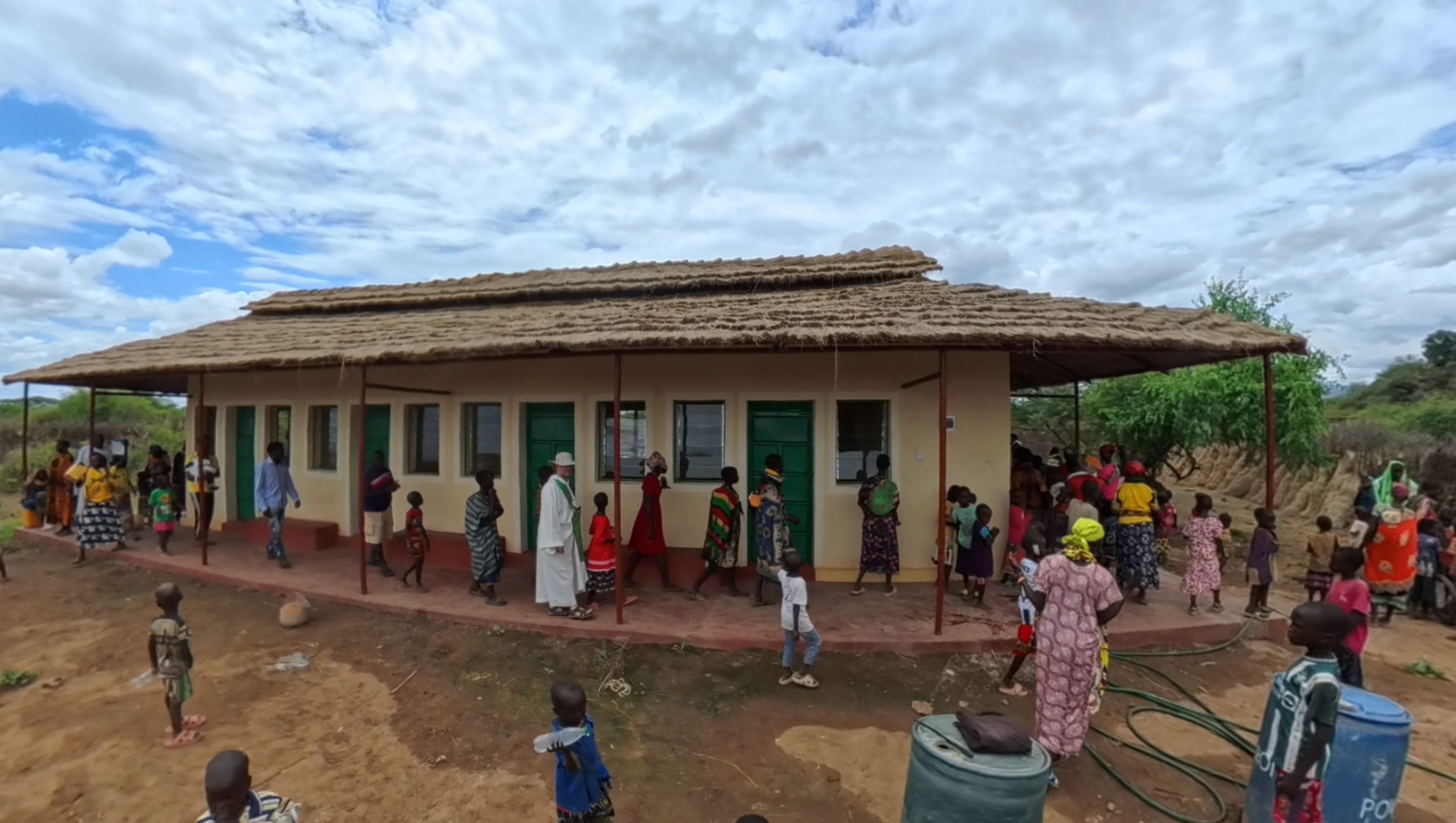
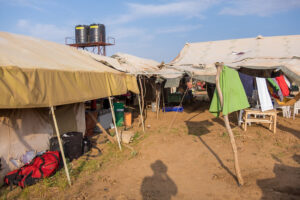 This partnership with MCSPA and the two Spanish priest living there, Father Angel and Father David did not happen quickly. Lalmba first visited this remote region in 2016. At that time, the two priests were living in a small tent camp in the searing heat of the Omo River valley. They had been working with the Nyangatom since 2014, having previously spent a decade across the border with the Turkana tribe.
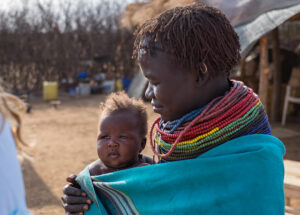 We witnessed the challenges, but we also saw their deep passion and commitment to these people. Their faithful, humble work, focused on community, has achieved incredible things. In the years the priests have lived there, two historically warring tribes — the Nyangatom and the Turkana — have begun to live in peace. That is the quiet, powerful result of long-term respect and faith driven persistence.
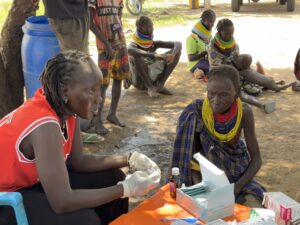 This new clinic building is ready at the perfect moment. It is the steady place Francis and Akales need to do their life-saving work. Over the next year, we will be carefully figuring out how Lalmba can best proceed with our partners. Your support is an investment in this long, patient work, ensuring that hope and healing always have a home, even in the farthest reaches of the Omo Valley.